On this page
Philip stood in the peanut butter aisle with Boo, his 2-year-old Westie, waiting in the car. One jar said natural. One said no sugar. One said protein-packed. All of them looked safe enough to smear in a Kong.
Pick the plainest jar. Peanuts and a little salt is enough. Skip anything sweetened with sugar substitutes, and treat the spoonful like a training reward, not a snack.
What makes one jar safer than another
Turn the jar around. Read the ingredient list first, then the nutrition panel.
Choose peanuts as the first and ideally only ingredient. A small amount of salt is acceptable for most healthy dogs. Avoid xylitol, also listed as birch sugar or E967, plus added chocolate, cocoa, raisins, macadamia nuts, and large amounts of added oils or syrups.
Xylitol is the deal-breaker. The U.S. Food and Drug Administration warns that xylitol can trigger a rapid insulin release and liver injury in dogs, even in small amounts. VCA Hospitals notes the same mechanism in its clinician-reviewed overview: low blood sugar, vomiting, weakness, and collapse can appear quickly.
Plain does not mean unlimited.
Peanut butter is calorie-dense from fat. The U.S. Department of Agriculture nutrient database shows plain peanut butter carries roughly 95 calories per tablespoon, mostly from fat. That matters for the brain as much as the waistline, since excess weight changes how an older dog moves, loads joints, and recovers from a neurologic injury.
Buy it like this
Follow these steps in the store:
- Scan for two words: peanuts, salt. Put back jars with long sweetener lists.
- Search the label for xylitol, birch sugar, sugar alcohol, stevia blend, monk fruit, erythritol, sorbitol, and maltitol. If you see xylitol or birch sugar, do not buy it for a dog household.
- Pick creamy over chunky for stuffable toys. Chunks plug the opening and frustrate small dogs.
- Check sodium if your dog has heart or kidney disease. Choose unsalted and ask your veterinarian for a portion limit.
- Check the oil separation. Natural jars separate. Stir once, refrigerate, and stir again before each use.
Do not trust the front claim alone.
Measure it like a treat
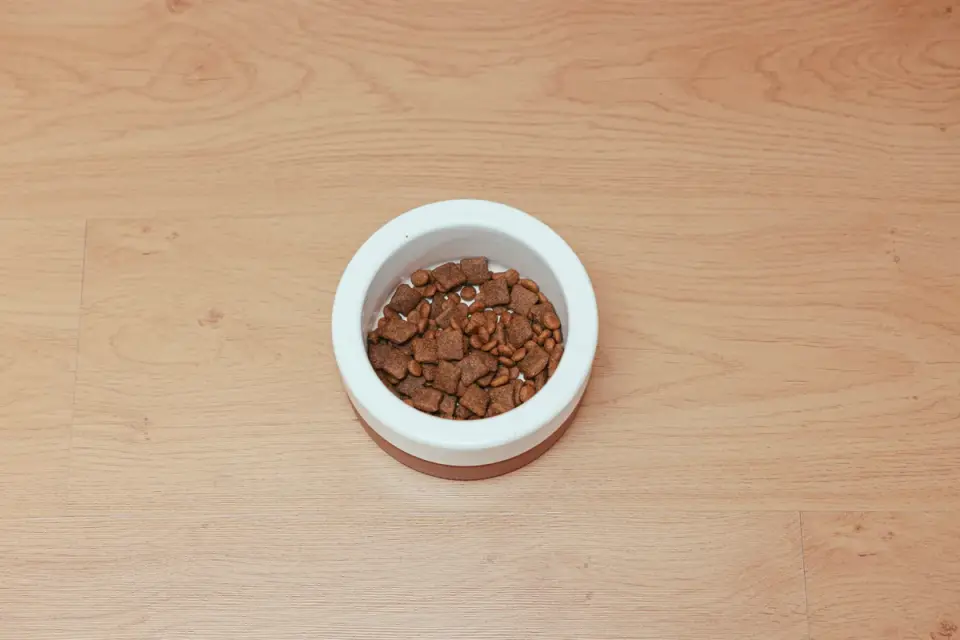
Scoop with a measuring spoon. Do not pour from the jar.
For a 20-pound dog like Boo, one level teaspoon smeared thin inside a Kong or on a lick mat is plenty. For a 50- to 60-pound dog like Ginny, the 5-year-old pointer mix from Mesa who inhales enrichment toys, one to two level teaspoons still does the job when you pair it with kibble, green beans, or frozen blueberries.
Keep extras under 10% of daily calories. Rinse stuffable toys daily. Peanut fat goes rancid fast in a warm crate.
Use peanut butter to deliver a behavior, not to fill a bowl. Smear, freeze for 30 minutes, then serve for nail trims, crate training, or pill practice. If you need a lower-calorie vehicle that day, try thin apple slices with the peel washed, or a spoon of plain pumpkin. Owners who rotate treats often find dogs work just as hard for less.
When plain is still the wrong call
My bias is food-first and mechanism-aware: conventional toxicology explains the xylitol risk, while careful food selection may help support steady energy and training without upsetting digestion.
Still, plain peanut butter is wrong for some dogs. Skip it and call your veterinarian if your dog has a history of pancreatitis, fat intolerance, peanut allergy with itching or facial swelling, or needs strict sodium restriction. The same applies during an acute vomiting or diarrhea episode, when added fat can prolong recovery.
For those dogs, use a different reward. Freeze low-sodium broth ice cubes, use single-ingredient meat training bits, or ask about a prescription low-fat treat. Then recheck the plan once the gut is stable.
The short answer to keep
Buy peanuts and little else. Read every new jar, because formulas change. Measure the spoonful, freeze it in the toy, and save the extra calories for balanced meals.
Frequently asked questions
Does crunchy or creamy peanut butter matter for dogs?
Both are safe if the ingredients are plain, but creamy spreads thinner and washes out of toys more easily. Use chunky only in small amounts for large dogs that chew carefully.
How often can I give my dog peanut butter?
Use it a few times per week as part of the treat allowance, not daily by the spoonful. If your dog needs daily medication help, ask your veterinarian to set a calorie limit.
What should I do if my dog ate peanut butter with xylitol?
Treat it as an emergency. Call your veterinarian or poison control right away and bring the jar, even if your dog looks normal.
Sources
- Paws Off Xylitol; It's Dangerous for Dogs — U.S. Food and Drug Administration
- Xylitol Toxicity in Dogs — VCA Hospitals
- FoodData Central — U.S. Department of Agriculture