On this page
The first strawberry I ever saw a dog eat wasn’t offered on purpose. A client’s young Cattle Dog mix, maybe eight months old, snatched one off a cutting board mid-prep and swallowed it whole before anyone could react. The owner called in a mild panic, convinced she’d need to induce vomiting before dinner was even served. Nothing happened. No vomiting, no lethargy, no trip to the ER. That dog went on to beg for strawberry tops at every meal for the next decade, and it became a small, recurring joke between us at annual visits. I tell that story not because it proves anything scientifically, but because it captures the gap between the panic strawberries provoke and what actually shows up in the exam room, which in my experience is close to nothing.
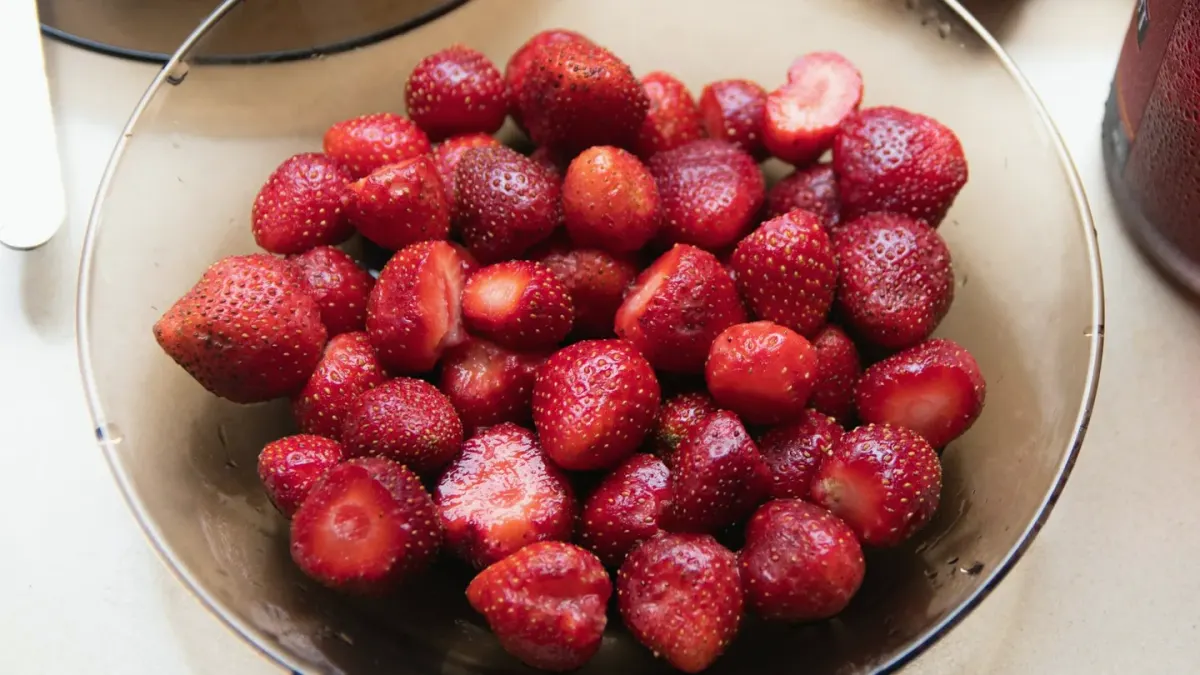
So, the direct answer: yes, American Kennel Club: dogs can eat strawberries in moderation. The fruit isn’t on the danger list, and for most healthy adult dogs a few berries here and there are a non-event. But I want to walk through this the way I’d walk through any nutrition question in my own exam room, moving from puppy to adult to senior, because the calculus shifts more than a quick internet search suggests.
Why the Toxicity Question Gets Asked at All
Owners ask about strawberries for the same reason they ask about grapes and raisins: fruit has a bad reputation in dog circles, and it’s earned in a few specific cases. Grapes and raisins carry a genuine, unpredictable risk of acute kidney injury. Strawberries don’t belong in that category. The ASPCA’s toxic-and-non-toxic plant database lists the strawberry plant, Fragaria, as non-toxic to dogs, cats, and horses, and that covers the fruit, the leaves, and the stems. The one caveat worth naming is the green calyx at the crown of the berry. It’s fibrous and mildly tannic, and while it isn’t dangerous, it can contribute to loose stool or a grumbling stomach in a dog that swallows several without chewing. I pull it off before serving, and I’d suggest you do the same.
The Puppy Question I Get Most Often
Puppy owners tend to ask two things at once: is it safe, and how much. For a young dog just transitioning off milk-based nutrition and onto solid food, a strawberry is a reasonable first fruit, but I’d start with a sliver, not a whole berry. A puppy’s gut is still calibrating, and any new food deserves a slow introduction and a day of watching stool and appetite before you repeat it. If you’re already working through a broader food transition, our guide on switching a senior dog to a new food covers the same gradual-introduction logic that applies at either end of a dog’s life, not just the senior years.
Where the Fiber Actually Goes to Work
Here’s where I reach for the research instead of the anecdote. Strawberries carry meaningful fiber alongside their natural sugar, and fiber’s job in the gut is more complicated than “good for digestion.” A review in JAVMA on dogs with exocrine pancreatic insufficiency notes that this condition is managed through pancreatic enzyme replacement, nutritional adjustment, and cobalamin support, specifically because “EPI is treated by pancreatic enzyme replacement therapy, nutritional management (low-residue diets with moderate fat content), and supplementation of cobalamin.” That’s not a strawberry-specific finding, but it’s a reminder that any dog with diagnosed digestive disease needs a vet weighing in on fruit and fiber additions, not a default assumption that a natural treat is automatically gentle. The same review adds that “future studies are needed to further understand the causes of persistent dysbiosis in animals with EPI following initiation of pancreatic enzyme replacement therapy,” which is a fair way of saying the gut-microbiome side of digestive disease is still being mapped, not fully solved.
For dogs without a diagnosed digestive condition, that same fiber and the polyphenols riding along with it are closer to a mild positive than a risk. A related thread of research in Frontiers in Veterinary Science on probiotic response in dogs found that “diversity metrics did not distinguish non-responders from responders,” meaning gut-microbiome diversity alone doesn’t predict how an individual dog handles a dietary change. In plain terms, two dogs can eat the same handful of strawberries and have genuinely different guts respond in genuinely different ways. That’s not a reason to avoid fruit; it’s a reason to introduce it in small amounts and actually watch the dog in front of you, whether we’re talking about strawberries, sweet potato, or a supplement chew. Owners weighing broader fiber questions might also find our piece on whether a dog can have too much fiber useful, since the same overcorrection risk applies here.
A quieter case from my caseload sits with me for a different reason. A retriever mix on a strict weight-management plan came in for a recheck, and the owner mentioned, almost as an aside, that she’d started giving him a few strawberries most evenings because it’s just fruit. His weight had crept up half a pound over six weeks, small on paper, meaningful against his target. Nothing about strawberries is inherently fattening, but a few berries every single evening, layered onto an already calorie-conscious plan, was enough to stall progress. We didn’t cut the fruit entirely. We cut the frequency to twice a week and moved on. That’s the kind of adjustment I’d rather make early than let compound for months.
Senior Dogs, Diabetes, and Where I Draw the Line
This is where I land firmly, not neutrally. For a healthy adult dog, strawberries in modest amounts are fine, and I don’t think owners need to agonize over them. For a senior dog, a diabetic dog, or a dog already managing obesity, I’d treat strawberries as an occasional exception rather than a routine treat, because the sugar load, roughly comparable to other soft fruit, adds up faster in a body with less metabolic headroom. The counterargument I hear most is that strawberries are natural and therefore gentler than a processed treat, and there’s some truth in that: no artificial sweeteners, no syrup, no filler. But natural sugar is still sugar, and a dog managing insulin resistance doesn’t get a pass because the source is a berry instead of a biscuit. I’d rather an owner ask their vet before making strawberries a nightly habit for a senior or diabetic dog than assume fruit automatically means safe in any quantity.
How I’d Actually Serve Them
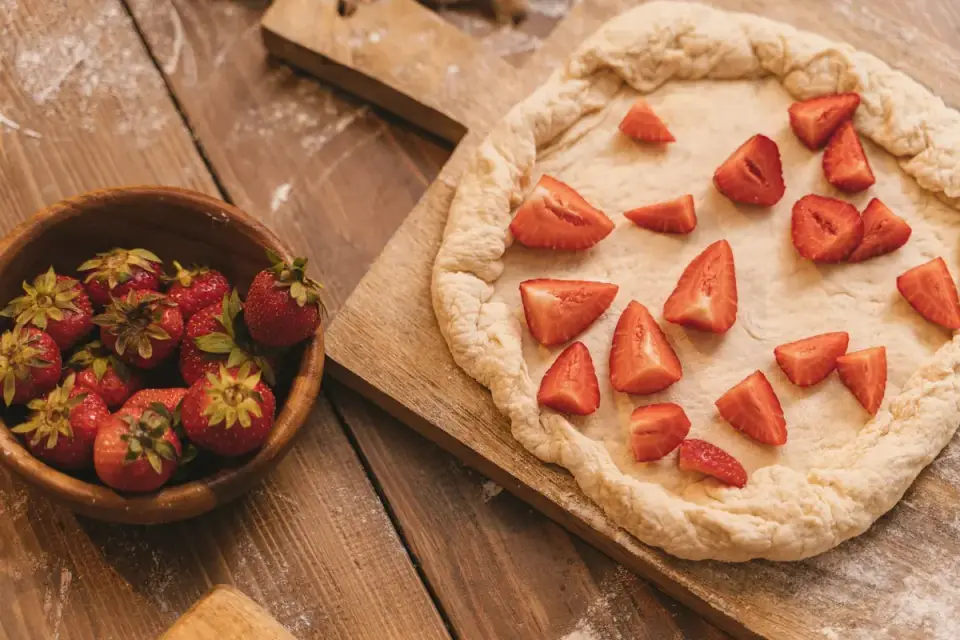
Hulled, cut to a size that matches the dog, and offered plain: no syrup, no yogurt dip loaded with sugar, no canned fruit that may carry xylitol in the packing liquid. Purina’s guidance on feeding strawberries to dogs lands in the same place, treating them as an occasional, plain treat rather than a diet staple. Fresh or frozen both work, and frozen berries are a nice option for a teething puppy or a hot afternoon. Keep the frequency to a few times a week rather than daily for most dogs, and treat it as a genuine exception, not a nightly ritual, for anyone managing weight or blood sugar. If a dog has an underlying digestive condition, loop in your vet before strawberries become routine, the same way you would before adding a new joint supplement or fiber source.
Looking ahead, I expect the research on individual gut response to fruit and fiber in dogs to keep sharpening, and that’s a good thing. Until it does, the sensible approach is the one that’s already worked for the dogs in my practice: small amounts, real observation, and a willingness to adjust when a treat that seemed harmless turns out to matter more than expected.
Frequently asked questions
Are strawberry leaves and stems safe for dogs?
The leaves and stems are not toxic, but the green calyx is fibrous and tannic and can cause mild stomach upset, so removing it before serving is the more comfortable choice.
How many strawberries can a dog eat in a day?
Most healthy adult dogs do fine with one to three berries for a small dog and three to four for a larger breed, kept to a few times a week rather than daily, since treats should stay under roughly 10% of daily calories.
Can puppies eat strawberries?
A puppy can try a small piece of strawberry once solid food is established, but start with a sliver, not a whole berry, and watch stool and appetite over the next day before offering more.
Are frozen strawberries safe for dogs?
Yes, frozen strawberries are a common way to serve them, especially for teething puppies or hot afternoons, as long as they're plain fruit with no added sugar, syrup, or sweeteners.
Sources
- Can Dogs Eat Strawberries? — American Kennel Club
- Toxic and Non-Toxic Plants: Strawberry — ASPCA
- Can Dogs Eat Strawberries? A Guide to Safety — Purina
- Exocrine Pancreatic Insufficiency in Dogs: Diagnosis, Treatment, and Dysbiosis — Journal of the American Veterinary Medical Association (JAVMA)
- Probiotic Response and Gut Microbiome Diversity in Dogs with Digestive Dysfunction — Frontiers in Veterinary Science