On this page
Many owners buy a bright red ball because it looks obvious to them. To a dog on green grass, that ball often disappears.
Prioritize physiology first. Dogs are dichromats. They have two cone types, tuned roughly to blue and yellow, while people have three. That one missing cone changes the whole picture. Blue stays blue. Yellow stays visible. Red and green collapse into a similar gray-brown range.
Vets often see this confusion in senior dogs. An owner worries vision is failing because the dog runs past a red toy. In practice, the eyes are often stable and the color choice was the problem.
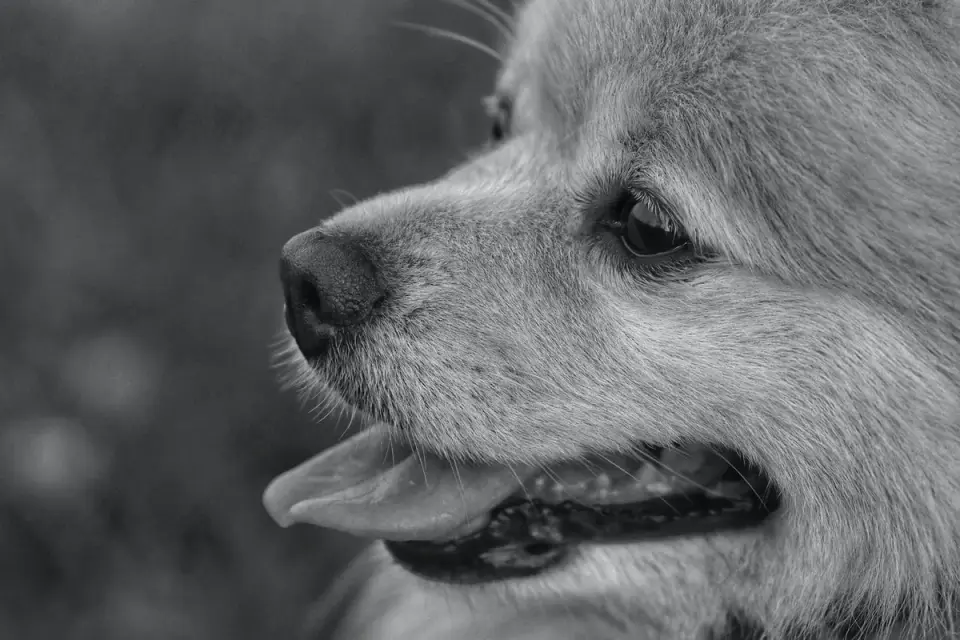
What does the world look like through dog eyes?
Think in two channels, not three. The classic work on PubMed describing color vision in the dog found peak sensitivity in the blue-violet and yellow-green regions, with no separate red cone. Later behavioral work confirmed the pattern.
In plain terms, blue objects look saturated and distinct. Yellow objects also stand out. Orange, red, and green blur together and blend easily into grass, soil, or brown flooring. Brightness and motion still help, but color contrast does more work than most owners expect.
This is proven anatomy and behavior, not preference. What remains merely plausible is how much an individual dog relies on color versus smell, motion, or memory in a familiar yard. Stabilize the part you can control.
Why does blue beat red on grass?
Grass reflects heavily in the middle wavelengths. A red toy reflects in long wavelengths that dogs discriminate poorly. The result is low contrast: brown-gray toy on brown-gray background.
A blue toy does the opposite. It stimulates the short-wavelength cone that dogs have and grass does not trigger strongly. The toy holds contrast even at distance, in flat light, or for an older dog with early lens clouding.
The American Kennel Club summarizes this well for owners, noting dogs see best in blue and yellow while red and green appear as shades of gray and brown. Use that as your shopping rule.
Pick blue for fetch toys, treat pouches used as markers, and the edge of steps where you want a visual boundary. Pick yellow as a second option. Avoid red, orange, dark green, and brown for anything the dog must find by sight.
When blue will not fix the problem
Color choice has limits. If your dog misses blue toys too, bumps furniture at dusk, or startles when approached from one side, stop adjusting toys and assess vision directly.
Age-related lens opacity, retinal disease, and neurologic weakness can all look like clumsiness at first. Owners researching senior changes often need help sorting pain from slowing down, which is covered in how to tell if a senior dog is in pain or just slowing down with age. Sudden hind-end weakness that looks like tripping over toys deserves a different checklist, described in a neurologist’s checklist for sorting arthritis from an emergency.
In that situation, prioritize an exam over new gear. Note onset, which eye seems affected, pupil size in dim light, and any discharge or cloudiness. Bring a short video of the dog navigating a hallway. That history stabilizes the visit and shortens the workup.
How to set up toys and training gear your dog can see
Keep it simple and ordered.
Choose one high-contrast color and stay with it. Buy blue balls, blue discs, and blue tug handles for grass play. Reserve yellow for snow or dark indoor floors where blue fades.
Test contrast before you train. Place the toy on the surface where you will use it and step back 20 feet. If you desaturate a phone photo and the toy still pops, a dog will likely see it.
Use size and motion next. A 3-inch blue ball beats a 1-inch red one, even for small breeds. Roll rather than toss high for seniors, and avoid throwing into low sun.
Mark agility and yard zones with blue. Blue tunnel entries, blue weave-pole bases, and blue-painted step edges read clearly. Red flags on green turf do not.
Wash toys when they dull. Dirt shifts blue toward gray and erases the advantage. Rinse, air-dry, and retire toys once the surface grays out.
That is the full decision. Blue and yellow are visible. Red and green are camouflage. Train to the physiology you have, and call your veterinarian promptly when the problem stops matching that pattern.
Frequently asked questions
Can dogs see blue toys better than red toys?
Yes. Dogs discriminate blue well and discriminate red poorly, so a blue toy holds contrast on grass while a red toy often blends in.
What colors should I avoid for dog toys on grass?
Avoid red, orange, green, and brown. They tend to look like similar gray-brown shades to dogs and disappear against lawns.
Sources
- Color vision in the dog — PubMed