
On this page
A client of mine — I’ll call her Dana — set two bottles on the exam table during a recheck for her thirteen-year-old shepherd, Rooster, whose hind end had started to give out on the stairs. One label promised the product was made in a “cGMP-certified facility.” The other carried a small round seal from the National Animal Supplement Council. She wanted to know which bottle meant her dog was safer. The honest answer is that the two phrases are not measuring the same thing.
One describes how a product is manufactured; the other describes a set of promises the company agreed to keep.

From raw material to finished batch: what cGMP governs
“cGMP” stands for current Good Manufacturing Practice, and it is fundamentally about process. According to the FDA CGMPs for Food and Dietary Supplements, these rules cover the unglamorous machinery of making a product: personnel hygiene, plant design, equipment, sanitation, and the production and process controls that keep one batch consistent with the next. For human dietary supplements specifically, the relevant rule is 21 CFR Part 111. The FDA Backgrounder on the Dietary Supplement CGMP Final Rule explains that when this rule was finalized in 2007, its purpose was to make sure a supplement actually contains what the label says and is not contaminated — that its identity, purity, strength, and composition hold up.
So a “cGMP-certified” facility is one that has been audited against a manufacturing standard. That is real, and it is worth something. It is also narrower than most shoppers assume.
The gap nobody prints on the label
Here is the part that trips up even careful owners. 21 CFR Part 111 is a human rule. The FDA Center for Veterinary Medicine: Animal Foods & Feeds page states plainly that the Dietary Supplement Health and Education Act “does not apply to animal food, including pet food,” and that “there is no ‘dietary supplement’ regulatory classification for animal food substances and products.” A product sold for your dog is legally either a food or an unapproved animal drug — never a “dietary supplement” in the sense the human rule was written for.
That matters because when a canine product says “cGMP,” it is not always obvious which cGMP: the human dietary-supplement rule, the animal-food rule, or a contract manufacturer’s certification earned on the human products it also makes. The claim can be accurate and still leave you guessing. This is the gap I point out to clients — the words on the front of the bottle describe a factory, not necessarily oversight built for dogs.
What NASC membership adds after the factory
The National Animal Supplement Council was formed in 2001 precisely because that animal-specific category was missing. Membership is not a government certification; it is a program a company joins and agrees to be held to. To earn the right to display its seal, the NASC Quality Seal requires a member to keep a quality control manual with written standard operating procedures, run an adverse event reporting and complaint system that monitors products in real time, submit to random product testing by an independent lab to confirm the product meets its label claim, follow strict labeling rules including FDA-CVM-recommended caution statements, and complete annual training.
Ongoing surveillance and re-auditing
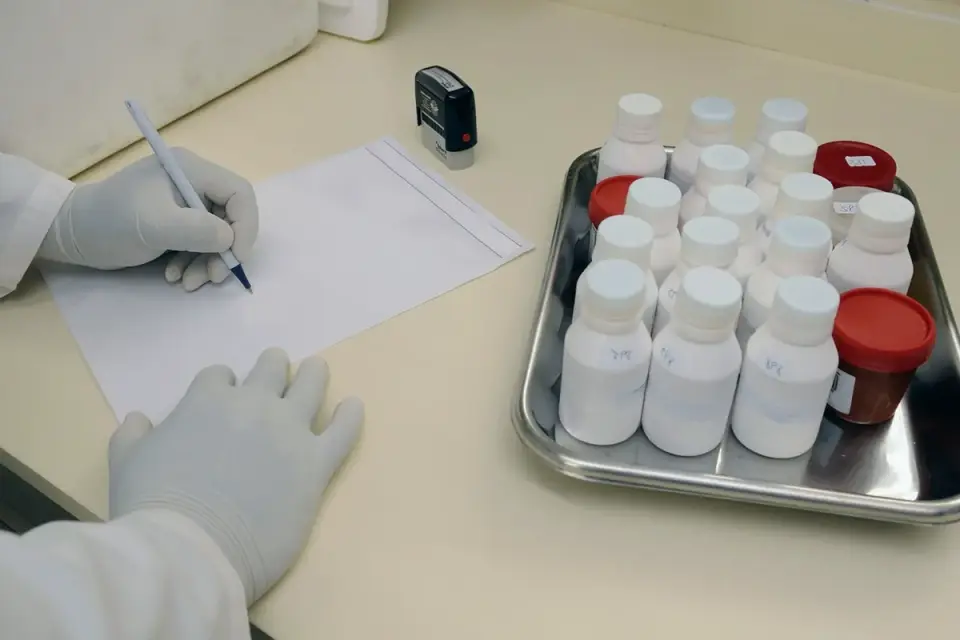
The program does not end at the first pass. The NASC Audit Program ties the seal to independent audits a member must keep clearing on a recurring basis, and the council’s adverse event reporting system pools complaints across many brands so a signal in one product can be seen against the wider field. It is post-market surveillance for a market that federal law never gave a tidy category.
Certification of a process versus membership in a program
Set side by side, the difference is cleaner than the marketing makes it sound. cGMP certification tells you a facility was measured against a manufacturing standard at a point in time. NASC membership tells you a company signed up for an animal-specific program with continuing obligations: label discipline, independent claim testing, adverse event tracking, and repeat audits.
Neither is a guarantee, and neither replaces the other.
A cGMP audit says little about whether the label claims are honest for dogs; a seal says little about the fine detail of the manufacturing line unless the audit reached it. The steadiest products tend to carry both, and will hand you a certificate of analysis when you ask.
Why this matters most for nervous-system and senior claims
I am a neurologist by training, so I watch the cognitive and calming products most closely — the ones aimed at the aging brain, at anxiety, at the senior dog like Rooster who is slowing down. This is where the distance between supporting a function and treating a disease is widest, and where honest labeling earns its keep. A supplement can reasonably support normal cognitive function; it cannot treat canine cognitive dysfunction, and the label should not imply that it does. Dose accuracy is not a formality here either. When an ingredient carries genuine pharmacology, its strength has to match the label — which is precisely what the manufacturing and testing standards are meant to protect. If you are weighing a NAD+ product, reading up on whether resveratrol is safe for dogs and at what dose, or comparing joint supplements for a senior dog, the credential on the bottle only helps once you know which question it answers.
How to read the label yourself
Look for the NASC seal, then verify the company on the council’s member list rather than trusting the artwork alone. If a product touts cGMP, it is fair to ask the maker which standard and who performed the audit. Request a certificate of analysis; a company doing the work will have one ready. And read the claims themselves — language that stays in the realm of supporting normal structure and function is a better sign than language that promises to cure, treat, or prevent a disease.
Bottom line
A cGMP claim vouches for how a product was made; NASC membership vouches for an ongoing, animal-specific program of testing, labeling, and surveillance — so the bottle worth trusting usually earns both and answers you when you ask for the paperwork.
Frequently asked questions
Is a 'cGMP-certified' dog supplement the same as an FDA-approved one?
No. cGMP describes a manufacturing standard a facility was audited against; the FDA does not pre-approve supplements for dogs, which are regulated as food or as unapproved animal drugs rather than as dietary supplements.
Is the NASC Quality Seal a government certification?
No. NASC is a nonprofit industry program a company joins voluntarily. The seal signals that the company keeps quality SOPs, reports adverse events, submits to independent label-claim testing, and clears recurring audits, but it is not a federal endorsement.
If a product has the NASC seal, do I still need to look for cGMP?
They overlap but are not identical. NASC membership pairs manufacturing expectations with animal-specific labeling and surveillance; a standalone cGMP certificate focuses on the factory. Asking for a certificate of analysis is the most direct way to confirm what is actually in the bottle.
Which matters more for a senior dog's cognitive or calming supplement?
Both, because dose accuracy matters most when an ingredient has real pharmacology. Look for independent label-claim testing and structure/function language that supports normal function rather than promising to treat a disease.
Sources
- FDA CGMPs for Food and Dietary Supplements — U.S. Food and Drug Administration
- FDA Backgrounder on the Dietary Supplement CGMP Final Rule — U.S. Food and Drug Administration
- FDA Center for Veterinary Medicine: Animal Foods & Feeds — U.S. Food and Drug Administration
- NASC Quality Seal — National Animal Supplement Council
- NASC Audit Program — National Animal Supplement Council