On this page
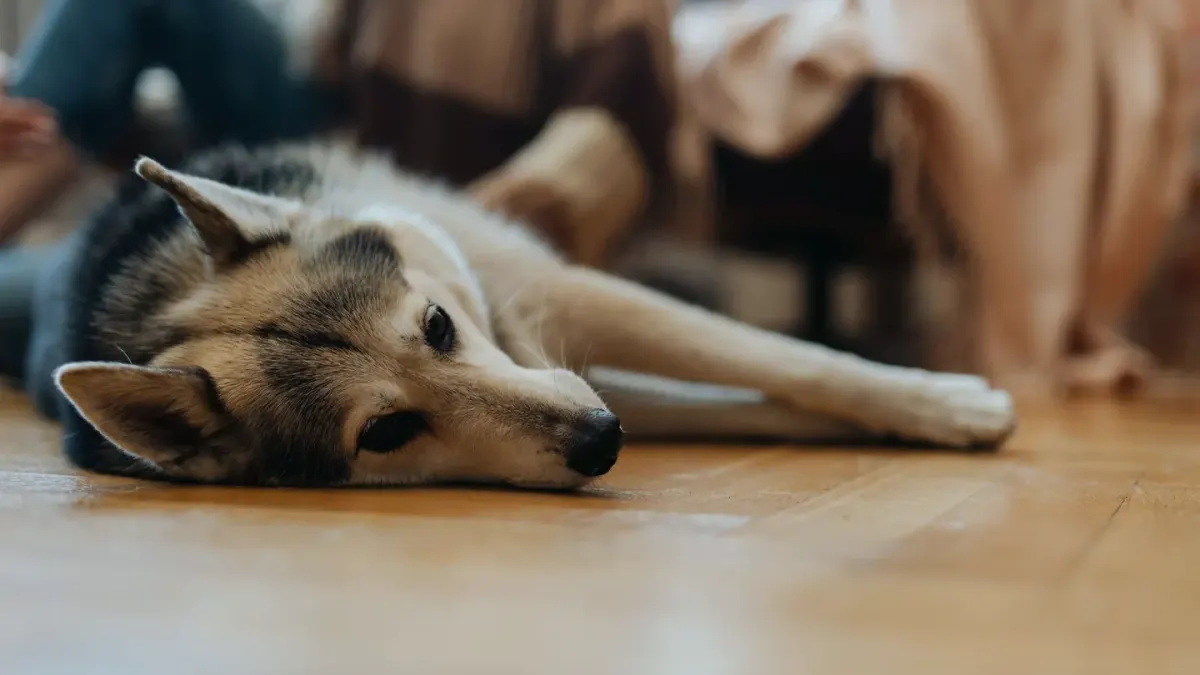
When the house heats up, a husky is often the dog you end up worrying about. That thick, double coat was built for a Siberian winter, not a humid July afternoon, so it is normal to watch your dog sprawl on the kitchen floor and wonder whether he is just being dramatic or genuinely struggling. The reassuring news is that most of what keeps a thick-coated dog comfortable at home is low-tech, inexpensive, and squarely within your control. Steady shade, moving air, and cool water do more for your dog than any single cooling gadget on the shelf. The aim isn’t to chase a perfect temperature — it’s to protect your dog’s comfort across a long, hot stretch of weeks.
The dogs that ride out a heat wave well tend to belong to people who planned the day around the temperature instead of the other way around.
Why a husky feels summer differently than you do
Dogs don’t cool the way we do. As the Cornell University College of Veterinary Medicine explains, a dog’s only sweat glands sit in the paw pads, so panting carries most of the heat out of the body — and a dense, double undercoat makes that work harder. Good insulation cuts both ways: the same coat that holds warmth in a Siberian winter traps it on a warm afternoon. It is also why your dog’s surface can feel cool under your hand while he is overheating underneath.
Two other things stack the deck. Older and heavier dogs tend to handle heat poorly, and a large UK study published in Scientific Reports found that dogs over two years of age, and dogs carrying more weight than average for their breed, were at higher risk of heat-related illness. In that study about one in seven dogs that developed heat-related illness did not survive it, and roughly 74 percent of cases were triggered by exertion rather than by simply sitting in a hot room. For a high-energy husky, that one finding reshapes the summer: the midday walk and the backyard sprint carry more risk than the warm living room ever will.
The levers that actually move the needle at home
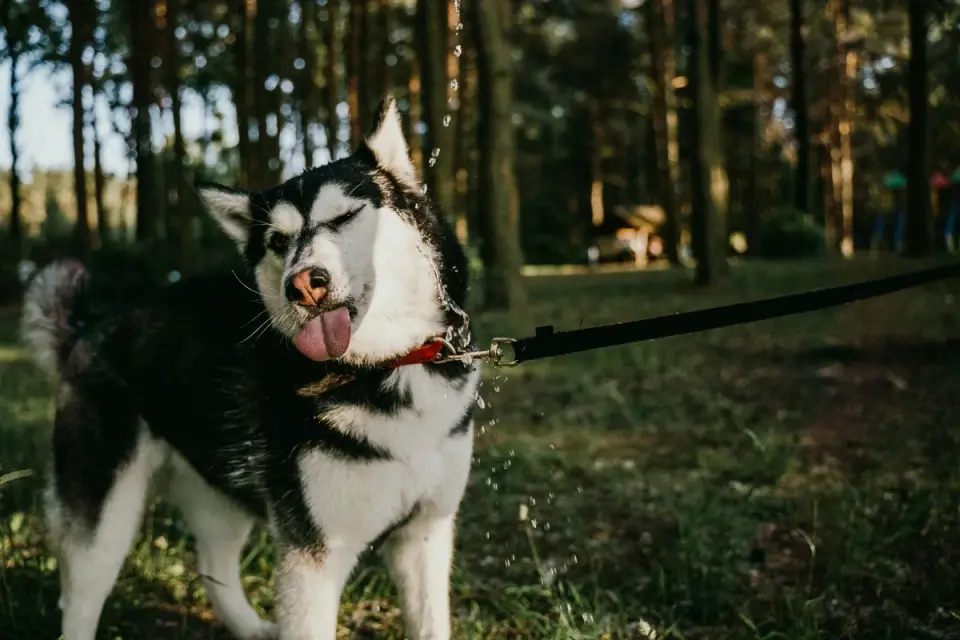
Shade and airflow do more than anything you can buy, with cool water close behind. Give your dog a genuinely shaded, breezy place to retreat to, ideally on a hard floor like tile or concrete that draws heat out of the body. Keep cool water in more than one spot so a drink is never far away. Aim a fan at his resting area, since moving air lets evaporation do its job. The American Veterinary Medical Association recommends shifting walks and play to the cooler ends of the day and keeping dogs off hot pavement — if you can’t hold the back of your hand on the asphalt for ten seconds, it is too hot for paws. On the hardest days, air conditioning is simply the most reliable tool you have.
Don’t shave the coat — work with it
Reaching for the clippers is tempting, but a double coat insulates against heat as well as cold and shields the skin from sun, so shaving it down can leave a husky worse off rather than cooler. A more useful habit is helping water reach the skin when you do cool him. Cornell notes that with a dense double coat you have to wet the dog down to the skin for cooling to work at all, not just dampen the outer fur. Regular brushing to clear the dead undercoat helps air move through what is left.
Cooling gear, and what each piece is really for
Plenty of products promise a cooler dog, and several genuinely help once you know what each is doing. A raised cot keeps air flowing underneath the dog. A cooling mat offers a cool surface to lie on, though many warm through after a while and need a shady spot to keep working. A shallow kiddie pool, or a wet-down followed by a fan, leans on evaporation, which is one of the more effective home methods. Frozen treats and ice in the water bowl are pleasant small extras rather than real temperature control. None of this replaces shade and airflow; it layers on top of them.
When cool isn’t enough: reading the warning signs
This is the part worth learning before you ever need it. Early overheating shows up as heavy, frantic panting, heavy drooling, and a dog that seeks shade, slows down, or simply wants to stop.
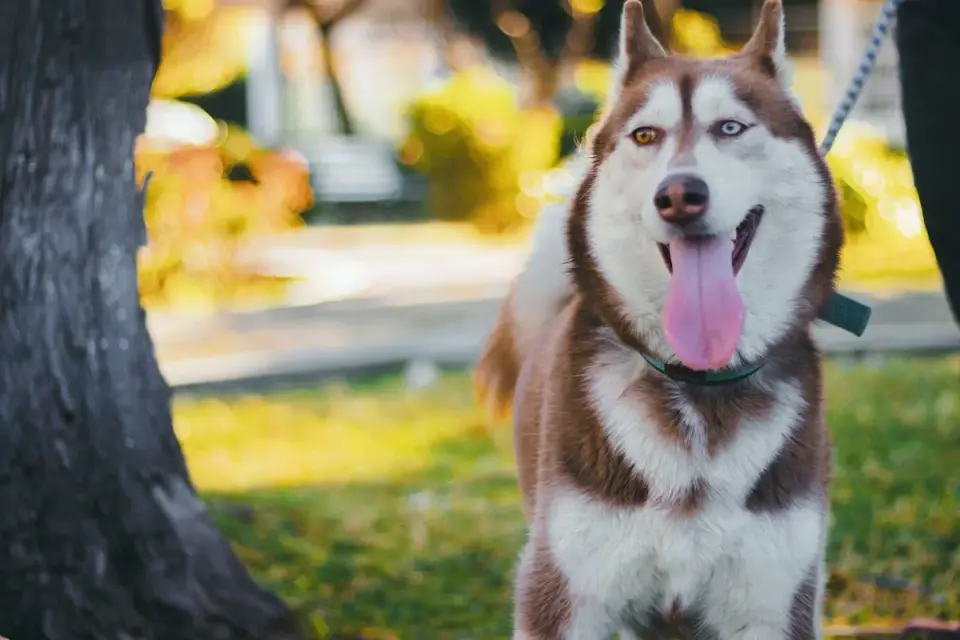
If the panting turns distressed, the gums look brick-red or bluish, or your dog seems wobbly, disoriented, or collapses, treat it as an emergency: cool first, then drive. A study in Veterinary Sciences on how dogs are cooled in the real world found that pouring cool water over the dog — cold-water immersion for young, healthy dogs, or any water cooler than the dog paired with a fan or breeze for older and frailer ones — brings temperature down faster than the old habit of draping wet towels, which can trap heat against the body. Call the clinic while you cool so they are ready for you.
Older huskies, and dogs with less to spare
A senior dog, or one already managing another condition, has less margin on a hot day, and this is where comfort-first planning earns its keep. If you are already tending an older husky’s stiff joints or the slower pace that comes with age-related decline, summer heat is one more load on a body that has less to give. For these dogs, favor the gentler evaporative approach — cool water and a fan — over an icy plunge, keep outings short and early, and let go of the exertion that used to be routine. The point is to keep an aging dog comfortable through the season, not to prove he can still do what he managed at three.
The bottom line: keep a thick-coated dog in shade and moving air, learn the early warning signs, and treat each hot day as a question of comfort rather than a problem to fix once.
Frequently asked questions
What temperature is too hot for a husky?
There's no single cutoff, because humidity and exertion matter as much as the thermometer. Many huskies begin to struggle as it climbs into the 80s Fahrenheit, and a humid 80 can be harder than a dry 90. Watch the dog, not just the forecast: heavy panting that won't settle means it's too hot for whatever he's doing.
Should I shave my husky in summer?
Generally no. The double coat insulates against heat as well as cold and protects the skin from sunburn, so shaving can leave a husky more vulnerable rather than cooler. Brush out the dead undercoat instead so air can move through the coat.
Do cooling mats and vests actually work?
They can help as part of a bigger routine, but none replaces shade, airflow, and water. Cooling mats give a cool surface to lie on until they warm through; evaporative vests and wet-downs work best with a breeze or fan. Treat gear as a layer on top of the basics, not a substitute for them.
How do I cool an overheating husky quickly?
Move him to shade or air conditioning and pour cool water over him, including down to the skin, while a fan or breeze moves air across the wet coat. For a young, healthy dog, cool-water immersion works well; for older or frail dogs, use cooler water plus airflow. If he seems distressed, cool first and head to the vet.
Sources
- Summer heat safety tips for dogs — Cornell University College of Veterinary Medicine
- Incidence and risk factors for heat-related illness (heatstroke) in UK dogs under primary veterinary care in 2016 — Scientific Reports
- Warm weather pet safety — American Veterinary Medical Association
- Cooling Methods Used to Manage Heat-Related Illness in Dogs Presented to Primary Care Veterinary Practices during 2016-2018 in the UK — Veterinary Sciences