
On this page
The porch door bangs at 9 p.m., thunder rolls an hour later, and the 4-year-old, 62-pound Lab mix I am thinking about starts pacing between the couch and the back door. Panting. Licking his lips. Not destructive, just unable to settle. His owner asks what she asked me to answer here: does valerian root actually do anything, or is it just a hopeful label?
That question decides the whole plan tomorrow. If the dog can still eat, respond to cues, and lie down between noises, a mild calming aid plus training may be enough. If he cannot, no herb will carry the night.
What valerian is supposed to do in a dog
Valerian root comes from Valeriana officinalis. In people it has a long history as a sleep and tension herb, and the proposed action involves GABA signaling and general sedation. That sounds promising until you handle real dogs.
Sedation is not the same as reduced fear. A groggy dog can still be afraid. For conditioning, performance, and day-to-day care, I want normal function supported — the dog notices the trigger and recovers — not a dog that is simply drowsy.
The honest framing is narrow. National Institutes of Health Office of Dietary Supplements reviews valerian for sleep and notes mixed human results and safety cautions, which matters because dog-specific dosing trials are even thinner.
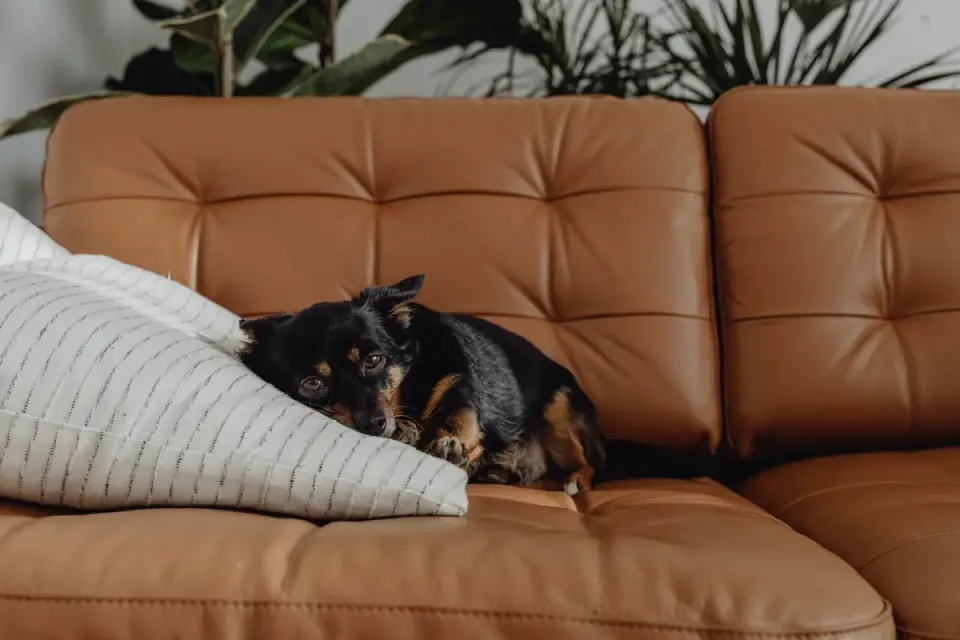
That 62-pound Lab got a test run on a quiet weeknight, not on the Fourth of July. His owner gave the product as directed, did ten minutes of place training, then lights low and no fetch. By day 10 he was settling about twenty minutes faster on calm evenings, still panting through real thunder. That split tells you what valerian can and cannot do.
What dog research actually shows
Here is the gap owners miss. We do not have strong randomized trials proving valerian reduces clinical anxiety in dogs.
A recent Biomedicines review put it plainly: “For the remaining species, evidence is derived mainly from preclinical studies or traditional use.” In other words, much of the support for herbs like valerian comes from laboratory work, other species, or long traditional use — not from controlled dog anxiety studies.
Traditional use still counts for something. Chamomile and valerian have that history, often described as “Chamomile and Valerian Root have been used in traditional herbal care to support relaxation.” I read that as support for mild restlessness, not treatment for panic.
My failed-approach story fits here. A 6-year-old, 38-pound border collie mix with true separation anxiety — howling within five minutes of departure, door scratching, no eating when alone — got valerian from a neighbor for three weeks in. Nothing changed on camera except she yawned between howls. We stopped pretending a chew would fix isolation distress and moved to alone-time shaping, a covered crate test, and a vet visit about daily medication. For context on that fork in the road, I often point owners to Gabapentin vs. Calming Chews for Dog Anxiety: When Each One Actually Fits and Reconcile (Fluoxetine) vs. Calming Chews for Dog Separation Anxiety: Which One Your Dog Actually Needs.
Valerian will not retrain an emotion.
Where I still use it, and where I stop
Stronger calming evidence in other ingredients does not transfer to valerian. Ashwagandha, for example, has human trial data summarized in a Cureus systematic review which concluded that “A systematic review analyzed multiple RCTs and concluded that ashwagandha has a moderate positive impact on stress reduction and cognitive performance.” That is useful context for multi-ingredient chews. It does not prove valerian works.
L-theanine is another comparison owners ask about. A large Molecular Psychiatry review noted “except for one study on psychotic anxiety (SMD = 0.54; 400 mg/day for 8 weeks)” — a human dose finding that should not be copied to dogs. The point stands: read the species and the dose before you borrow a result.
I keep valerian for one lane.
Mild evening restlessness, travel settling, or post-exercise wind-down in an otherwise healthy dog, paired with exercise, training, and a predictable rest spot. I stop using it for panic, escape attempts, aggression with fear, or any anxiety that keeps getting worse. Those dogs need a full exam and a behavior plan first.
The edge case that changed my advice involved a 9-year-old, 18-pound senior terrier who seemed anxious at night. Pacing. Whining. By week two the owner wanted a stronger herb. Bloodwork showed pain and early cognitive change, not a valerian deficiency. We added joint support, a night light, a low-sided bed, and checked in about sleep aids like those covered in Melatonin for Dogs: What It Actually Does, and Where I Draw the Line. Her night waking dropped from four times to once. Environment and medical care did what no root could.
Make no promise the working-dog data will not back. Track what you see. Appetite, latency to lie down, recovery time after a noise. If there is no clear change in two to three weeks, stop and reassess.
For crate setup around any calming plan, see Wire Crate vs. Covered Crate for a Dog With Anxiety: Which One Actually Helps It Settle?.
My call after the evidence
Valerian is a reasonable low-stakes trial for mild unease. It is not a proven treatment for dog anxiety.
Buy standardized products, follow label directions, tell your vet about all sedatives and behavior drugs, and skip it before surgery or with liver disease unless your vet approves. Then judge by behavior, not hope.
Sources
- Valerian Fact Sheet for Health Professionals — National Institutes of Health Office of Dietary Supplements
- Herbal Interventions Review — Biomedicines review
- Ashwagandha Systematic Review — Cureus systematic review
- L-Theanine Evidence Review — Molecular Psychiatry review