
On this page
A 9-year-old, 62-pound Labrador retriever named in my notes only as “the yellow lab from the lake house” came in for a recheck in late July, three weeks after his owner noticed he’d started leaving a quarter of his dinner in the bowl. His owner’s first thought was arthritis pain. Mine was simpler: the thermometer that week had not dropped below 90°F after 6 p.m., and his kennel run had no shade until nearly 8. He was drinking normally, still enthusiastic about a walk once the sun dropped, and had lost exactly zero pounds by the following visit. That combination — mild, gradual, temperature-tracking, everything else normal — is the signature of heat-driven appetite loss, not disease.
What heat actually does to the appetite
Here’s the mechanism, and it matters because it tells you what to watch rather than what to assume. Dogs don’t cool themselves the way we do. They have sweat glands only in their paw pads, so the primary cooling tool is evaporative heat loss through panting (Cornell University College of Veterinary Medicine). A normal body temperature sits between 100.5°F and 102.5°F, and true heatstroke begins around 105°F — a narrow margin the body works hard to protect.
Digestion is metabolically expensive. Breaking down and absorbing a meal raises core temperature for hours afterward, a cost the body pays gladly in cool weather but resents in heat. When ambient temperature climbs, blood flow shifts toward the skin and respiratory surfaces to support panting and shed heat, and away from the gut. Appetite drops as a downstream consequence of that redirection, not as an independent decision the dog is making. It’s a thermoregulatory tradeoff, not a preference.
That’s the piece I want owners to sit with: a modest drop in food intake during a heat wave is often the body correctly refusing to generate more heat than it can dissipate. Trying to override that by encouraging a full meal at 7 p.m. in July can work against the dog’s own cooling strategy.
The counterargument, and why I still say let intake dip
The obvious pushback: shouldn’t a dog eat every calorie it’s given, especially if it’s active, aging, or already lean? I take this seriously — under-eating in a senior or thin dog is a real risk I don’t wave off. But the evidence for forcing full portions during genuine heat is thin, while the physiologic cost of digestion-generated heat is well established. My position, and it’s a deliberate one: I’d rather let a healthy adult dog eat 10–20% less on the hottest days, offered in two smaller meals instead of one large one, than push a full bowl against a system that’s trying to cool itself down. Where I part ways with a stricter “always finish the bowl” camp is that I don’t think this is a hill worth defending in July.
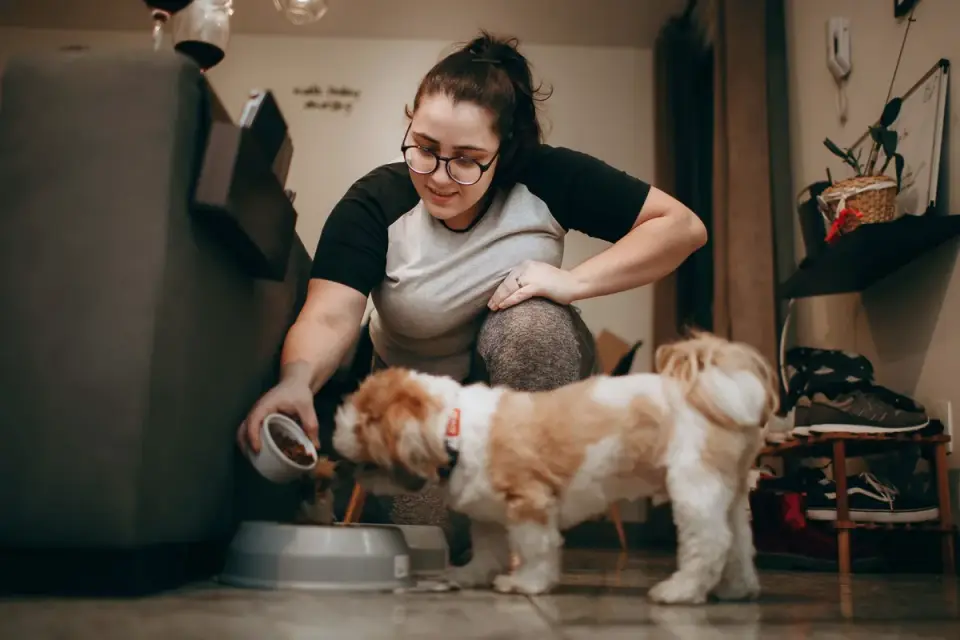
The exception that changes the calculus: a 4-year-old French Bulldog I saw in early August was also eating less, also in hot weather, and the owner assumed the same benign pattern. But this dog was also panting heavily indoors with air conditioning running, had lost 1.5 pounds over 10 days, and was reluctant to lie flat. Brachycephalic anatomy blunts the panting mechanism itself, so the “normal heat appetite dip” reasoning doesn’t transfer cleanly — for a flat-faced breed, the same signs that would be reassuring in a Labrador are a reason to call the clinic that day, not wait out the season.
When reduced eating isn’t about the weather at all
Not every summer appetite drop is thermoregulation working as intended, and this is where I want to be direct rather than reassuring. Weight loss, lethargy that doesn’t lift once the temperature drops in the evening, vomiting, or diarrhea alongside reduced intake point somewhere else. One condition worth naming specifically because it’s underdiagnosed and easy to misread as “just picky in summer”: exocrine pancreatic insufficiency. EPI causes poor nutrient absorption regardless of season, and management centers on three pillars — pancreatic enzyme replacement therapy, nutritional adjustment toward low-residue, moderate-fat diets, and cobalamin supplementation when levels are low (JAVMA). A dog losing weight while eating less in July doesn’t have a heat problem; it has a workup pending.
Fiber quality also deserves a mention here, because owners often reach for dietary tweaks when appetite dips and not all fiber sources serve the same purpose. Pumpkin fiber, for instance, is a gentle, natural source of both soluble and insoluble fiber, useful for firming stool or easing mild GI upset without adding significant caloric load during a season when you’re already trimming portions.
The check I actually recommend
If you’re deciding whether to trim your dog’s food this summer, don’t guess — measure. Weigh your dog monthly during hot months using the same scale, and compare against a body condition score rather than eyeballing the ribs. A 5–10% reduction in a healthy adult’s daily calories, split across two cooler-hour meals (early morning and evening, avoiding midday heat), is a reasonable, evidence-consistent adjustment for most temperate-climate dogs during a genuine heat spell. It is not a reasonable adjustment for puppies, pregnant or nursing dogs, working or high-activity dogs, or any dog already losing weight unintentionally — those cases need calories, not less of them, and a heat-related excuse shouldn’t delay a vet visit if the pattern doesn’t fit.
Owners managing a senior dog’s appetite through a seasonal transition may also find it useful to look at how to change food for a senior dog more broadly, since heat is often just one of several variables competing for a dog’s appetite at that life stage. And because summer often means more outdoor scavenging opportunities, it’s worth a refresher on why onions are never safe for dogs and what actually happens with fruit like apples or blueberries if you’re using cool, hydrating treats to coax a hot-weather appetite along.
Where this leaves you
Heat-driven appetite loss is real, mechanistically explainable, and usually not worth fighting. The dog that eats a little less on a 95°F day, drinks normally, and perks back up at dusk is behaving exactly as a well-regulated thermoregulatory system should. The dog that’s losing weight, panting excessively at rest, or a brachycephalic breed showing any of those same signs is telling you something different, and the season isn’t the explanation. Watch the trend, not the single meal, and let the scale — not the bowl — settle the argument.
Frequently asked questions
How much less should I feed my dog in hot weather?
For most healthy adult dogs, a 5–10% reduction in daily calories during a genuine heat spell is reasonable, split into two smaller meals in the cooler parts of the day. This isn't a rule for puppies, pregnant dogs, working dogs, or any dog losing weight unintentionally.
How do I know if my dog's reduced appetite is heat-related versus a medical problem?
Heat-related appetite dips are mild, gradual, and track with temperature — the dog stays hydrated, active once it cools down, and holds its weight. Weight loss, lethargy that doesn't lift in the evening, vomiting, or diarrhea point to something that needs veterinary evaluation, not a summer adjustment.
Sources
- Heatstroke: A medical emergency — Cornell University College of Veterinary Medicine
- Exocrine pancreatic insufficiency treatment review — JAVMA