On this page
Small dogs burn through energy quickly, cool down faster, and carry that energy on a frame built to a different scale than a Labrador’s. That physiology, not their footprint on the couch, is what should shape how you exercise them.
Small is a different machine, not a smaller one
A Chihuahua and a Great Dane share a skeletal blueprint, but the small-breed version runs hotter and closer to its limits. A higher surface-area-to-mass ratio means toy dogs shed heat quickly and, in very young or very small puppies, deplete blood glucose quickly too, which is why over-activity with a long gap between meals can tip a toy puppy toward hypoglycemia. Their kneecaps sit in shallower grooves. Medial patellar luxation, where the patella slips toward the inside of the leg, is far more common in small and miniature breeds than in large ones, and a primary-care study of dogs in England placed the Pomeranian, Chihuahua, and Yorkshire Terrier at roughly five to six times the odds of the average dog against an overall prevalence near 1.3 percent. Many of those same breeds also carry weaker tracheal cartilage, so pressure at the throat matters in a way it rarely does for a big dog. Sound exercise for a small dog is exercise that respects those three facts.
Little and often, not long and hard
For most healthy adult small breeds, something on the order of 30 minutes of activity a day covers the bases, and it does not have to arrive in one block. Two or three short walks, a few minutes of indoor fetch down a hallway, and a play session on carpet add up to the same physiological stimulus with far less orthopedic load. Duration is the easy number to chase. The more useful question is what kind of movement you are asking for. Fifteen minutes of loose, sniffy ambling is a genuinely different demand than fifteen minutes of skidding after a ball on hardwood, and the second one is where small dogs tend to get hurt.
What the anatomy rewards, and what it punishes
Favor low-impact, self-paced movement: level walks on grass or dirt, gentle inclines, swimming for dogs who take to water, and short bursts of chase where the dog controls the stops. Be cautious with the activities that load a small joint suddenly or repeatedly, such as long leaps off couches and beds, hard landings from a raised throw, tight twisting turns, and repetitive stair sprints. None of these are forbidden, but each concentrates force on a small patella or a growing limb, and repetition is the real risk factor.
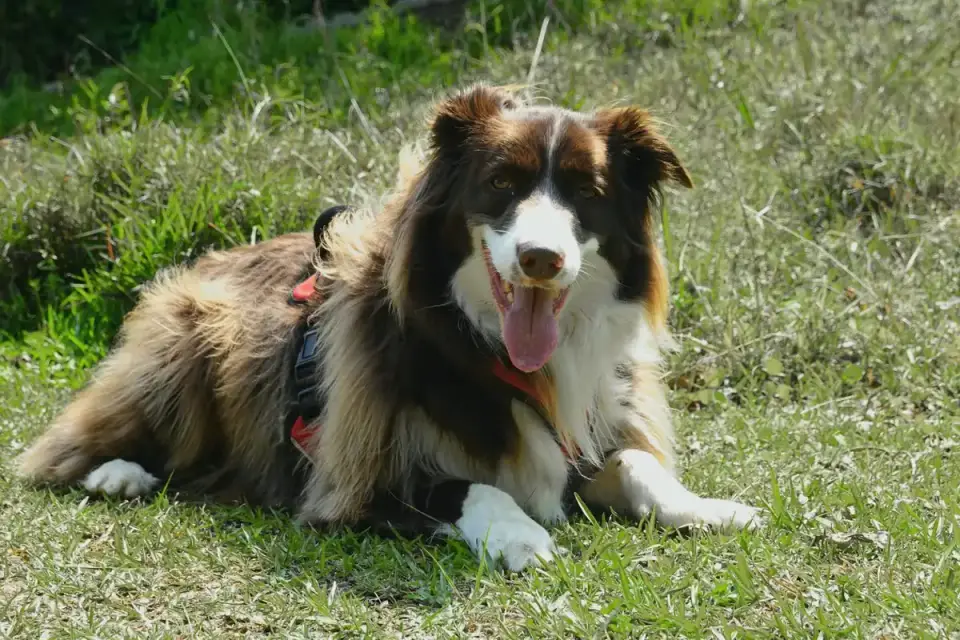
Walking gear belongs in the same conversation. For breeds prone to tracheal collapse, among them Yorkshire Terriers, Pomeranians, and Toy Poodles, a well-fitted harness rather than a neck collar keeps leash force off the windpipe and removes one mechanical trigger for the honking cough that marks the condition. It does not treat the disease. It takes a known aggravator away.
The half of exercise you cannot see
Physical fatigue and mental fatigue are not the same currency, and small dogs often need the second one more than a longer walk. Scent is the lever. Letting a dog work a trail of smells on a walk, scattering kibble in the grass to forage, or feeding a meal out of a puzzle toy turns a few minutes into real cognitive work and settles many dogs more reliably than pavement miles do. For a Maltese who has already had two short walks, a food puzzle is often a better third outing than another lap around the block. This matters most on the days when weather, a recovering joint, or a heat-sensitive flat-faced dog rules out much time outside.
Puppies and seniors change the rules
Growth plates in toy and miniature breeds typically close around six to eight months, and until they do, twisting, jumping, and repetitive hard-surface impact carry more risk to developing bone. The often-repeated five-minutes-per-month-of-age rule is a rough heuristic, not an evidence-based limit; veterinarians who have examined it note that it has little scientific backing and that the type of activity matters more than a strict count of minutes. Free, varied movement on soft ground is fine and probably protective, while forced roadwork and ball-launcher repetition are the things to defer. Toy puppies also need food on the near side of hard exertion, since a long fast before vigorous play is a classic setup for hypoglycemia. Senior small dogs swing the other way and do best with shorter, more frequent outings, a warm-up before anything brisk, and honest attention to arthritis so they keep moving without soreness.
Building a week that fits the dog
A workable rhythm for a healthy adult might be two daily walks the dog actually sets the pace on, one or two short indoor games, and a daily dose of nose or puzzle work, scaled down on hot days and around any limp. Watch the dog, not the stopwatch. Persistent coughing, a skipping hind-leg gait, reluctance the next morning, or fading stamina all warrant a conversation with your veterinarian rather than a push through the session. Good exercise should leave a small dog pleasantly tired, not sore.
Frequently asked questions
How much exercise does a small breed dog need each day?
Most healthy adult small dogs do well on roughly 30 minutes of activity a day, split into a few short sessions rather than one long walk. Puppies, seniors, and flat-faced breeds usually need less, and needs vary with age and health, so confirm the right amount with your veterinarian.
Is a harness or a collar better for exercising a small dog?
For toy and small breeds prone to tracheal collapse, a well-fitted harness keeps leash pressure off the windpipe and removes a known trigger for the honking cough that marks the condition. A harness does not treat the disease, but it takes one aggravating factor off the table.
Can I take my small breed puppy jogging?
Not until the growth plates close, which in toy and miniature breeds is usually around six to eight months. Free, varied play on soft ground is fine and likely beneficial; repetitive hard-surface running and high jumps are the activities to postpone until a veterinarian confirms the plates have closed.
What indoor exercise works for small dogs?
Hallway fetch, carpet chase games, tug, and scent or puzzle-feeder work all count. Nose work in particular tires many small dogs mentally, which often settles them more reliably than adding walking distance, and it is a good option on hot days or when a joint is recovering.
Sources
- Patellar Luxation in Dogs and Cats — Merck Veterinary Manual
- The epidemiology of patellar luxation in dogs attending primary-care veterinary practices in England — Canine Genetics and Epidemiology (O'Neill DG et al., 2016)
- Tracheal collapse — Cornell University College of Veterinary Medicine, Riney Canine Health Center
- Hypoglycemia in Dogs: Signs, Symptoms, and Treatments — American Kennel Club
- Is there actually evidence that too much exercise is bad for puppies' joints? — Vet Help Direct (Rebecca MacMillan, BVetMed MRCVS)
- How Much Exercise Does a Dog Need? — American Kennel Club