
On this page
It is 10 p.m. and the house is dark, except for the nails clicking down the hallway again. A four-year-old, 62-pound mixed-breed dog paces from bed to door to window, pants lightly, settles for thirty seconds, then gets up to reposition. Her owner is exhausted and worried she is missing pain, anxiety, or simply a habit that has hardened over three weeks of broken sleep. That pattern — wired body, tired owner — is where a bedtime routine has to start, not with a chew but with what the nervous system has learned to expect at night.
From a neurology perspective, restlessness at night is arousal that never downshifted. Dogs cycle between light sleep and deeper sleep, and transitions are vulnerable moments when noise, light, bladder pressure, pain, or daytime under-exercise can push them back awake. From a whole-patient perspective, I also look at the day that preceded it: late meals, evening wrestling on the couch, inconsistent bedtime, and a sleeping spot that is too warm, too exposed, or too close to household traffic.
My position is straightforward. A consistent, low-stimulation evening sequence does more for restless sleepers than any single supplement, because it trains the autonomic shift toward rest while you address medical contributors. Calming ingredients may help support relaxation alongside that routine, although the strongest counterargument deserves weight: if pain, cognitive change, urinary urgency, or true separation distress is driving the waking, no routine or botanical will hold without diagnosis and targeted care.
When restlessness is learned, and when it is medical
Before building the routine, separate habit from signal. Learned restlessness tends to look the same nightly — pacing, nudging, asking to go out then sniffing rather than eliminating — and improves within days once evenings become boring and predictable.
Medical restlessness looks different. New waking in a senior dog, vocalizing, panting without heat, stiffness on rising, house-soiling, excessive thirst, or itching through the night points toward pain, lower urinary tract disease, gastrointestinal discomfort, pruritus, or cognitive dysfunction. Those dogs need an examination first.
Routine still helps while you work that up.
The last hour matters more than bedtime itself
Think of the final 60 to 90 minutes as a dimmer switch. Keep dinner at the same time, ideally at least two to three hours before bed so digestion and a final potty break are complete. Follow with a short sniff walk rather than fetch or tug, then inside lights low, voices low, screens dimmed.
Give the dog the same order every night: potty, brief gentle handling or Tui-na style stroking along the shoulders and ribcage, then bed. Dogs learn sequences quickly, and predictability itself may help support calmer transitions because the brain stops scanning for what comes next.
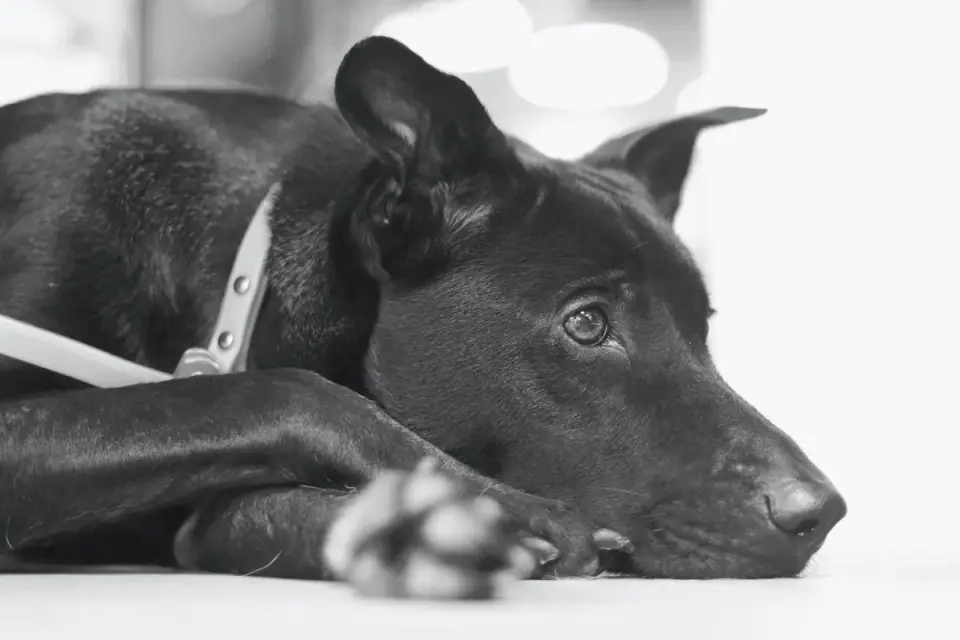
A seven-year-old, 28-pound beagle mix shows how easily this goes sideways. His owners, trying to tire him out, added a vigorous 9 p.m. ball session followed by a stuffed Kong on the couch and then lights-out at 11 p.m. For ten nights his midnight pacing worsened, with whining at 2 a.m. and scratching at the bedroom door. The tradeoff was classic: more evening exercise felt productive, yet high arousal that close to sleep kept his sympathetic tone elevated. When they moved active play to late afternoon and kept the last hour quiet, his first uninterrupted stretch lengthened by day 10, although he still woke briefly when the furnace kicked on.
That failed approach is common. Tiring a dog right before bed rarely creates sleepiness; it creates a fitter, more alert night pacer.
Set the sleep space for a nervous system, not a photograph
Choose one consistent sleeping spot and protect it. Most restless dogs do better on a washable orthopedic bed in a corner or crate with the door open, away from windows and foot traffic, with white noise to blur household sounds. Keep the room cool, dark, and familiar — same blanket, same location, same cue word such as bedtime.
Avoid inviting the dog up and down from furniture through the evening. Each change of place is a micro-arousal. If your dog prefers proximity, place their bed beside yours rather than alternating between rooms.
Sleep is nervous-system work.
What calming ingredients may — and may not — add
Once the routine and medical screen are in place, some owners ask about calming chews or teas used in the evening. Keep expectations bounded. Chamomile and Valerian Root have been used in traditional herbal care to support relaxation, which describes traditional use rather than proof of sedation in dogs. That distinction matters, because a Biomedicines review cautions that “For the remaining species, evidence is derived mainly from preclinical studies or traditional use.”
Other ingredients are studied primarily in people. L-theanine is an amino acid found in tea that has been studied for its calming properties, and human data remain limited and dose-specific, “except for one study on psychotic anxiety (SMD = 0.54; 400 mg/day for 8 weeks)” described in Molecular Psychiatry. Ashwagandha has broader human literature; a Cureus systematic review found that “A systematic review analyzed multiple RCTs and concluded that ashwagandha has a moderate positive impact on stress reduction and cognitive performance.” None of those sentences translate directly into a bedtime dose for dogs.
My practical rule folds a modality in without overstating what it fixes: use a single, well-labeled evening product only as a routine anchor — given at the same time, with the same cue — and judge it by observable sleep latency and night wakings over two to three weeks, not by morning grogginess. For broader context on matching ingredients to age and trigger, see Dog Calming Chews: A Vet’s Guide to What Actually Helps, Stage by Stage and Chamomile vs L-Tryptophan for Calming Dogs: Which Works, and Why the Best Chews Use Both.
A sample 90-minute sequence you can copy
Start with medical clearance if waking is new, severe, or paired with other signs. Then run the same script for at least 14 nights before judging it.
Evening walk and potty 90 minutes before bed, on leash, mostly sniffing. Light dinner already finished earlier. Inside, five minutes of calm body handling, then chew or quiet licking activity in the sleep spot if your veterinarian agrees it fits your dog. Lights low, house quiet, same bedtime cue. Overnight waking gets a boring potty trip on leash with no play, then straight back.
If anxiety is event-specific rather than nightly, timing changes; comparison pieces such as Gabapentin vs. Calming Chews for Dog Anxiety: When Each One Actually Fits can help frame that conversation with your veterinarian.
An 11-year-old, 45-pound senior dog illustrates the edge case owners miss. Her bedtime pacing began three weeks after a move, and the routine helped for the first hour — she settled by 11 p.m. — yet she still woke at 3 a.m. to drink and urinate. That split response changed the plan: evening calm had addressed learned arousal, but the second-half waking signaled a medical pattern that needed urinalysis and pain assessment rather than a stronger chew. Restless nights often contain two problems wearing one label, and the clock tells you which is which.
Where this leaves you
Prioritize consistency over intensity: same feeding time, same sniff walk, same handling, same bed, same cue. Screen for pain, urinary, gastrointestinal, skin, and cognitive contributors when waking is new or fragmented. Add calming support, if at all, as a modest adjunct to the sequence rather than the mechanism itself.
That combination — nervous-system timing beside whole-patient pattern — is what most often returns sleep to both ends of the leash.
Frequently asked questions
How long should I try a bedtime routine before it works?
Run the exact same sequence for 14 nights. Most habit-driven pacers show shorter sleep latency within 7 to 10 days; persistent 2 to 3 a.m. waking despite a calm first half suggests a medical check.
Should evening exercise tire my dog out before bed?
No. Move vigorous play to afternoon and keep the last 60 to 90 minutes low-arousal with a sniff walk, potty, and quiet settling. Late high-energy play often increases night waking.
Can calming chews replace a routine?
They work best as a timed anchor inside a consistent sequence, not as sedation. Judge them by fewer wakings over two to three weeks and discuss ongoing use with your veterinarian, especially for seniors or dogs on medication.
Sources
- Herbal approaches for anxiety and related disorders — Biomedicines
- Ashwagandha for stress and cognition systematic review — Cureus
- L-theanine and anxiety outcomes meta-analysis — Molecular Psychiatry