On this page
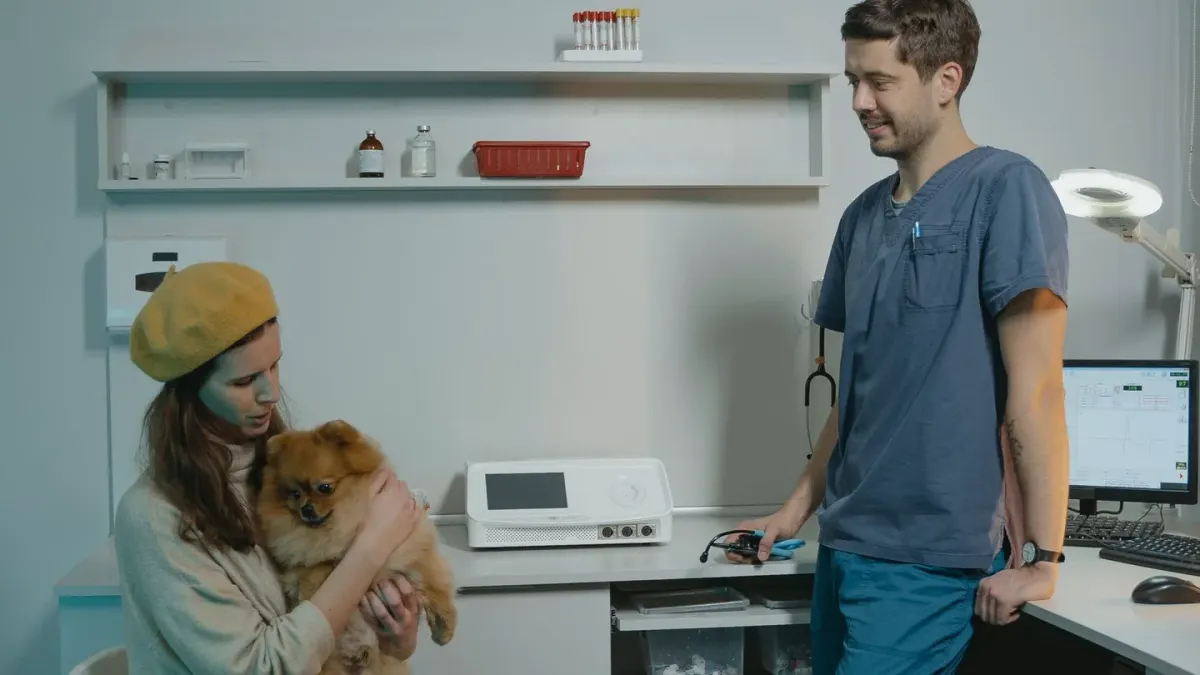
Most dogs are not afraid of medicine. They are afraid of being cornered, held still, and handled by strangers in a room that smells of other anxious animals. That distinction matters, because handling and predictability are exactly the things you can rehearse long before the appointment.
Start early, and the exam stops feeling like an ambush.
Your prep checklist
- Practice touch at home — paws, ears, mouth, and a gentle collar hold — for a few seconds, then a treat. Let your dog walk away whenever they want.
- Make the car and the carrier ordinary and rewarding, not just the thing that comes before needles.
- Book a “happy visit”: walk in, take a treat from the front desk, walk out. No exam.
- Bring high-value treats the morning of, and shrink or skip breakfast so those treats actually matter.
- Ask for the first or last slot to avoid a crowded lobby, and wait in the car until the room is ready.
- Stay in the room and keep yourself calm — your dog reads your body before the vet touches them.
- Tell the team what scares your dog, and ask about a basket muzzle, a calming cap, or pre-visit medication if fear runs high.
- If your dog flinches at handling that never used to bother them, ask the veterinarian to check for pain.
Weeks out: teach handling before you need it
The exam is mostly touch — paws lifted, ears looked into, mouth opened, a hand on the belly. You can make each of those familiar at home. Cornell University College of Veterinary Medicine recommends briefly handling paws, ears, and mouth while rewarding with treats, and always letting the dog choose to walk away. Never force it. Forcing a nervous dog to accept touch teaches the opposite of what you want.
Then borrow the clinic itself. A “happy visit” is a short, no-exam trip — treats in the parking lot, then a step through the door, then a biscuit from a staff member — so the building predicts good things instead of one bad afternoon.
The week before: logistics and a plan for fear
Sort the boring parts now. Practice loading into the car or carrier for a treat and a short drive that ends somewhere pleasant. Call ahead and ask for a quiet appointment time. If your dog has struggled before, ask the veterinarian what to do about it — that conversation is the plan, not an afterthought.
Owners often ask about calming supplements here. Be honest about what they can do. A 2026 systematic review in Molecular Psychiatry pooled 31 human trials of L-theanine and found the anxiety effects were mostly inconsistent, and canine data are thinner still — so treat a supplement as a small, uncertain edge, not a fix. Pheromone products and pre-visit anti-anxiety medication exist too, but the medication is a decision to make with your veterinarian, matched to your dog.
The morning of: set the day up to go well
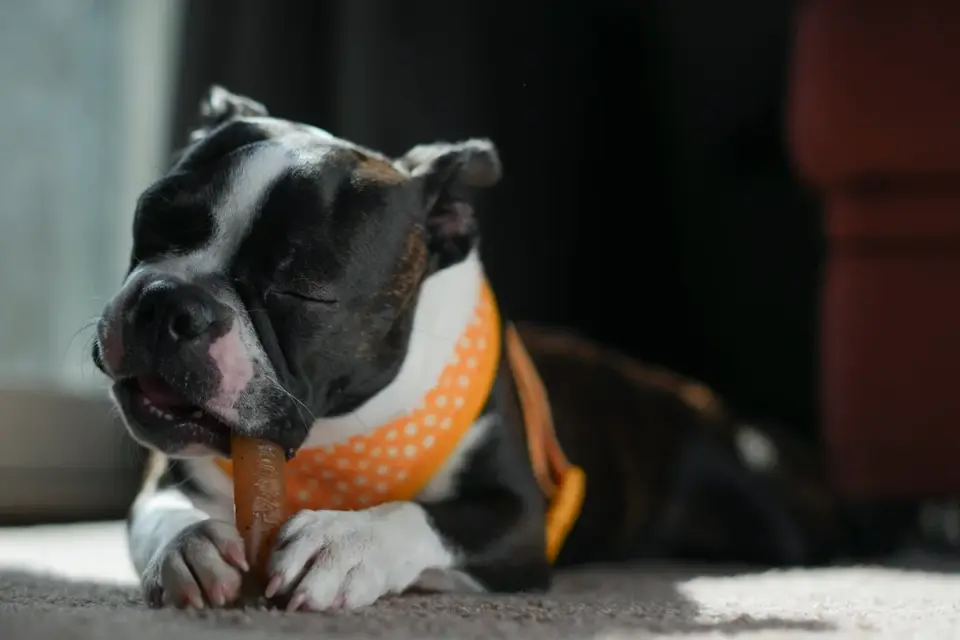
A long walk or a game of fetch first takes the edge off. Keep breakfast light or skip it, with your vet’s okay, so treats carry weight in the room. Pack something your dog loves — behaviorists writing for VCA Animal Hospitals suggest pea-size pieces of chicken or cheese, and note that any anxiety you feel travels straight down the leash. A frozen lick mat can carry a dog through a wait.
Keep your own voice level. Your dog is watching you for the verdict on whether this place is safe.
In the room: what actually lowers the stress response
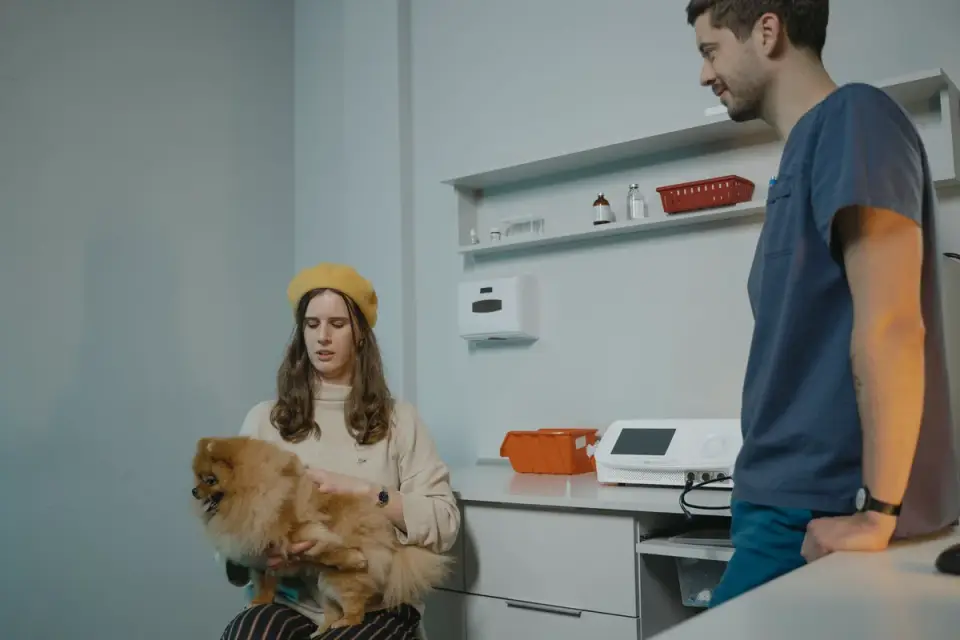
You are not just company in the exam room. In a crossover study published in Physiology & Behavior, dogs whose owners petted and talked to them during the exam had smaller rises in heart rate and eye-surface temperature — and tried to jump off the table less — than dogs whose owners sat silently nearby. So stay, and keep gently engaging your dog.
Ask for handling that fits your dog. The American Animal Hospital Association behavior guidelines set the standard plainly: use the least restraint that still gets the job done, and let the patient’s response set the pace. If your dog’s stress climbs too high, it is fair to pause, reschedule, or ask about sedation for the procedure.
Reading your dog, and the senior-dog angle
Fear at the vet is common and, once you know the signs, easy to read. In a clinic study reported in The Veterinary Journal, 78.5% of 135 dogs showed fearful behavior on the exam table, and roughly one in eight had to be dragged or carried through the door. Watch for panting, trembling, a tucked tail, lip licking, and the whites of the eyes showing.
One thing owners miss: new fear can be pain. If an older dog suddenly resents a hip or paw being touched, ask for a pain check first — a sore joint turns routine handling into a threat, and our guide to joint supplements for senior dogs covers that side of care. Senior dogs also visit more often, and age-related cognitive change can make a known place feel newly strange; if that sounds like your dog, our overview of NAD+ for senior dogs is a useful companion read.
After the visit, keep the balance positive
End well. A treat, a favorite walk, a quiet ride home — anything that closes the day on a good note keeps the emotional account in the black. Then keep the happy visits going between appointments. Preparation is not a one-time cram before an exam; it is the small, steady deposits that make the next visit easier than the last.
Frequently asked questions
How early should I start preparing my dog for a vet visit?
Start weeks ahead if you can. Brief daily handling of paws, ears, and mouth, plus a couple of no-exam 'happy visits' to the clinic, give your dog time to build calm associations. Even a few days of handling practice with high-value treats beats no preparation at all.
Should my dog eat before a vet visit?
For most healthy dogs, keep the morning meal light or skip it so treats carry more value in the exam room, and pack soft, pea-size treats like chicken or cheese. Check with your veterinarian first if your dog is diabetic, very young, or on medication that must be given with food.
What if my dog is too fearful to examine safely?
Tell the veterinary team before the appointment. They can plan for a basket muzzle, a calming cap, extra treats, or pre-visit anti-anxiety medication, and pause or sedate for a procedure if your dog's stress climbs too high. Forcing a terrified dog through an exam usually makes the next visit worse.
Sources
- Fear-related behaviour of dogs in veterinary practice — The Veterinary Journal
- Behavioral and physiological reactions in dogs to a veterinary examination: Owner-dog interactions improve canine well-being — Physiology & Behavior
- 2015 AAHA Canine and Feline Behavior Management Guidelines — American Animal Hospital Association
- How to make veterinary visits less stressful for dogs — Cornell University College of Veterinary Medicine
- Reducing Fear of Veterinary Visits for Dogs — VCA Animal Hospitals
- Cognitive and affective effects of L-Theanine: a systematic review and meta-analysis of 31 randomized trials — Molecular Psychiatry