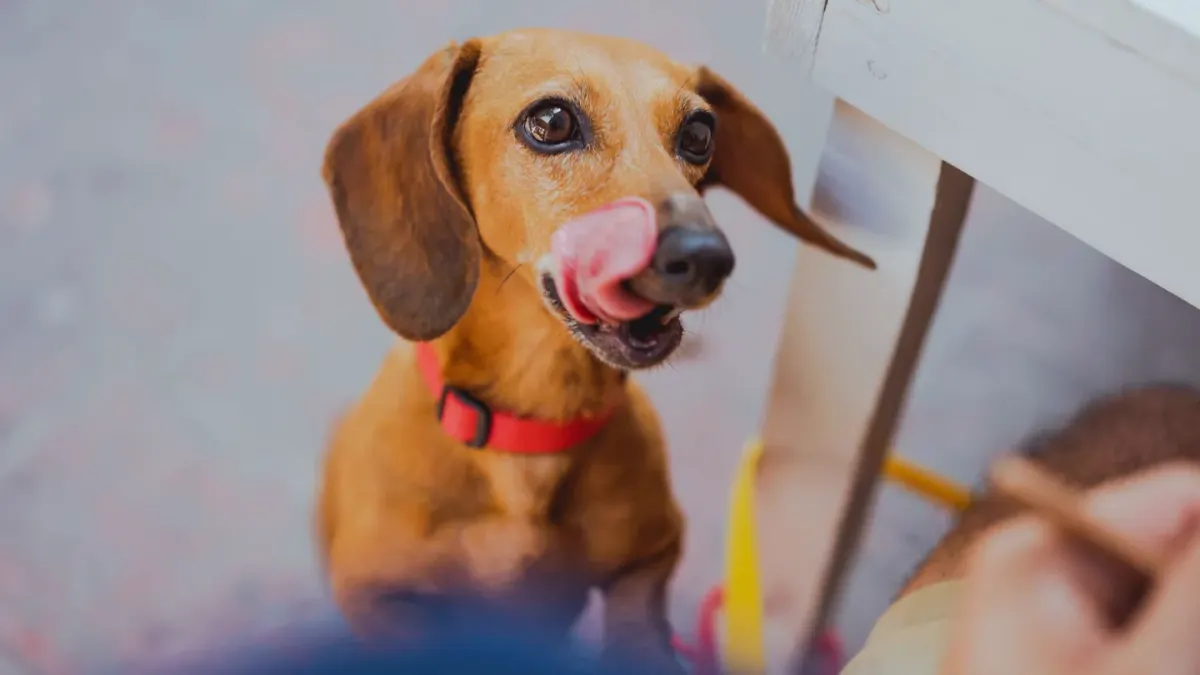
Heidi feeds Lino, her 2-year-old neutered male Belgian Malinois in Tyler, Texas, twice a day. He used to finish two cups in under a minute, then pace and swallow air. Vets often see this pattern in young, high-drive dogs. Excitement plus a deep bowl equals speed.
Start with the bowl. Swap the flat dish for a slow-feeder with wide ridges or a muffin tin with a few kibbles per cup. Spread wet food thin on a lick mat. Feed on a large tray so kibble scatters. These shapes force the tongue and nose to work for each bite.
Keep the change boring. Wash the feeder daily. Check that ridges do not scrape gums or trap a flat face. If the dog paws, flips, or panics, simplify the design. Frustration raises arousal and defeats the point.
How speed builds at mealtime
Fast eating is usually learned arousal. Hunger plus competition plus a big single meal teaches the nervous system to load fast. Sympathetic drive rises. Chewing drops. Air swallowing rises.
Think mechanism first. Chewing and sniffing engage vagal pathways linked to rest and digest function. Slow nasal work may help support a calmer transition into a meal. From a Traditional Chinese Veterinary Medicine view, practitioners describe this as supporting Spleen and Stomach rhythm through warm, regular feeding. Tradition is not proof. It is a useful reminder that routine matters.
Portion and timing shape drive. Divide the daily ration into two or three even meals. Measure with a scale or cup. Feed at the same times and in the same quiet corner. Ask for one sit, then release to eat. No hovering, no hand in the bowl, no other pets nearby.
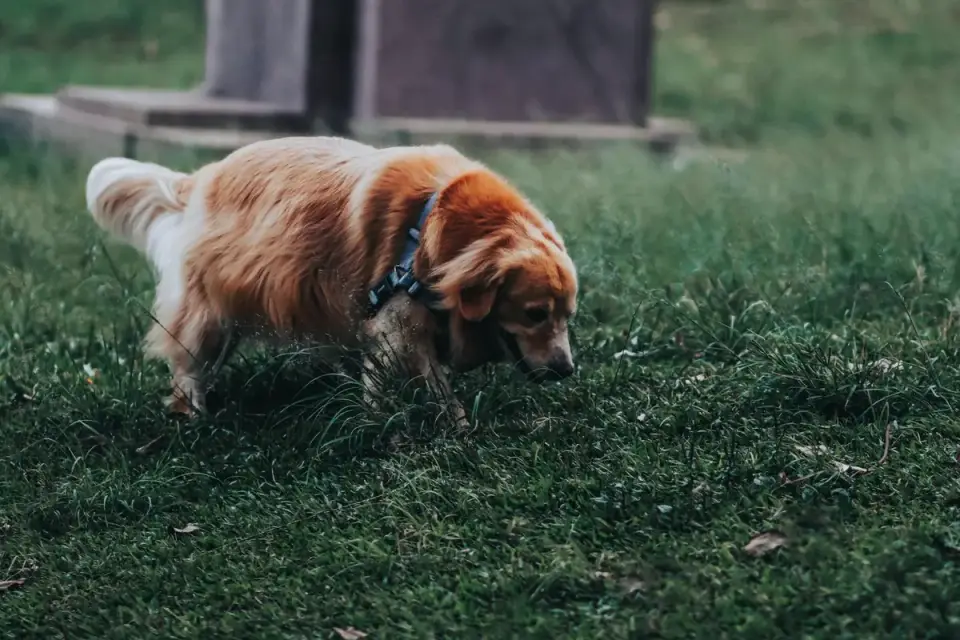
Set the bowl to do the work
Do this order.
Pick a feeder your dog can actually use. Shallow maze for long noses. Low-ridge disc for short muzzles. Snuffle mat for dry kibble only.
Add friction without adding much food. Soak kibble in warm water for 10 minutes, then spread it. Add a spoon of mashed banana or blueberries as a thin top layer to make licking slower. Keep extras small so total calories stay steady. If you use fiber-rich toppers often, read about why too much fiber can upset a dog’s stomach before you increase the amount.
Slow the room. Feed away from foot traffic. Use a non-slip mat. Give water before, not during, the frantic first minute. Pick up the bowl after 15 minutes.
Train the pause separately. Twice a week, hand-feed ten kibbles for eye contact, touch, and settle. Toss kibble in grass for a five-minute search. Short hunts may help support calmer bowl behavior because the nose sets the pace.
Food choice matters less than form. If you share produce, keep portions plain and small. See portion notes for bananas and blueberries for context on peels, sugars, and when to skip.
When slowing the bowl is the wrong plan
My core recommendation is simple. Change setup and schedule before you change diet or buy gear. Most healthy, eager young dogs slow by half once meals are smaller, spread out, and quiet.
That advice fails in one common situation.
Take Hana, a 6-year-old spayed female Coton de Tulear in Milwaukee, Wisconsin, owned by Earl. She was a tidy eater for years, then started gulping in about 90 seconds and asking for more. A harder puzzle feeder only raised her stress. She began leaving food, then vomiting foam once in a week.
Do not push through that pattern.
New speed, skipped meals, drooling, retching without vomit, a tight or swollen belly, restlessness after eating, or gulping tied to new stealing or guarding needs an exam first. Rapid eating with a distended abdomen can signal gastric dilatation-volvulus, which VCA Hospitals describes as an emergency where the stomach fills and may twist. Large, deep-chested dogs carry higher risk, and the Merck Veterinary Manual outlines the same urgent physiology for small animals.
Slow down, but do it gently.
Call your veterinarian promptly for sudden change, pain, bloat signs, weight loss, diarrhea, or resource guarding that escalates. Bring a 3-day log with meal times, amounts, finish times, and any vomit or stool change. Ask about dental pain, nausea, intestinal parasites, thyroid and behavior drivers before you add a harder feeder.
For most dogs, the win is quiet and repeatable. Smaller meals. Textured bowl. Same corner. Calm start. Speed fades when the body no longer needs to rush.
Sources
- Bloat - Gastric Dilatation and Volvulus in Dogs — VCA Hospitals