
On this page
It’s a Tuesday exam room, and the family in front of me has a laminated printout of “Labrador vs Golden Retriever” comparison charts. They’ve done their homework. What they haven’t done is figure out which trade-offs they can actually live with for the next decade-plus. That’s the conversation I have more than almost any other in my practice.
The question underneath the question
Most owners walk in asking about temperament, but temperament is rarely what breaks a household. Labradors and Golden Retrievers are both friendly, biddable, food-motivated dogs bred for the same job — retrieving game for hunters — and that shared history shows up in how easy both are to train. The real fork in the road is what you’re signing up to manage: coat maintenance, exercise load, and which set of breed-typical health risks you’re comfortable monitoring for thirteen-plus years.
I tell clients to stop comparing photos and start comparing chores and vet visits.
Coat and grooming: short and dense vs long and flowing
The Labrador’s coat is short, straight, and very dense, with a soft, weather-resistant undercoat — a design built for cold-water retrieving, according to the American Kennel Club: AKC breed standard. It sheds year-round and “blows” its coat seasonally, but it doesn’t mat and needs only a weekly brush-out for most owners.
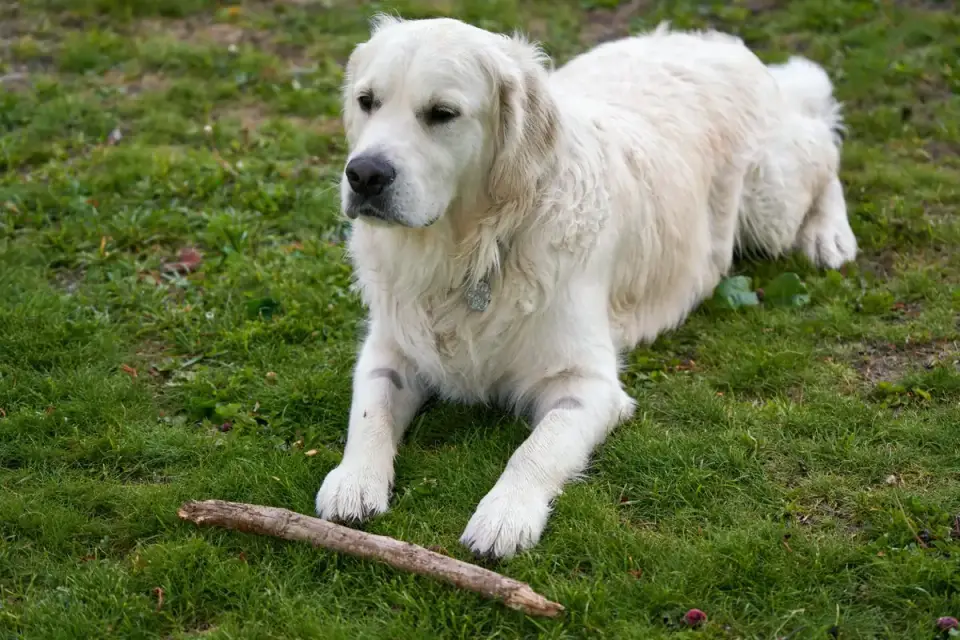
Golden Retrievers carry a longer, wavy double coat with feathering on the legs, tail, and chest. It looks glamorous in photos and it is genuinely more work: regular brushing to prevent mats, more frequent baths, and a grooming budget that Lab owners simply don’t have. If you dislike vacuuming or can’t commit to brushing two or three times a week during shedding season, that alone may settle the decision.
Exercise and energy: both need a job
Neither breed does well as a couch ornament. Both were bred as working retrievers and both need 45–60+ minutes of real exercise most days — running, swimming, or structured retrieving games, not just a lap around the block. Labs tend to run slightly more food-driven and can pack on weight fast if activity drops, so I watch body condition score closely at every visit with Lab owners. Goldens are a touch more likely to want to be doing something with you specifically, rather than just burning energy solo, which shows up as more separation-related fretting in some individuals.
If your household schedule genuinely can’t support daily vigorous exercise for a large, athletic retriever, neither breed is the right answer — that’s a bigger fork than which breed you pick.
The health trade-off owners underestimate
This is where I get more direct with clients than the cute breed comparison charts do. Golden Retrievers, as a breed, carry one of the highest documented lifetime cancer risks of any popular dog breed. The Golden Retriever Lifetime Study, Morris Animal Foundation’s ongoing cohort of more than 3,000 golden retrievers, has tracked cancer as the cause of roughly 75% of deaths recorded in the study cohort, with hemangiosarcoma, lymphoma, high-grade mast cell tumor, and osteosarcoma as the four cancers under closest watch. That’s not a scare tactic — it’s the reason I recommend twice-yearly wellness exams and a low threshold for bloodwork and imaging in Goldens past age seven, versus once-yearly for many Labs at the same age.
Both breeds are prone to hip and elbow dysplasia, and neither breed “wins” cleanly here. Reporting bias in voluntary OFA submissions likely understates true prevalence in both, a caveat raised in hip dysplasia data coverage from dvm360. Ask any breeder for OFA hip and elbow certifications on both parents, regardless of which breed you choose, and don’t accept “the vet said their hips looked fine” as a substitute for an actual OFA or PennHIP score.
One dog I followed for years was a stout, 78-pound yellow Lab named Beau who came in every August for his senior panel. His owners weighed the coat-care question early — they’d had a Golden mix before and were tired of the brushing — and picked Lab specifically for the shorter coat. What they didn’t anticipate was how much Beau’s weight crept up between visits once his hips started slowing him down around age nine; we spent two years adjusting food volume and adding short, frequent walks instead of one long one. It’s a reminder that whichever breed you choose, the health conversation doesn’t end at adoption — it just changes shape. If joint changes do show up, our guide to the best joint supplements for senior dogs walks through what actually has evidence behind it.
What I actually tell clients to prioritize
Stop ranking these breeds by cuteness or by which one you saw in a movie. Rank them by three concrete questions: Can you commit to the Golden’s grooming schedule, or do you need the Lab’s low-maintenance coat? Can your household deliver serious daily exercise regardless of which one you pick? And are you prepared to budget for more frequent cancer screening if you choose a Golden, understanding that Labs are not risk-free either?
For most working households I see — two adults with a standard 9-to-5, moderate but not extreme activity level, and a preference for predictable veterinary costs — I lean toward recommending the Labrador. It’s not because Goldens aren’t wonderful family dogs; they absolutely are. It’s because the cancer risk data is specific and well-documented, and I’d rather a family go in with clear eyes than fall for a coat color.
Nutrition and joint support matter either way
Whichever breed you choose, large-breed puppies benefit from controlled growth nutrition to protect developing joints, and senior dogs of both breeds benefit from weight management and joint monitoring. If you’re building out a senior dog’s diet, our guide on whether dogs can eat sweet potato safely and our piece on whether a dog can get too much fiber are both useful starting points once you’re managing an aging retriever’s weight and digestion.
The short version
Pick the Labrador if a low-maintenance coat and slightly lower average cancer risk matter more to you than a marginally softer temperament. Pick the Golden Retriever if you can commit to real grooming time and you’re willing to screen aggressively for cancer starting in the senior years. Either way, plan for twice-a-week exercise minimums, ask breeders for real OFA hip and elbow paperwork, and don’t let a coat photo make the decision for you — the dog you’ll be managing at year ten looks nothing like the puppy in the breeder photo.
Looking ahead, both breeds will likely keep benefiting from the kind of long-term cohort data the Golden Retriever Lifetime Study is generating — the more we learn about which environmental and genetic factors drive cancer risk, the better both breeds’ owners will be equipped to act early rather than react late.
Frequently asked questions
Which breed sheds more, the Labrador or the Golden Retriever?
The Golden Retriever generally requires more grooming due to its longer, feathered double coat, though both breeds shed year-round and blow their coat seasonally.
Is a Golden Retriever more likely to get cancer than a Labrador?
Golden Retrievers carry one of the higher documented lifetime cancer risks among popular breeds; the Golden Retriever Lifetime Study has tracked cancer as the cause of roughly 75% of deaths in its cohort, which is why more frequent senior screening is often recommended for Goldens.
Sources
- Official Standard for the Labrador Retriever — American Kennel Club
- Golden Retriever Lifetime Study — Morris Animal Foundation
- Recent OFA hip dysplasia data show changes in reported classifications — dvm360