
On this page
Mealtime should be one of the simplest, happiest parts of your dog’s day. For plenty of households, it’s the messiest one. Kibble skitters across the floor, water ends up flung a few feet from the bowl, and a dog who gulps or carries food off to a corner turns a tidy spot into a daily mop-up. If you’re standing there with a paper towel wondering whether a mat would actually fix any of this — and whether your dog is even comfortable while eating — those are the right two questions to start with.
A feeding mat solves a smaller problem than most product pages let on, and a different one than a tray does. Figuring out which mess you’re fighting is what tells you which to buy.
Mat or tray: which mess are you solving
Picture it as a spectrum. A flat mat is a placemat with grip. It stays put on tile or hardwood, gives your dog a stable, non-slip surface to stand on, and catches the crumbs and drips that land close to the bowls. What it doesn’t do is help with a dog who flings water sideways or bats kibble clear off the edge.
A tray — a mat with a raised lip, sometimes sold as a feeding-station tray — is built to contain. That lip corrals splashed water and stray pieces so they pool inside instead of running under the cabinet. If your dog is a sloppy drinker or a determined scatterer, the tray wins on cleanup almost every time. The trade-off is that a lipped tray is a little harder to tip into a sink and takes up more floor space.
Most messy eaters do better with the tray. A calm, slow eater who just needs steadier footing under the bowls is fine with a plain mat.
What “messy” is usually telling you
A lot of feeding-station mess is really about hygiene, not just tidiness. That splash zone around the bowls is one of the germiest spots in a whole house. In a 2022 study in PLoS One, researchers swabbed dozens of household dog dishes and found that owners who followed basic food-handling steps ended up with significantly less bacterial contamination on their bowls than owners who didn’t. A wipeable mat or tray helps here in a quiet way: it turns the mess into one liftable surface you can rinse and sanitize, instead of grout and floorboards you can’t.
Materials, compared: silicone, fabric, and the wipe test
Material is where the day-to-day difference lives, so compare on a single thing — how easily it comes clean.
Food-grade silicone is the workhorse. It’s non-porous, so water and saliva sit on top instead of soaking in; it flexes, so you can funnel spills straight into the sink; and most versions are dishwasher-safe. Look for a raised lip, a genuinely non-slip underside, and a footprint that fits both bowls with room to spare.
Fabric-backed and microfiber mats feel plush and soak up drips, which sounds ideal until you remember that “soaks up” means the bacteria go in too. They need machine washing rather than a quick wipe, and a damp fabric mat left down all day is exactly the warm, wet surface you don’t want sitting under a food bowl. Thin rubber and PVC mats land in the middle: easy to rinse, but check that they’re labeled food-safe and free of the chemical smell cheap PVC tends to carry.
Feeder height and the older dog
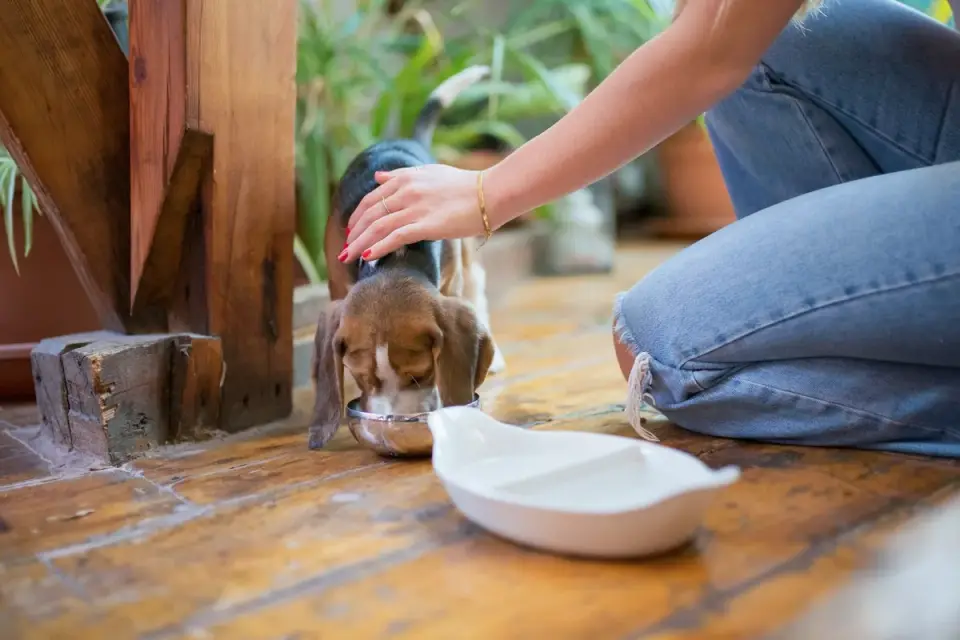
This is where comfort and the mat decision meet. Raised feeders are often suggested for stiff, arthritic, or senior dogs so they don’t have to stoop to a bowl on the floor, and for a dog with a sore neck that can honestly make meals easier. If that’s your dog, the height of the station matters as much as the mat beneath it, and it’s worth folding into a wider comfort plan alongside the right joint support for an aging dog and the everyday ways you help a senior dog’s vitality.
There’s an honest caveat, though. In large and giant breeds, raised bowls have been tied to bloat. One large prospective study in the Journal of the American Veterinary Medical Association linked both fast eating and a raised feeder to a higher risk of gastric dilatation-volvulus — a sudden, life-threatening emergency — while a later study found no effect from feeder height at all. A knowledge summary in Veterinary Evidence that weighed those studies side by side called the evidence conflicting, and pointed out that the very dogs sometimes put on raised feeders for comfort — big, older ones — may be the breeds most at risk. If you have a large or giant breed, raising the bowls is a conversation to have with your own veterinarian first; a floor-level mat or a low tray is the more conservative default.
Keeping the station clean without making it a chore
A mat only helps if you actually clean it. The U.S. Food and Drug Administration recommends washing food bowls and any scooping or measuring utensils with hot, soapy water after every meal, and washing water bowls daily. Your mat or tray earns its keep by making that painless: a silicone one can go in the same wash, and a quick daily wipe of the surface keeps the splash zone from turning into a bacterial reservoir. Choose something you’ll clean, not the biggest or fanciest one you’ll come to resent.
Bottom line: buy for the mess you actually have and the dog you actually have. A lipped, wipeable tray for a splasher; a plain non-slip mat for a tidy eater; food-grade silicone over fabric so it wipes clean; and a cautious, vet-guided approach to raised feeders if your dog is a large breed. The best feeding station isn’t the one that looks nicest on the counter — it’s the one that keeps your dog steady and comfortable at meals and takes ten seconds to clean.
Frequently asked questions
Do I need a mat or a tray for a messy dog?
It depends on the mess. If your dog mostly drops crumbs and needs steadier footing, a flat non-slip mat is enough. If they splash water or scatter kibble past the bowl, choose a tray with a raised lip so spills pool inside instead of running across the floor.
What material is best for a dog feeding mat?
Food-grade silicone is the easiest to keep clean because it's non-porous, wipes down in seconds, and is usually dishwasher-safe. Fabric and microfiber mats feel soft but absorb saliva and bacteria and have to be machine-washed, so they're a poorer fit under a food bowl.
How often should I clean my dog's feeding mat and bowls?
The FDA recommends washing food bowls and utensils with hot, soapy water after every meal and water bowls daily. Wipe or rinse the mat on the same schedule, and run a silicone mat through the dishwasher regularly.
Sources
- Tips for Safe Handling of Pet Food and Treats — U.S. Food and Drug Administration
- Survey evaluation of dog owners' feeding practices and dog bowls' hygiene assessment in domestic settings — PLoS One
- Are Dogs That Are Fed from a Raised Bowl at an Increased Risk of Gastric Dilation Volvulus Compared with Floor-Fed Dogs? — Veterinary Evidence
- Non-dietary risk factors for gastric dilatation-volvulus in large and giant breed dogs (JAVMA 2000;217:1492-1499) — Journal of the American Veterinary Medical Association