On this page
The first time I met a client with a brand-new Cavalier King Charles Spaniel puppy, she’d already bought a crate, a slow feeder, and three different leashes because she didn’t know which one she’d need. That’s the thing about a first dog: you’re not just choosing an animal, you’re choosing a learning curve. I’ve counseled a lot of nervous new owners in exam room three, and the conversation almost always starts the same way — not “which breed is cutest,” but “how much dog can I actually handle right now.”
I’m going to be direct about where I land: trainability and temperament predictability beat looks, size, and even coat type when you’re picking a first dog. That’s not a popular answer, because most “best breeds” lists are really just popularity lists dressed up as advice. But if you’ve watched as many first-time owners struggle as I have, you start caring less about breed glamour and more about whether a dog gives clear signals and responds to consistent handling.
Why “easy” breeds are really “predictable” breeds
When people ask me for an easy dog, what they usually mean is a dog that won’t surprise them. The American Kennel Club frames this well: breeds that do best with first-time owners tend to share a cluster of traits — eagerness to please, forgiving temperaments, and moderate exercise needs — rather than any single defining feature. That’s a useful lens because it shifts the question away from “which breed” and toward “which traits.”
Labrador and Golden Retrievers show up on almost every first-dog list, and there’s a real reason beyond marketing. Labs are described in the breed standard as kindly, outgoing, and tractable, with a strong drive to please their handler — the kind of temperament that makes basic obedience training go smoothly instead of becoming a daily negotiation. That combination of intelligence and eagerness means mistakes in early training are more forgivable; the dog wants to figure out what you’re asking, not test whether you mean it.
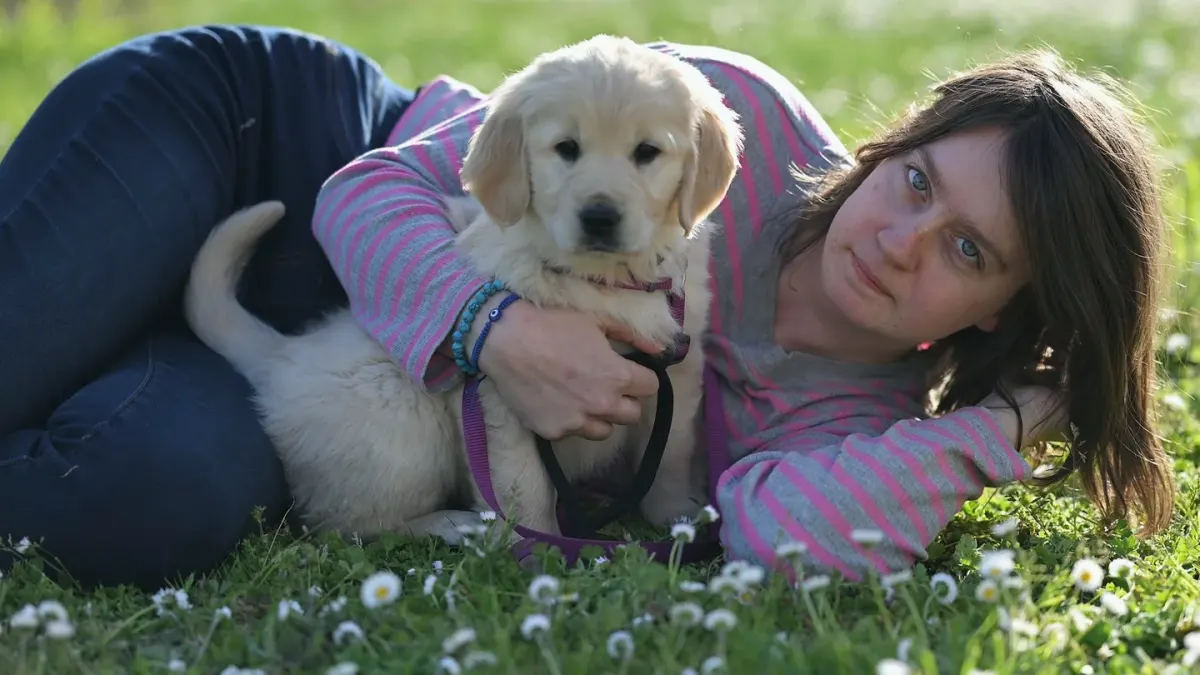
Golden Retrievers carry a similar profile — friendly with strangers, generally easygoing with kids and other dogs, and quick to pick up commands. Poodles land in the same conversation for a different reason: raw trainability. They’re often ranked among the most intelligent breeds, which cuts both ways for a beginner — fast learning is a gift, but an understimulated Poodle will find its own hobbies, and those hobbies are rarely the ones you’d choose.

The trade-offs nobody puts on the list
Here’s where I diverge from the glossy lists: every “easy” breed still has a real cost, and pretending otherwise sets owners up to feel like they failed when the dog turns out to need more than expected.
Labs and Goldens are energetic. A bored, under-exercised retriever chews furniture, counter-surfs, and can develop anxious habits that look like a training problem but are really an unmet-needs problem. If you work long hours and can’t commit to daily structured activity, a high-drive sporting breed can turn a “forgiving” dog into a frustrating one fast. We cover pacing exercise appropriately for smaller or lower-energy dogs in our guide to exercise for toy and small breeds, and the same principle — matching activity to the individual dog, not the stereotype — applies here too.
Cavalier King Charles Spaniels are gentler on the energy front and genuinely affectionate, which makes them a reasonable pick for an owner who wants companionship more than a jogging partner. But they’re a brachycephalic-adjacent, small toy breed prone to certain cardiac and spinal conditions that a first-time owner should know about before falling for the face. Poodles need regular grooming upkeep that a lot of new owners underestimate — it’s not just cute haircuts, it’s a maintenance commitment measured in weeks, not months.
I had a client bring in a six-month-old Poodle mix, about 18 pounds, because he’d started chewing through drywall in the hallway near the front door. She worked full days and assumed a “smart dog” meant a self-sufficient dog. Once we mapped out his actual schedule — long stretches alone, no structured mental work — the picture made sense. It wasn’t a temperament problem. It was a mismatch between the dog’s needs and the household’s rhythm. We rebuilt his day around shorter, more frequent engagement instead of one long walk, and the chewing dropped off within a few weeks.
What to actually evaluate before you commit
Instead of chasing a ranked list, I ask new owners to walk through four questions with me, in this order, because the order reflects what actually breaks down first.
First: how much unsupervised time will this dog have most days? This determines whether you need a low-boredom-risk breed or can handle a higher-drive one. Second: what’s your tolerance for a training learning curve? Some breeds are eager but stubborn — trainable, just not fast. Third: what physical care can you realistically sustain — daily brushing, occasional professional grooming, joint-conscious exercise as the dog ages? And fourth: what’s your actual living space and daily walking capacity, not the one you imagine on your best weeks?
None of the “top breeds” lists ask these questions in this order, and that’s a real gap. A Golden Retriever in a small apartment with an owner who works twelve-hour shifts is not the same recommendation as a Golden Retriever with a fenced yard and a retiree. Breed is a starting point, not a verdict.
Puppy versus adult: the choice most first-timers skip
I also push first-time owners to seriously consider an adult dog, not just a puppy. A lot of what makes the retriever breeds look “easy” on paper — calm temperament, house manners, predictable energy — is actually adult behavior. Puppies of any breed chew, have accidents, and need round-the-clock structure through teething and the socialization window, and that stretch is genuinely demanding no matter how forgiving the adult temperament eventually becomes. An adult dog from a rescue or breeder, whose temperament and energy level are already visible, can be a far gentler entry point for someone new to dog ownership than a puppy of the “recommended” breed.

In my practice, the first-time owners who do best aren’t the ones who researched breed rankings the longest — they’re the ones who were honest about their actual daily capacity before they brought a dog home. One family I worked with, a couple in their early thirties with a demanding new job schedule, almost brought home a Border Collie puppy because a friend swore by the breed’s intelligence. We talked through what a Border Collie actually needs — hours of structured mental and physical work daily — against their real week, and they adopted a five-year-old Lab mix from a shelter instead. That dog was already house-trained, already knew basic cues, and needed a solid walk and some fetch, not a full-time job. Eighteen months later, that mismatch they almost walked into is the thing they bring up first when friends ask for advice.
As dogs move from that puppy stage into adulthood and eventually into their senior years, the same “know the individual dog” principle keeps applying — joint support becomes relevant, energy needs shift, and the traits that made a breed easy at two years old aren’t always the traits that matter at ten. Our guide to joint supplements for senior dogs and our explainer on NAD+ and senior dog aging cover what changes later, if you want to think ahead rather than just at adoption day.
So which breed is actually “best” for a first-time owner? I’d rather you walk out of this article with a framework than a name. If I had to lean somewhere, it’s toward a retriever-type temperament — Labrador, Golden, or a mixed-breed with that profile — matched carefully to your real schedule, not your ideal one. What would your week actually look like with a dog in it, honestly?
Sources
- 9 Great Dog Breeds for First-Time Owners — American Kennel Club