On this page
Why does a friend swear her poodle never bothers her allergies, while another poodle sets off the same friend’s sneezing within an hour? I get this question in exam rooms more than almost any other breed-selection question, and the honest answer starts with a protein, not a coat.
The main dog allergen, Can f 1, is made in every dog’s sebaceous and salivary glands. Coat type doesn’t turn that gene off. A hairless dog and a heavily coated one both produce it; what differs is how much of it ends up airborne, on furniture, and on your hands. A 2012 study on hair and home samples found no consistent evidence that breeds marketed as hypoallergenic carried lower Can f 1 levels — in fact, some low-shedding Poodles in that sample had higher coat allergen counts than Labrador Retrievers, a breed almost never marketed as allergy-friendly. That finding, published as ScienceDirect: Can f 1 levels in hair and homes of different dog breeds, is the single most important thing to understand before you pick a breed for an allergic household.
The allergen isn’t just in the coat
Saliva turns out to matter more than most people expect. Research described in PMC (NIH): Dog saliva – an important source of dog allergens found a greater number and diversity of IgE-binding proteins in saliva than in dander extracts, and identified allergen candidates in saliva beyond Can f 1 itself. Among people who tested negative to dog dander but still reacted to dogs, a meaningful share tested positive to saliva. That’s a plausible explanation for the friend-with-two-poodles puzzle: a dog that grooms itself less, drools less, or gets bathed more often may simply be putting less total allergen into circulation — independent of coat type.
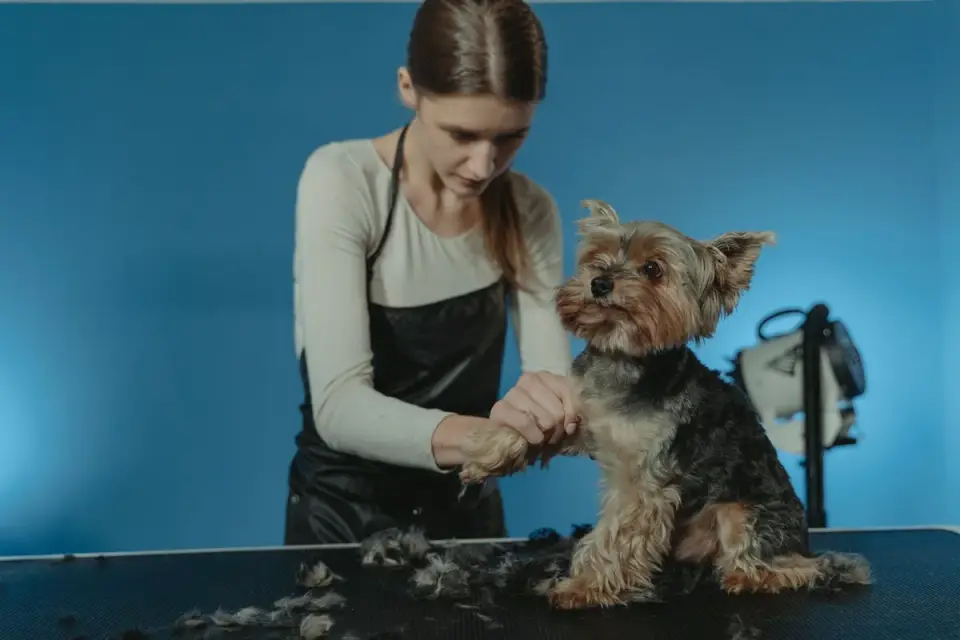
This is also why the review behind Journal of Allergy and Clinical Immunology: The myth of hypoallergenic dogs (and cats) concluded that “hypoallergenic” is a marketing term, not a diagnosis. No breed produces zero allergen. What changes from dog to dog is shedding rate, grooming frequency, drool volume, and how much allergen gets tracked through the house on hair versus how much stays trapped in a curly, continuously-growing coat that needs professional clipping.
What a lower-shedding coat actually buys you
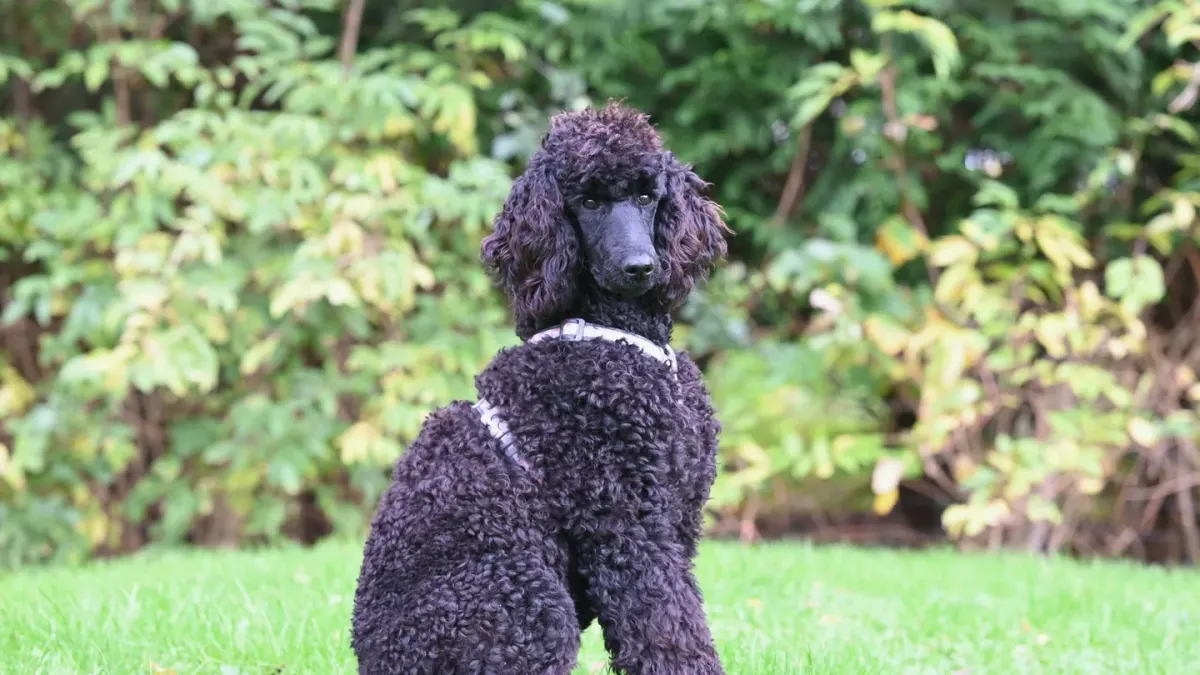
Here’s where I land with clients, and I’ll be direct about it: I recommend low-shedding, single-coated breeds for allergic households — Standard and Miniature Poodles, Bichon Frise, Portuguese Water Dogs, some Schnauzers — not because they produce less allergen, but because their coats trap loose hair and dander instead of scattering it across floors, couches, and car seats. The American Kennel Club rates the Standard Poodle a 1 out of 5 for shedding, the lowest tier, in its guidance on Does a Completely Hypoallergenic Dog Exist?, which also underscores that no breed is allergen-free. Less loose hair means less allergen redistributed into carpet, upholstery, and HVAC ducts — the reservoirs that keep a sensitized person symptomatic for weeks after exposure, not just during direct contact.
The counterargument I hear constantly: “But my cousin’s Lab never bothered anyone, and my neighbor’s poodle mix put someone in urgent care.” Both things are true, and neither contradicts the data. Individual dogs vary in how much Can f 1 they shed and secrete regardless of breed, and a person’s sensitivity threshold varies too. A single-coated breed shifts the odds in your favor; it does not guarantee a symptom-free home. I tell clients to treat breed choice as risk reduction, not risk elimination — and to always meet the specific dog, ideally over repeated visits, before committing.
I once worked with a family choosing between a 9-month-old Bichon Frise and a Cavalier King Charles Spaniel mix for a household with a school-age child who had a documented dog-dander allergy. They spent three separate afternoons with each dog in their own living room before deciding — the mother tracked her daughter’s eye-rubbing and sneezing on a phone note after each visit. The Bichon visits produced no symptoms across all three afternoons; the spaniel mix triggered mild sneezing by the second hour on two of three visits. They adopted the Bichon, kept a strict weekly bathing schedule, and by the six-month checkup the child had had no allergy flares serious enough to need antihistamines. That’s one family’s outcome, not a guarantee — but it’s a reasonable way to test compatibility before signing an adoption contract.
Managing exposure once the dog is home
Bathing frequency, HEPA filtration, and keeping the dog out of the bedroom all reduce airborne and surface allergen load regardless of breed. None of these substitute for allergy testing and, where appropriate, medical management with your physician — a breed choice is a household decision, a treatment plan is a medical one. If your household is also managing joint or skin issues in an aging low-shedding breed, our guide to The Best Joint Supplements for Senior Dogs covers what’s actually worth adding to the diet. And if you’re bringing home a toy or small breed like a Bichon or Miniature Poodle, pair coat management with appropriate activity using our Exercise Ideas for Small Breed Dogs guide, since under-exercised small dogs often develop the anxious over-grooming that raises shed hair and dander in the first place.
Where I land
I’m not going to pretend every low-shedding breed is interchangeable, and I won’t tell an allergic family that any dog is risk-free — the evidence doesn’t support either claim. What I will say plainly: choose a single-coated, low-shedding breed as your starting filter, commit to a grooming and bathing routine before the dog arrives, and spend real time with the specific dog first. That combination is the most defensible way to reduce allergy symptoms in a dog-owning household, even though the phrase “hypoallergenic dog” oversells what any breed can deliver.
Frequently asked questions
Is any dog breed truly hypoallergenic?
No. Every dog produces the Can f 1 allergen in its skin and saliva regardless of coat type, according to research summarized in the Journal of Allergy and Clinical Immunology's review on the topic. Low-shedding breeds reduce how much allergen circulates through a home, but they don't eliminate it.
Do poodles produce less allergen than other breeds?
Not necessarily. A study of hair and home samples found some Poodles had higher Can f 1 levels than Labrador Retrievers, a breed rarely marketed as allergy-friendly. Poodles help mainly because their coats shed less loose hair, not because they make less allergen.
What actually reduces allergy symptoms in a dog household?
Choosing a low-shedding breed, bathing the dog regularly, keeping the dog out of the bedroom, and using HEPA filtration all reduce allergen load. Spending time with the specific dog before adopting is also a practical, low-cost step.
Sources
- Can f 1 levels in hair and homes of different dog breeds: Lack of evidence to describe any dog breed as hypoallergenic — ScienceDirect
- Dog saliva – an important source of dog allergens — PMC (NIH)
- The myth of hypoallergenic dogs (and cats) — Journal of Allergy and Clinical Immunology
- Does a Completely Hypoallergenic Dog Exist? — American Kennel Club