
On this page
Why Does the Same Ingredient Come in Three Different Bottles?
Walk down the supplement aisle for glucosamine, fish oil, or a probiotic blend and you’ll find the identical active ingredient sold as a soft chew, a powder you scoop into food, and a liquid you pump or drop onto a meal. That’s not marketing redundancy. Each format solves a different problem — palatability, shelf stability, dosing precision — and each one creates a different failure point if it doesn’t fit your dog.
I remember a nine-year-old Labrador named Reggie, sixty-eight pounds, who came in for a January recheck because his owner had quietly stopped his joint chews without telling me. She’d noticed him slower on the stairs by the back door and hesitating before jumping onto the tailgate of her truck, and she assumed the chews simply weren’t working anymore. What had actually happened was that Reggie started refusing the chew outright, spitting it onto the kitchen floor for the better part of a week before she gave up rather than fight him twice a day. We switched the identical glucosamine and chondroitin dose to a powder she could stir into his food. His compliance went from maybe half his doses to essentially every one of them within two weeks, and by the six-week recheck he was jumping onto the tailgate again on his own. The ingredient hadn’t changed. The delivery had.
That’s the argument I want to make plainly, because it’s the one I keep defending in exam rooms: compare the actual formulations against each other on dosing accuracy and real adherence, not on which package looks most premium. A supplement your dog won’t reliably eat is, functionally, a zero-dose supplement no matter what the label promises.
Does Absorption Really Differ Between Forms?
For some ingredients, yes, though the difference is smaller than marketing copy suggests. A comparison of oral liquid, chewable, and tablet glucosamine formulations posted on ResearchGate found that once exposure was normalized to the actual dose of glucosamine free base administered, the three formulations showed broadly similar relative bioavailability — but the dose-normalized peak plasma concentration ran higher for the liquid than for either tablet form. In other words, a liquid may get glucosamine into circulation a bit faster and at a somewhat higher peak, but a properly dosed chew or tablet still gets most of the same total amount in over time.
That distinction matters for how you think about “effective.” If your dog reliably eats a chew every day at the labeled dose, the modest pharmacokinetic edge of a liquid rarely outweighs the compliance you already have. If your dog is a chew-refuser, or the dose has to be titrated precisely for a small-breed patient, the liquid’s faster, more controllable absorption becomes the more relevant advantage — not because it’s inherently superior, but because it solves the problem you actually have.
What Happens When the Dog Simply Won’t Eat It?
This is where format matters more than pharmacology for most households. Owners don’t fail at supplementing because they misunderstand bioavailability; they fail because the dog stops eating the product. A Frontiers in Veterinary Science analysis of dog owners’ real-world experiences administering oral medications found that most respondents had run into meaningful challenges getting tablet-based products into their dogs, and that palatable, easy-to-administer formats consistently improved reported adherence over plain tablets.
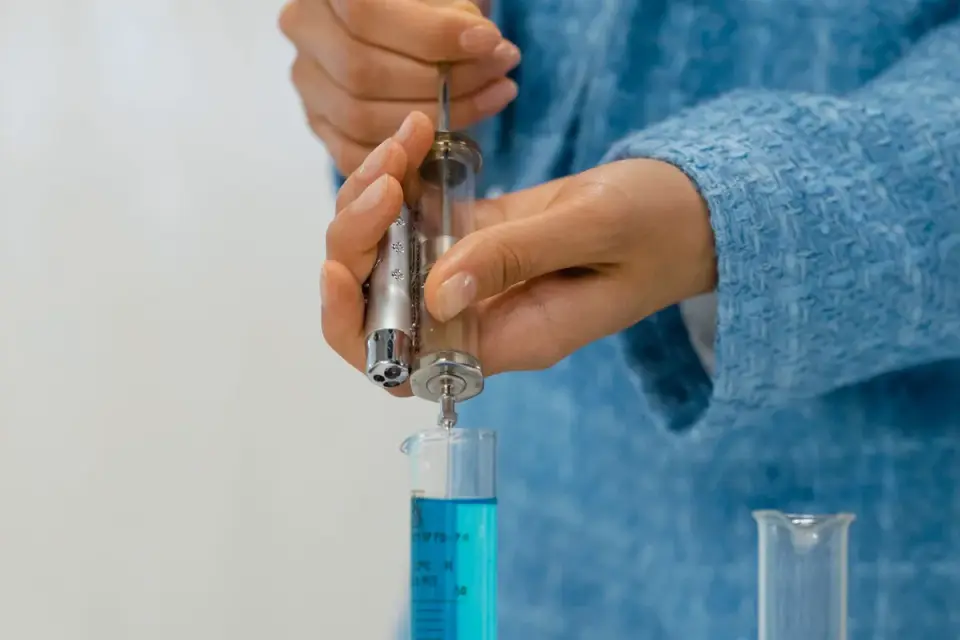
One of the dogs I see regularly, a fourteen-year-old Chihuahua mix named Pepper, four pounds, already takes eleven medication doses a day for unrelated chronic conditions, and her owner was adamant that adding a twelfth pill — a joint chew — was going to be the dose that broke the whole routine. We moved that supplement to a liquid, dosed by syringe alongside her other liquids at the same 7 a.m. and 7 p.m. checkpoints she already used. At her next visit three months later, her owner reported near-perfect adherence and no repeat of the gagging-after-chew episodes she’d seen with the earlier product. Pepper’s case isn’t proof that liquids beat chews across the board — it’s a reminder that the format has to fit the household’s existing routine, not fight it.
Powders sit in an interesting middle position. They’re often the cheapest per dose and easiest to blend into wet food, but they’re also the most exposed to degradation once the container is opened, and some active ingredients — live probiotic strains in particular — are notably sensitive to moisture, heat, and time on a scoop left in a humid kitchen. If you’re weighing a powder probiotic specifically, it’s worth understanding how Prescription vs Over-the-Counter Dog Probiotics: What Actually Differs breaks down strain identity and viable count, because those same storage vulnerabilities apply.
How Do You Know the Label Is Telling the Truth?
Format aside, none of this matters if the product doesn’t actually contain what the label claims. This is where third-party verification earns its keep. PetMD notes that the National Animal Supplement Council’s seal requires member companies to submit to independent random product testing so that label claims — ingredient identity and amount — can be verified against what’s actually in the bottle, alongside facility audits every two years. That verification process applies to chews, powders, and liquids alike; it says nothing about which format works best for your dog, only that the dose printed on the label is more likely to be the dose you’re actually giving. If you want the deeper distinction between that seal and manufacturing certifications, cGMP Certification vs. NASC Membership for Dog Supplements: What Each Really Verifies is worth reading before you buy any format.
For joint-support products specifically, format questions come up constantly with senior dogs on multiple supplements at once, and the practical tradeoffs are covered in more depth in The Best Joint Supplements for Senior Dogs (2026 Guide).
So Which Form Should You Actually Choose?
Here’s where I land, and I’ll name the counterargument first because it’s a fair one: a purist reading of the pharmacokinetic data would tell you to default to liquid for anything where peak absorption matters, since the glucosamine study showed a real, measurable edge there. I don’t think that’s the right general advice, and here’s why. For the large majority of dogs, a chew or powder dosed consistently every day beats a liquid dosed inconsistently three days a week because the bottle is fussy to use in a moving household. Adherence, not absorption curves, is the variable most owners actually control.
So my working rule is this: start with the format your dog will reliably finish at the labeled dose, then only move to a different format if that one fails — refusal, GI upset, or a dosing precision problem for a small-breed or multi-medication patient. Chews win on convenience and are genuinely fine for most healthy adult dogs who eat them without hesitation. Powders win on cost-per-dose and blend invisibly into food, but demand attention to storage once opened, especially for moisture-sensitive ingredients. Liquids win on precise, adjustable dosing and a modest absorption edge, and they’re the right default for tiny dogs, dogs already on multiple liquid medications, or dogs who’ve become chew-refusers. None of the three is universally “most effective” — the most effective form is the one that survives contact with your actual dog, in your actual kitchen, seven days a week.
I’ve watched enough owners quietly stop supplementing rather than fight a refused chew to trust that adherence beats absorption curves almost every time it’s tested against them in practice. Pick the format on that basis first, verify the label with a seal like NASC’s second, and only chase a formulation’s marginal pharmacokinetic advantage once the first two boxes are checked.
Sources
- What Is the National Animal Supplement Council (NASC)? — PetMD
- Comparison of Glucosamine Absorption After Administration of Oral Liquid, Chewable, and Tablet Formulations to Dogs — ResearchGate
- Using social media listening to identify the real-world challenges faced by dog owners globally when administering oral medications — Frontiers in Veterinary Science