
On this page
A senior dog losing weight while eating normally usually has a metabolic, digestive, or absorption problem underneath.
Start with the scale, not the food bowl. Weigh your dog today, write the number down, and compare it against the last weight recorded at your vet. If the number is falling while meals still disappear on schedule, book an exam this week. A steady appetite paired with a shrinking frame is not reassuring news — it usually means calories are going in but are not being turned into body mass, and that points at the machinery of digestion, absorption, or metabolism rather than at the diet itself.

What does eating normally but still losing weight actually tell you?
It narrows the list. Body weight is energy in versus energy out. When intake looks normal, the problem sits on the processing or output side: food that is eaten but poorly digested, nutrients that are digested but poorly absorbed, or a body burning through fat and muscle faster than a full bowl can replace. That last pathway matters most in older dogs, because muscle is load-bearing tissue — lose it and strength, mobility, and recovery from any future illness all degrade together.
Normal eating also rules out the simpler explanations first. A dog with painful teeth, nausea, or a dull appetite tends to eat less; a dog cleaning the bowl and still thinning is pointing you toward something internal.
Which conditions cause weight loss despite a good appetite?
A short list of diagnoses shows up again and again in senior dogs, and most are treatable when caught early.
Diabetes mellitus is the classic case. Without enough working insulin, cells cannot pull glucose out of the blood, so the body breaks down fat and muscle for fuel even as the dog eats more. The Diabetes Mellitus in Dogs and Cats reference lists polyuria, polydipsia, polyphagia, and weight loss together — increased drinking and urination alongside the weight change are the tell.
Exocrine pancreatic insufficiency (EPI) is maldigestion at the source: the pancreas stops making enough digestive enzymes, so food passes through largely unprocessed. Per Exocrine Pancreatic Insufficiency in Dogs and Cats, the most commonly reported signs are weight loss and loose stools with increased appetite, and the feces are “most commonly pale, loose, and voluminous and may be malodorous.” Bulky, greasy, pale stool next to a ravenous dog is a strong hint.
Chronic kidney disease drives weight and muscle loss as it advances; the Renal Dysfunction in Dogs and Cats reference describes weight loss becoming manifest as the disease progresses, and muscle can begin to waste before appetite fully fails. Cancer belongs on the list too — in a review published in Frontiers in Veterinary Science, roughly 15% of evaluated dogs with cancer showed moderate-to-severe muscle loss, which can start while a dog is still eating.
Malabsorptive gut disease, and less often in dogs than in cats an overactive thyroid, round out the common culprits. The point is not to self-diagnose. It is to recognize that “eats fine, still shrinking” is a known pattern with a short differential your vet can work through methodically.
What should you do this week?
Move in order:
- Record an accurate weight, and if you can, a hands-on body- and muscle-condition read — run your palms over ribs, spine, and the muscle over the hind legs.
- Photograph your dog from the side and from above as a visual baseline.
- Bag a fresh stool sample and note its color, volume, and smell.
- List every change you have seen: water intake, urination frequency, energy, stool, any vomiting.
- Book the exam, and bring all of it.
What tests will the vet likely run?
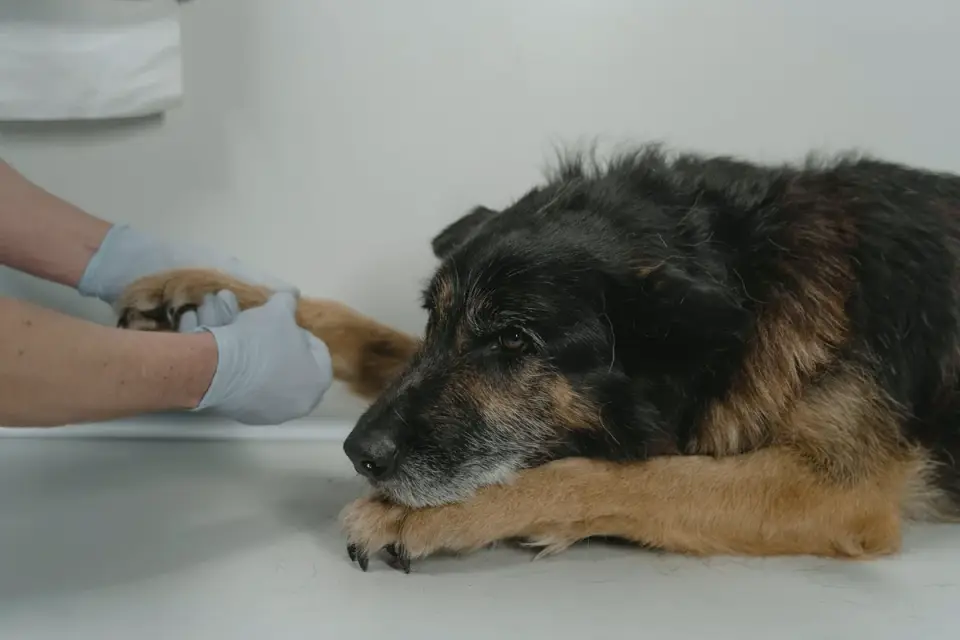
Expect a physical exam plus baseline diagnostics: a complete blood count and chemistry panel, a urinalysis, and often a thyroid check. Digestive complaints usually add a fecal exam and a specific blood test — the TLI — to screen for EPI. Depending on the results, imaging such as X-rays or ultrasound looks for organ disease or masses. This staged approach is exactly why the visit comes first: the treatments for diabetes, EPI, kidney disease, and cancer are entirely different, and the workup is what separates them.
Can supplements or a food change fix it?
Not on their own, and this is where restraint matters. When weight loss is driven by disease, the fix is the diagnosis and the targeted treatment — insulin, enzyme replacement, a renal diet, oncology care — not a topper or a chew. Supplements have a supportive, evidence-bound role at best: they may help a healthy senior hold condition, but they will not correct maldigestion or replace insulin, and leaning on them can cost the very weeks that matter most. Once your vet has ruled out disease, general senior support becomes a separate conversation — think mobility and muscle maintenance, the kind covered in our guides to joint supplements for senior dogs and to NAD+ and senior dogs. Feed the diagnosis first; support the aging dog second.
So the real question is not which food to switch to — it is how quickly you can get the underlying cause identified while the weight change is still small and still reversible?
Frequently asked questions
Is some weight loss just normal for an old dog?
A little muscle loss comes with age, but a measurable, ongoing drop in weight is not normal aging, especially alongside a good appetite. Have it checked rather than assumed.
My dog eats a lot and is still losing weight. What does that mean?
A big appetite with weight loss points strongly at diabetes or a digestion and absorption problem such as EPI. Both are diagnosable with routine blood and stool tests.
How quickly should I act?
Within a week. Unexplained weight loss usually reflects a treatable condition that is far easier to reverse while the change is still small.
Sources
- Diabetes Mellitus in Dogs and Cats — Merck Veterinary Manual
- Exocrine Pancreatic Insufficiency in Dogs and Cats — Merck Veterinary Manual
- Renal Dysfunction in Dogs and Cats — Merck Veterinary Manual
- Connection between nutrition and oncology in dogs and cats: perspectives, evidence, and implications—a comprehensive review — Frontiers in Veterinary Science