On this page
- The question I get in the exam room
- Where the Poodle’s predictability actually comes from
- What “hybrid vigor” does and doesn’t buy you
- The screening that actually protects you, in either dog
- A case that stuck with me
- Temperament: closer than people expect, with real caveats
- Coat and allergies: the part everyone asks about first
- Where I actually land
The question I get in the exam room
A woman brought in a nine-month-old “mini goldendoodle” last spring, thirty-one pounds and still growing, and asked me flatly why he looked nothing like the fourteen-pound dog she’d seen in the breeder’s photos. She’d done her research. She’d asked about health testing. She’d paid a deposit based on a picture of the sire, a Miniature Poodle, and a dam who was herself a first-generation goldendoodle. What she’d bought, in practice, was a genetic coin flip — coat texture, adult size, shedding, even temperament were all still being decided by which parent’s genes won out in that particular puppy. That’s not a knock on her. It’s the honest answer to the question doodle vs poodle difference is really asking: how much can I predict about this dog before I bring it home?
A purebred Poodle answers that question with real precision. A doodle answers it with a range. Neither is wrong to want. But they are not interchangeable, and treating them as if they are is where I see people run into trouble.
Where the Poodle’s predictability actually comes from
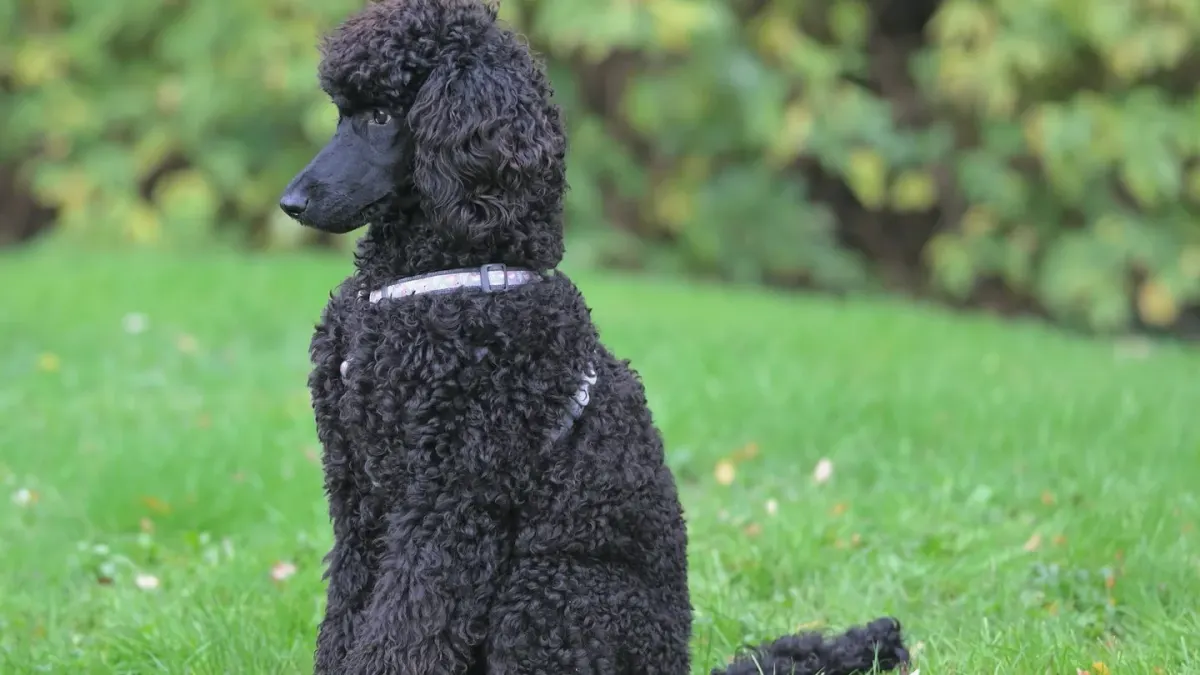
The American Kennel Club: AKC recognizes the Poodle in three sizes — Standard, Miniature, and Toy — with a curly, low-shedding coat and a defined size range for each variety. That predictability isn’t marketing. It’s the product of generations of breeding to a written standard, which means a reputable Poodle breeder can tell you with real confidence what an adult dog from a given litter will look like, how it will shed, and roughly what its temperament tendencies will be.
Genetics backs this up at the molecular level: coat curl in Poodles is tied to specific variants in the KRT71 gene, and dogs carrying two copies of the curl allele reliably produce the tight curl the breed is known for. A doodle puppy might inherit that allele, or might inherit the straighter-coated parent’s version instead — which is a large part of why doodle litters can range from wavy-flat to tightly curled within the same set of puppies, even when both parents look similar.
What “hybrid vigor” does and doesn’t buy you
I hear this phrase used as a selling point constantly, and it deserves a straight answer. A UK VetCompass analysis found that crossbred dogs live, on average, roughly 1.2 years longer than purebreds — a real, measurable effect. But a 2024 study covered by VIN News Service: VIN compared Cockapoos, Labradoodles, and Cavapoos against their parent breeds directly and found that for most specific health problems, the crosses weren’t meaningfully healthier or less healthy than the purebreds they came from.
Here’s why that split exists, and it’s worth sitting with for a second. Hybrid vigor helps most against problems tied to a small, inbred gene pool or an extreme physical trait. Hip dysplasia doesn’t work that way — it’s polygenic, and it’s also driven by growth rate and body condition, not just which breeds are in the pedigree. Crossing two breeds that both carry hip dysplasia risk doesn’t erase that risk; it just recombines it. A doodle can absolutely inherit hip dysplasia, epilepsy, or an eye condition from either parent line.
The screening that actually protects you, in either dog
This is where I get decisive, because owners have a real choice here even inside the uncertainty. For a purebred Poodle, established testing pathways exist and they’re specific. Miniature and Toy Poodles are recommended for prcd-PRA DNA testing plus an annual exam by a board-certified veterinary ophthalmologist, alongside hip and patella evaluation — guidance laid out by the Poodle Club of America. Standard Poodles carry their own screening priorities, including hip dysplasia, eye clearance, and a required elective covering thyroid, sebaceous adenitis, or cardiac health.
For a doodle, the honest answer is: ask whether both parents were screened, not just one, and ask to see the actual results — OFA hip scores, an ophthalmologist’s eye clearance, the PRA DNA result — rather than taking a breeder’s word that “the line is healthy.” A doodle bred from two well-screened, unrelated Poodle and retriever parents is a genuinely different health proposition than one bred from a doodle-to-doodle pairing with no documentation on either side. I ask every client to request paperwork, not photos.
A case that stuck with me
I worked with a family who’d adopted a two-year-old Labradoodle, forty-two pounds, after losing their Standard Poodle to old age the year before. They wanted “the same dog, easier coat.” Within six months they noticed him slowing on stairs he used to take two at a time, and by his third birthday he had a diagnosis of hip dysplasia — a condition his Poodle predecessor never developed, despite living to thirteen. It wasn’t bad luck exactly. Neither of his parents had documented hip screening; the breeder simply didn’t test. I’m not telling this story to say doodles are riskier as a category. I’m telling it because the variable that mattered wasn’t “doodle versus Poodle” — it was screened versus unscreened parents, and that variable is the one a buyer can actually act on before a puppy ever comes home.
Temperament: closer than people expect, with real caveats
Poodles across all three sizes are typically described as trainable, people-oriented, and alert — traits that show up reliably because the breeding pool is consistent. Doodles often inherit a similar intelligence and eagerness to please from the Poodle side, but the non-Poodle parent breed matters more than most buyers plan for. A goldendoodle tends to run softer and more biddable; a labradoodle can carry more retriever energy and mouthiness as a puppy; an aussiedoodle often needs more structured mental work than either. If you loved a specific Poodle’s temperament, a doodle crossed with a very different breed won’t guarantee you get it back.
If you’re weighing this against other breed comparisons, our guides on Toy Poodle vs Miniature Poodle and Labradoodle vs Goldendoodle go deeper into the specific size and coat trade-offs within each category.
Coat and allergies: the part everyone asks about first
Both a purebred Poodle and most doodles shed less than the average retriever or shepherd, largely thanks to that KRT71 curl variant. But “low-shedding” isn’t the same as “hypoallergenic,” and doodle coats are genuinely less predictable — a first-generation labradoodle puppy can grow into a coat that’s closer to a Labrador’s than a Poodle’s if it inherits the straight-coat allele from that side. If allergies are the deciding factor in your household, it’s worth reading our breakdown of hypoallergenic dog breeds before you commit to either option, since coat predictability and allergen exposure aren’t quite the same question.
Where I actually land
If you want the most predictable dog — known adult size, documented health screening on both sides for generations back, consistent temperament — a purebred Poodle from a breeder who does full OFA and ophthalmologist testing is the safer bet on paper. If you’re drawn to a doodle for a specific trait mix, that’s a legitimate reason to choose one, but the burden shifts onto you to verify screening on both parents rather than trust the coat photo. The dog in front of you, six months or six years from now, is shaped far more by that paperwork than by which side of the doodle-vs-Poodle line it started on. Ask for it before you ask about the puppy.
For families still deciding what kind of dog fits their life first, our guide to breeds for first-time owners is a useful starting point before narrowing down to coat type at all.
Frequently asked questions
Is a doodle healthier than a purebred Poodle?
Not reliably. A 2024 comparison covered by VIN found that crossbreeds like Labradoodles weren't meaningfully healthier than their parent breeds for most specific conditions, even though crossbreds as a group show a modest average lifespan advantage in UK population data. What actually predicts a healthy dog is documented health screening on both parents, not the cross itself.
Why do doodle puppies from the same litter look so different?
Coat curl is controlled by specific gene variants (KRT71) that Poodles carry consistently but that a non-Poodle parent may or may not carry. Puppies can inherit either version, which is why litters range from wavy to tightly curled even with similar-looking parents.
What health tests should I ask about before buying a doodle?
Ask for documentation on both parents: OFA hip evaluation, a current ophthalmologist eye clearance, and prcd-PRA DNA testing if a Poodle is in the pedigree. A breeder who can't produce paperwork on both sides is a bigger red flag than the cross itself.
Sources
- Poodle (Standard) — American Kennel Club
- Research challenges notion of 'hybrid vigor' in dogs — VIN News Service
- Health Testing in Poodles — Poodle Club of America