On this page
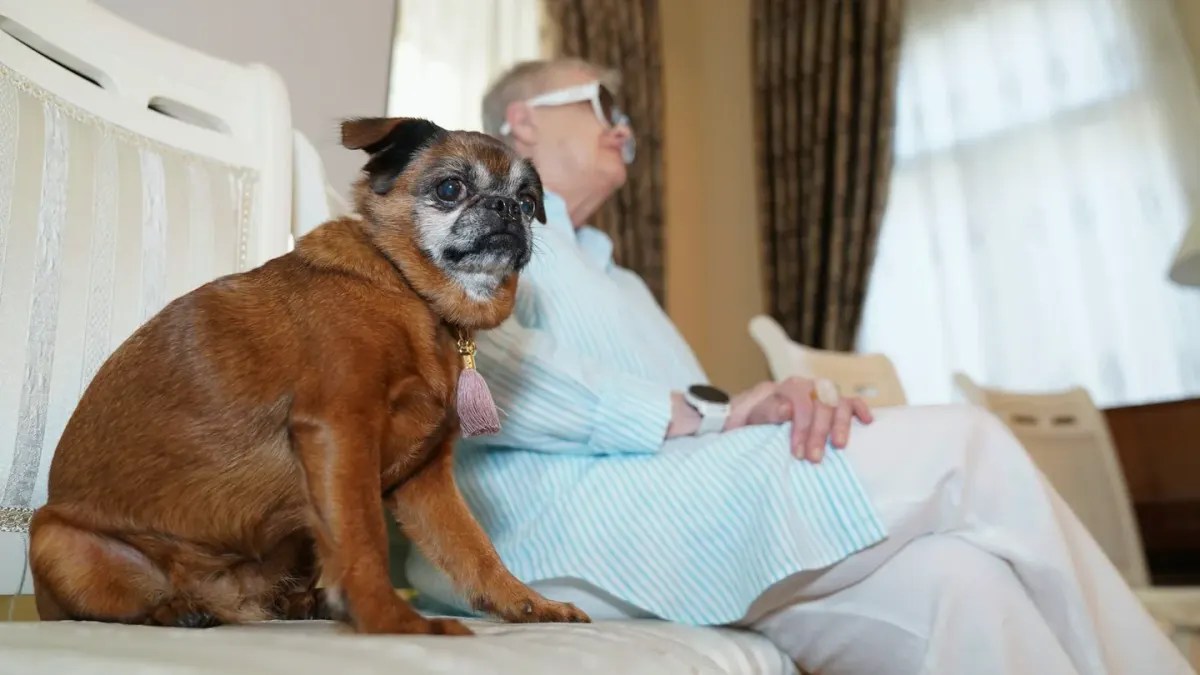
Marla noticed the pattern before she believed it. A full day before a storm, her eleven-year-old Labrador, Biscuit, would take the back stairs one at a time and lower himself onto his bed with a small groan. The sky still looked fine. The barometer, it turned out, did not.
She wasn’t imagining it, and she isn’t alone.
Owners of older, stiff dogs describe the same thing across the country: a good dog who moves a little worse when the weather is about to turn. The science behind that observation is firmer in people than in dogs, but the joint biology is shared, and the pattern is worth understanding before you wave it off.
What a falling barometer does to a joint
Barometric pressure is simply the weight of the air pressing down on everything, your dog included. Ahead of a storm or an incoming front, that pressure drops. The leading explanation for why joints notice is mechanical: when the pressure outside the body falls, the tissues and fluid in and around a joint can expand a little. In a healthy joint, nothing registers. In an arthritic one, with worn cartilage, a thickened capsule, and nerves that are already sensitized, even a small shift can read as stiffness or a dull ache.
That mechanism is still a working idea rather than settled fact. What is better documented is the association itself.
What the research actually shows
A 2007 study in The American Journal of Medicine followed 200 people with knee osteoarthritis and found that changes in barometric pressure were independently associated with the severity of their knee pain. A much larger UK smartphone project, published in npj Digital Medicine, tracked thousands of chronic-pain patients over more than a year and reported that days with lower atmospheric pressure, higher humidity, and stronger wind carried modestly higher odds of a painful day, even after accounting for mood and activity. Pulling the field together, a 2023 systematic review and meta-analysis in Annals of Medicine concluded that weather conditions are consistently, if modestly, associated with osteoarthritis pain.
The honest summary: the effect is real but small, and most of the evidence comes from people, not dogs.
There is no large controlled trial in dogs linking a pressure drop to a measured flare. What we have is shared joint disease, thousands of consistent owner reports, and human data pointing the same way. For a preventive-minded plan, that is enough to take seriously without overselling.
Why arthritic dogs feel it first
The dogs most likely to react to weather are the ones already carrying joint disease, and that group is larger than many owners realize. A UK primary-care study in Scientific Reports put the annual osteoarthritis diagnosis rate at roughly 2.5% of dogs, climbing steeply with age, with dogs over twelve at dramatically higher odds than dogs under three, and hitting breeds like Labradors, Golden Retrievers, and Rottweilers hardest.
Osteoarthritis is also easy to miss, because dogs hide pain and compensate quietly. That means a weather-sensitive dog is often a dog whose arthritis simply hasn’t been named yet.
A pressure drop, hour by hour
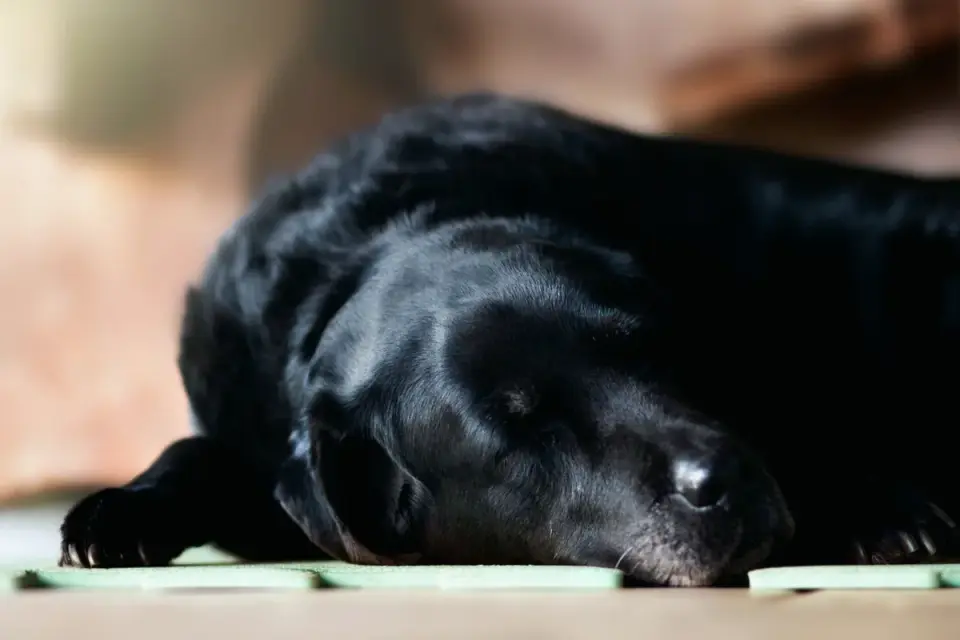
For a weather-sensitive dog, a flare tends to track the front rather than the clock. In the twelve to twenty-four hours before a storm, as the barometer starts to fall, the earliest sign is usually a slower first few steps and more deliberate movement getting up. As the low deepens, you may see real reluctance on stairs, more time spent in a warm spot, or a dog who lags on the usual walk. Once the front passes and pressure climbs again, many dogs loosen up within a day.
None of that timing is precise, and every dog runs a little different. The aim is to watch the pattern over a couple of weather cycles instead of judging a single bad morning.
What you can do before the next front
You cannot change the weather, but you can change how ready the joint is to meet it.
Keep the dog warm and dry when pressure is low and the air is damp: a supportive bed away from drafts, and a sweater for a thin-coated or senior dog on cold, wet days. Keep moving, gently. Consistent low-impact activity like short leashed walks keeps joints lubricated, and skipping movement on a stiff day usually backfires. Weight is the single biggest lever you control, since every extra pound is load the joint has to carry through the flare. Talk with your veterinarian about a plan for bad days, because prescription pain relief exists precisely for these episodes. Sudden, severe, or non-weight-bearing lameness is not a weather problem, and that dog needs to be seen.
Nutritional joint support may help support comfort over the long run rather than rescuing a single flare; our guide to the best joint supplements for senior dogs walks through what the common ingredients actually do. For broader aging support, see what the evidence says about natural anti-inflammatory options like quercetin and how NAD+ fits into senior-dog wellness, always as part of a plan you build with your vet.
Next time the forecast turns, don’t wait for the limp. Put the warm bed down, keep the walk short and regular, and note how your dog moves over the following day. That small record is the most useful thing you can hand your veterinarian.
Frequently asked questions
Can weather really make my dog's arthritis worse?
In people, studies consistently link lower and changing barometric pressure to modestly more osteoarthritis pain. Direct canine research is thin, but dogs share the same joint biology, so a stiff, arthritic dog moving worse before a storm is plausible rather than imagined. The effect tends to be modest, not dramatic.
Does a pressure drop cause the arthritis, or just the pain?
Just the pain. The joint damage is already there. A falling barometer appears to modulate how much discomfort an already-arthritic joint produces on a given day; it does not create the underlying disease.
How do I tell weather stiffness from a real injury?
Weather-linked stiffness usually eases with gentle movement and warmth and tracks the front over a day or two. Sudden, severe, or non-weight-bearing lameness, or pain that does not improve, is not a weather pattern and should be checked by your veterinarian.
Sources
- Changes in barometric pressure and ambient temperature influence osteoarthritis pain — The American Journal of Medicine
- How the weather affects the pain of citizen scientists using a smartphone app — npj Digital Medicine
- Associations between weather conditions and osteoarthritis pain: a systematic review and meta-analysis — Annals of Medicine
- Prevalence, duration and risk factors for appendicular osteoarthritis in a UK dog population under primary veterinary care — Scientific Reports