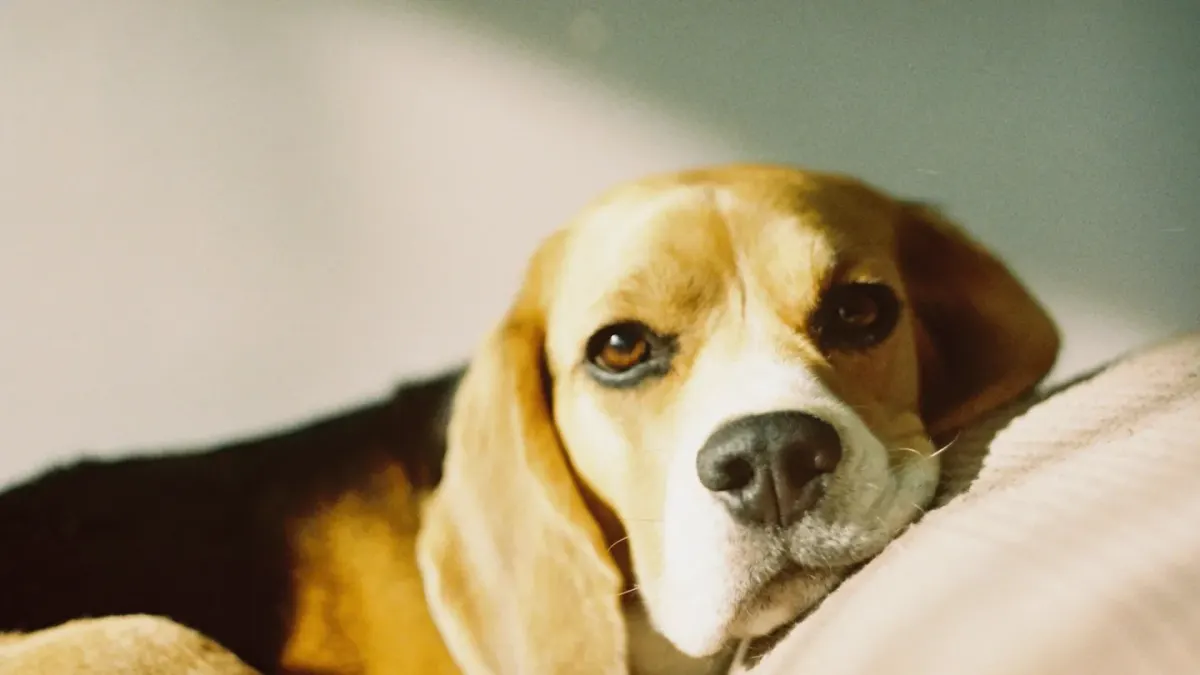
Allen throws a green tennis ball across short grass in Pasadena, Texas, and Mando, his 3-year-old neutered hound mix, runs past it twice before finding it by smell at about 30 yards. The legs work fine. The nose works fine. The color is the problem.
Pick toys and training markers your dog can see first, then build movement around them. That one change supports cleaner structure-and-function — eyes guide the spine, limbs, and turns — and it keeps whole-patient balance instead of asking joints to compensate for confusion.
The fetch mistake that looks like stubbornness
Vets often see this pattern in active young dogs: good energy, normal gait, but sloppy retrieves on green fields. Owners read it as distraction or joint stiffness.
Check contrast before you check compliance. A green ball on green grass is nearly invisible to a dichromatic eye. Switch to blue or bright yellow for a week and watch the line. Straighter runs mean fewer sudden stops, skids, and neck twists.
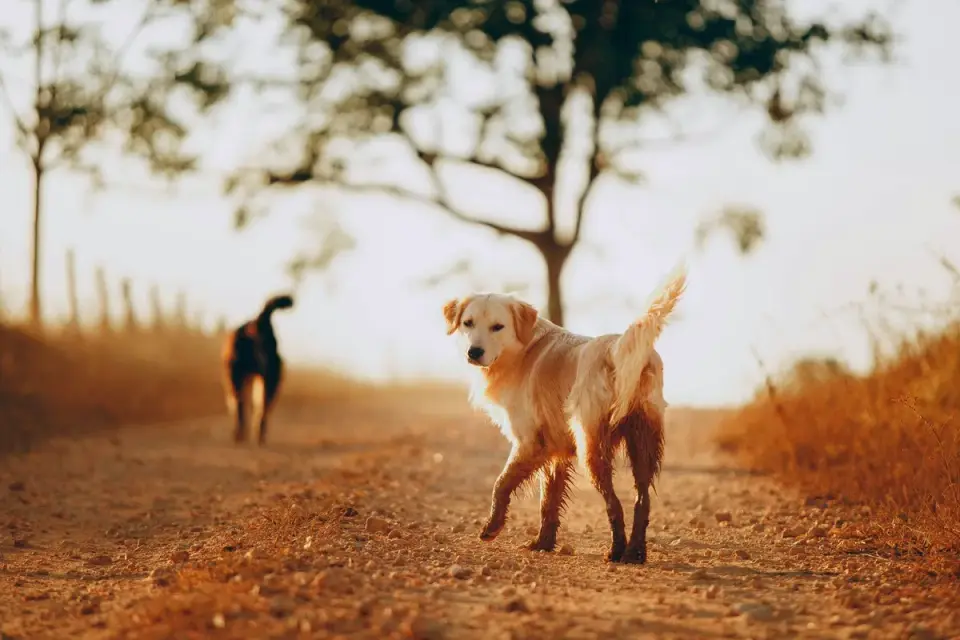
Mando locked onto a royal-blue bumper in two throws once Allen changed colors. Same field, same distance, less circling.
What green looks like through two cones
Humans usually have three cone types. Dogs have two, tuned toward blue and toward yellow, with far more rod cells for low light and motion. Peer-reviewed work on canine electroretinography and behavioral testing supports this blue-yellow axis, summarized for owners by the American Kennel Club as blue-violet and yellow-green discrimination with poor red-green separation.
So green does register. It just lands as dull yellowish-gray or beige.
Red looks dark brown-gray. Orange looks yellowish. Violet looks blue. Blue and yellow stay distinct, which is why training dummies in those shades pop against grass.
The VCA Hospitals review makes the same practical point: dogs distinguish blue from yellow well, but confuse reds with greens.
That matters for mobility. When the target is clear, the dog tracks with head steady and spine aligned, then decelerates in a straight line. When it is not, the dog brakes late, swerves, and loads one forelimb.
Choose contrast you can test in one walk
Do this in order. Keep sentences short and watch the dog.
- Retire green-on-green. Put green tennis balls away for park grass. Keep one yellow and one blue toy of the same size.
- Test at 20 feet. Toss each color separately onto mowed grass in daylight. Count misses and head-swings.
- Mark training spots in blue. Use blue cones, blue tape on agility contacts, or a white-yellow towel for a down-stay target. Avoid red and dark green markers outdoors.
- Add brightness at dusk. Rods help dogs in dim light, but color fades further. Choose light blue or high-visibility yellow, and add a reflective strip rather than a red blinker.
- Protect the turn. Throw along the field, not across a slope or into brush. Straight retrieves may help support comfortable hips and shoulders over time, which is the same reason movement quality matters in Dog Hip and Joint Supplements: What the Ingredients Actually Do (And What Movement Adds) and Fish Oil vs Glucosamine for Dog Joint Health: What Each Actually Does.
Yaya, a 3-year-old spayed Siberian Husky from Pembroke Pines, Florida, shows the other half. Her owner Barbara switched evening play from a dark-green field to a sandy lot with a yellow ball for 10 days and saw fewer overshoots at the fence line.
Where this advice is the wrong call: if a senior dog still loses every color, even blue and yellow, do not keep buying toys. That pattern points to vision loss, pain, or cognitive change rather than color. Book an eye and musculoskeletal exam, keep walks short and scent-led, and read Glucosamine for a Dog Struggling With Stairs at Night: What Actually Helps for how to separate stiffness after rest from true slipping.
What will you change first — the toy color, or where you throw it?
Frequently asked questions
Can dogs see green at all?
Yes, but not as green. With two cone types, dogs likely perceive green as yellowish-gray or beige, so green toys blend into grass.
What colors are best for dog toys?
Blue and bright yellow. Both stand out from green grass and brown dirt for most dogs in daylight.
Are dogs colorblind?
Not fully. They have dichromatic vision — they see blues and yellows well but confuse reds and greens.
Sources
- Can Dogs See Color? — American Kennel Club
- Do Dogs See Color? — VCA Hospitals