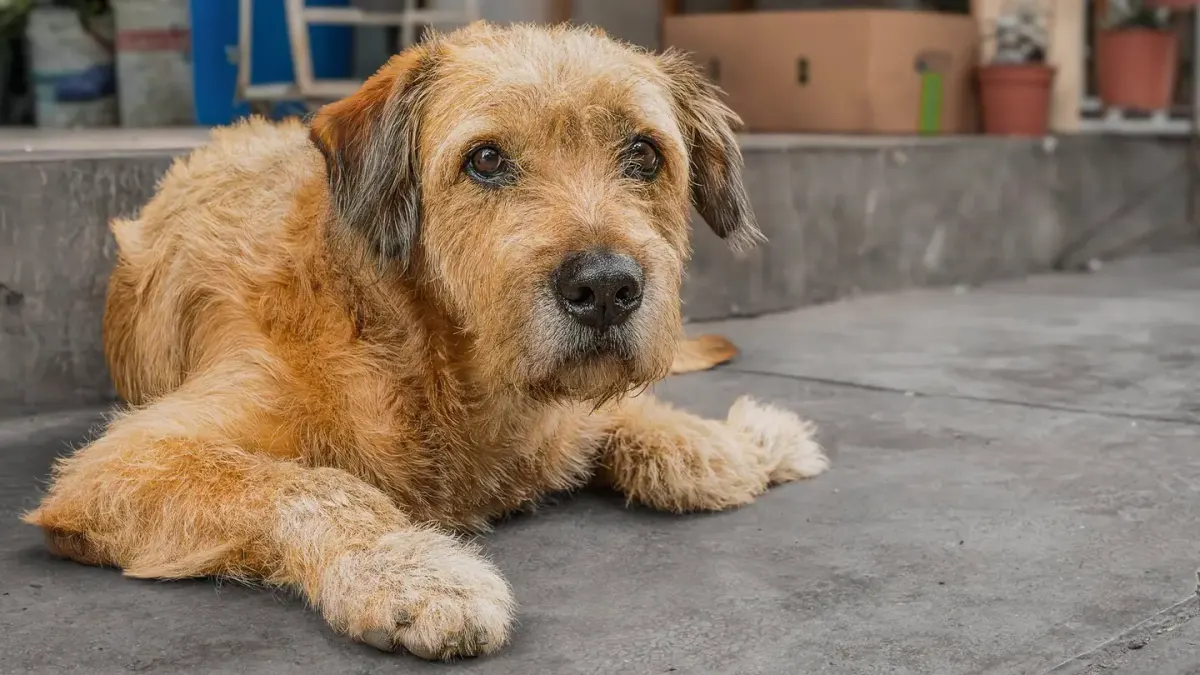
The morning after surgery, most dogs stand the same way, with the repaired leg tucked and the other leg planted hard under the shoulder and hip to carry the load.
I visited a seven-year-old, 82-pound Labrador in his own kitchen three days after his left knee surgery. The tile ran from the back door to the rug, and he had to cross it to drink. By day 10 he was toe-touching on the surgical side, but his right hind leg trembled after standing for more than a minute. His owner worried about that good leg giving out. We moved the water bowl, laid down two low-pile runners, and set a short leash by the door for every potty trip. The decision was not only about the incision. It was about where his weight would live for the next eight weeks.
Why the sound leg carries extra risk
A cranial cruciate ligament fails in part because of biology and in part because of mechanics. When one hind leg hurts, the dog shifts weight to the other hind leg, and that contralateral stifle and its meniscus absorb more force with every stand, turn, and stair. Body weight multiplies that force. Slick floors add shear. Uncontrolled pivots add rotation.
That is why home setup matters as much as medication. Joint cartilage depends on steady loading and healthy synovial fluid to nourish chondrocytes and reduce friction. Chondroitin has been described in a Frontiers in Veterinary Science study as an ingredient that “supports healthy synovial fluid homeostasis,” which is a modest structure-function statement, not a promise to prevent a second tear. In laboratory work, glucosamine has been reported to “prevent experimentally induced cartilage degradation in vitro” in a Journal of Veterinary Medical Science review, which tells us about mechanism rather than proof of protection in a limping dog at home.
Supplements may help support the joint environment. They do not unload the joint.
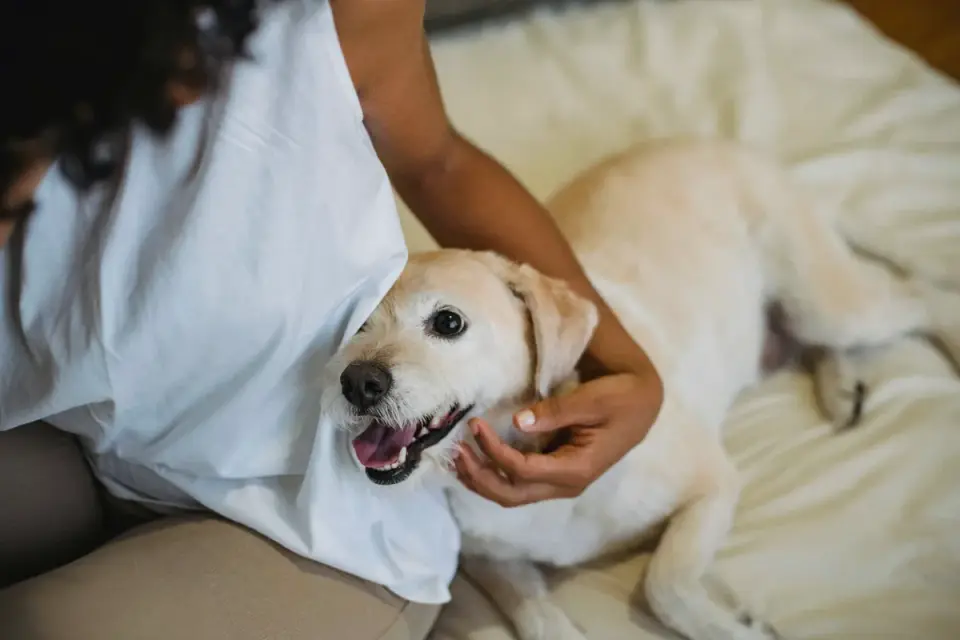
What shifts load off the good knee
Attend to the whole patient in its own home. That is my bias after years of house calls. The clinic sees gait for five minutes. You see the midnight water trip, the doorway dash, the slide on the stairs.
Start with traction, confinement, and weight. Cover slick paths with washable runners. Use a properly fitted sling or towel under the belly for the first one to two weeks if your surgeon advises it, not under the surgical leg alone. Keep the dog in one gated room with a non-slip bed. Carry or assist on stairs. Feed for lean body condition during rest, because every extra pound loads the sound stifle.
Then add controlled movement only as directed. Short leash walks to urinate and defecate, then back inside. No fetch, no dog park, no off-leash turns. If your surgeon refers to rehabilitation, ask about progressive strengthening for both hind legs, weight-shifting exercises, and underwater treadmill once the incision has healed. For background on how ingredients fit beside movement, I often point owners to Dog Hip and Joint Supplements: What the Ingredients Actually Do (And What Movement Adds) and Collagen vs. Glucosamine for Dog Joint Support: How to Actually Choose.
I saw the tradeoff clearly in a five-year-old, 64-pound pit bull type who looked bright at three weeks in. Her owner, meaning well, let her trot up six carpeted stairs alone because she cried at the gate. On the fourth step she lunged toward a cat, twisted on the sound right hind, and held it up for almost an hour that evening. The surgical leg was healing. The plan had failed at the staircase, not at the bottle of chews. We added a baby gate, a harness with a rear handle, and a rule that stairs meant sling plus leash until week eight.
Where joint nutrition fits, and where it does not
Owners often ask if a glucosamine and chondroitin chew or green-lipped mussel powder will shield the other knee. The honest answer is narrower. Glucosamine and chondroitin are widely studied joint-support ingredients, and green-lipped mussel contains omega-3 fatty acids and glycosaminoglycans studied for joint support, but none has been shown to prevent a contralateral cruciate tear.
The strongest counterargument I hear is that rest alone protects the good leg, so supplements and rehab are unnecessary expense. Rest does reduce peak load, and I respect the impulse to keep things simple. Yet complete inactivity brings its own cost in this setting, with loss of hind-limb muscle, stiffer joints, and more load on the sound leg when the dog finally moves. That is why I still land on controlled activity plus footing plus weight control as the core, with joint nutrition as optional support discussed with your veterinarian.
Preclinical data helps set expectations. In rodent work summarized in Nutrients, researchers reported that “BMO, GMO, and KO all alleviated paw swelling in rats and reduced serum levels of rheumatoid factor (RF), anti-cyclic citrullinated peptide (anti-CCP) antibody, and pro-inflammatory cytokines such as TNF-α and IL-17.” That is animal-model inflammation data, not evidence that a mussel oil will hold a dog’s cruciate intact. If you use a formula, look for clear labeling, consistent dosing, and NASC or equivalent quality controls, a topic explained further in Does Hyaluronic Acid Actually Work for Dog Joints? What the Research Shows.
An edge case changed how I counsel small senior dogs. An eleven-year-old, 38-pound spaniel mix lived in a one-bedroom apartment with hardwood throughout and a low couch she loved. By week five her surgical leg was weight-bearing well, but she began bunny-hopping when rising, and the sound hind clicked softly on cold mornings. The apartment left no room for a gated rest pen. We laid interlocking foam tiles around her bed, blocked the couch with storage bins, and split her daily food into three measured meals with training treats subtracted from the total. The numbers mattered less than the pattern. Less slipping and less carried weight meant steadier rises.
Watch the sound leg daily. Note heat, swelling above the hock, a new toe-touch lameness, difficulty rising, or a shorter stride on turns. Film a 20-second walk from behind once a week in the same hallway. Share it with your surgeon. If lameness shifts sides, if the dog will not bear weight by the timeline your surgeon gave, or if swelling or fever appears, call promptly rather than waiting for the recheck.
The weeks ahead will test your patience more than your dog’s. Keep the floors grippy, the walks short and leashed, the waistline lean, and the rechecks on the calendar, and the healthy leg stands a better chance of carrying its share without breaking down.
Sources
- Chondroitin and synovial homeostasis in dogs — Frontiers in Veterinary Science
- Glucosamine and cartilage degradation review — Journal of Veterinary Medical Science
- Mussel and krill oils in rat arthritis model — Nutrients