On this page
Why does your dog limp only in the morning, then walk it off by breakfast? That pattern is common, and it usually points to stiffness rather than a fresh injury.
I see this in an 11-year-old, 68-pound Labrador-type who rises stiff on his right hind, takes ten short steps to the kitchen, then moves almost normally by the time his bowl is down. Three weeks in, his owner notices the same sequence every day: slow first rise, a hitch for a minute or two, then a normal walk around the block. No yelp, no swelling, no fall the day before. That repeatable, warming-out-of-it arc is what makes owners ask whether this is arthritis, age, or something they missed overnight.
The first few steps tell the story
Watch the arc, not just the limp. A dog who improves within 5 to 10 minutes of gentle movement is showing a different physiology than a dog who gets worse with activity.
That warm-up effect matters. Overnight the joint has been still for hours. Synovial fluid thickens slightly, soft tissues cool and shorten, and the first loading feels uncomfortable. Once the dog walks, circulation increases and the joint lubricates again.
Stiffness after rest is classic for osteoarthritis, but it is not proof by itself. A nail crack, a sore pad, a mild muscle strain, or early cruciate irritation can look similar for a day or two. The clue is repetition without progression.
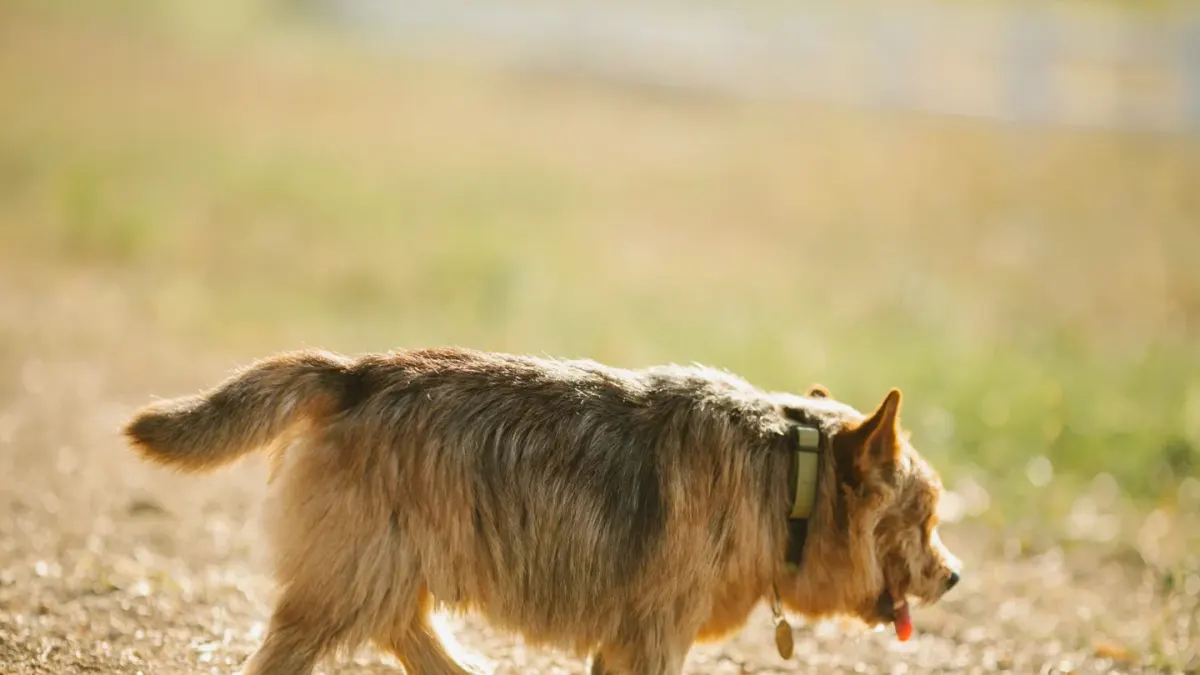
Gentle movement helps morning joints loosen.

What stiffness actually is after a night’s rest
Inside a healthy joint, cartilage glides on a thin film of synovial fluid rich in hyaluronan and lubricin. Chondrocytes maintain that environment, and one line of research described as work that “supports healthy synovial fluid homeostasis” points to why steady daily support matters more than a quick fix, according to Frontiers in Veterinary Science.
With early joint change, cartilage loses some of its smooth resilience. The joint still works, but after hours without motion it needs a few minutes to re-establish that low-friction glide. That is the morning hitch you see.
This is where I stay honest about what supplements can and cannot do. Glucosamine and chondroitin are among the most studied joint support ingredients for dogs, and laboratory work has shown glucosamine can “prevent experimentally induced cartilage degradation in vitro” in work published in the Journal of Veterinary Medical Science. That is supportive biology, not a cure for arthritis, and in vitro is not the same as a dog climbing stairs. Green-lipped mussel is another ingredient often discussed because it contains omega-3 fatty acids and glycosaminoglycans studied for joint support, though much of the mechanistic data comes from models — one rat-model paper in Nutrients reported that “BMO, GMO, and KO all alleviated paw swelling in rats and reduced serum levels of rheumatoid factor (RF), anti-cyclic citrullinated peptide (anti-CCP) antibody, and pro-inflammatory cytokines such as TNF-α and IL-17.”
I had a 9-year-old, 42-pound border collie mix whose owner tried weekend-only pain medication plus an occasional joint chew before agility. By day 10 the mornings were no better, and the dog was actually stiffer on Mondays after a big Sunday hike. That failed approach taught something useful: intermittent dosing and weekend warrior exercise do not match the physiology. Joints like consistency — same bed, same warm-up walk, same body condition, daily support if you and your vet choose it — not bursts. For context on how ingredients differ, I often point owners to Fish Oil vs Glucosamine for Dog Joint Health: What Each Actually Does and Collagen vs. Glucosamine for Dog Joint Support: How to Actually Choose.
When morning-only means watch and when it means call
Most morning-only limps in older dogs turn out to be early osteoarthritis, but do not assume. Call your vet promptly if the limp stops warming up, shifts to non-weight-bearing, lasts past 15 to 20 minutes, appears after trauma, or comes with swelling, fever, loss of appetite, or crying out.
Your vet will watch the gait, flex the joints, check nails and pads, feel for effusion or crepitus, and often recommend radiographs. Labs or joint fluid are reserved for atypical cases. Keep a simple log for two weeks: time to normal, which leg, surface, temperature, and yesterday’s activity. That timeline beats memory in the exam room.
A 7-year-old, 95-pound German shepherd taught me the edge case. He limped only in the morning for a month, warmed out of it perfectly, and everyone assumed hips. On careful exam the issue was a long toenail catching plus early lumbosacral stiffness from sleeping curled on a cold tile floor. Trim, orthopedic bed away from the draft, and a three-week leash-walk ramp changed the mornings more than anything added to the bowl. Big, fast-growing breeds can hide spinal or bilateral disease behind a single-leg hitch, so location is not always what it seems. If you are weighing long-term options for an aging dog, The Best Joint Supplements for Senior Dogs (2026 Guide) and Does Hyaluronic Acid Actually Work for Dog Joints? What the Research Shows lay out trade-offs without hype.
Where I land on those stiff mornings
My evidence-bounded recommendation is this: treat repeatable morning stiffness as early joint disease until proven otherwise, and prioritize weight, sleep surface, and controlled motion before you chase ingredients.
The strongest counterargument is fair — some dogs with morning stiffness never progress on radiographs, so am I medicalizing normal aging? I still land here because the cost of the basics is low and the upside is function. Keep the dog lean, provide a warm, supportive bed, do a 5-minute leash warm-up before stairs or play, avoid slippery starts, and ask your vet about a consistent joint-support plan and safe pain control for bad days.
You cannot supplement your way out of obesity or deconditioning.
Frequently asked questions
How long should a morning limp last before I worry?
Many stiff dogs warm out of it in 5 to 10 minutes. If it persists beyond 15 to 20 minutes, worsens, or becomes non-weight-bearing, call your vet promptly.
Should I rest my dog completely if he limps in the morning?
No prolonged crate rest unless your vet advises it. Short, controlled leash walks usually loosen stiffness better than no movement or intense weekend exercise.
Do joint supplements fix morning limping?
They do not cure arthritis. Consistent weight control, warm bedding, and measured activity matter most; ingredients like glucosamine and chondroitin may support joint health as part of a vet-guided plan.
Sources
- Synovial fluid homeostasis study — Frontiers in Veterinary Science
- Glucosamine cartilage degradation in vitro — Journal of Veterinary Medical Science
- Marine oils paw swelling and cytokines in rats — Nutrients