On this page
You lean in, kiss the top of that furry head, and say goodnight. Your dog stays still. Is that love, habit, or just patience?
Dogs don’t grow up kissing each other. They sniff, lick, play-bow, and lean. A human kiss — face close, arms wrapping, lips puckering — is a learned human ritual. What your dog understands is everything around it: your soft voice, slow movement, and familiar smell. That context matters more than the kiss itself.
Vets often see the mismatch in exam rooms. The owner means affection. The dog reads pressure.
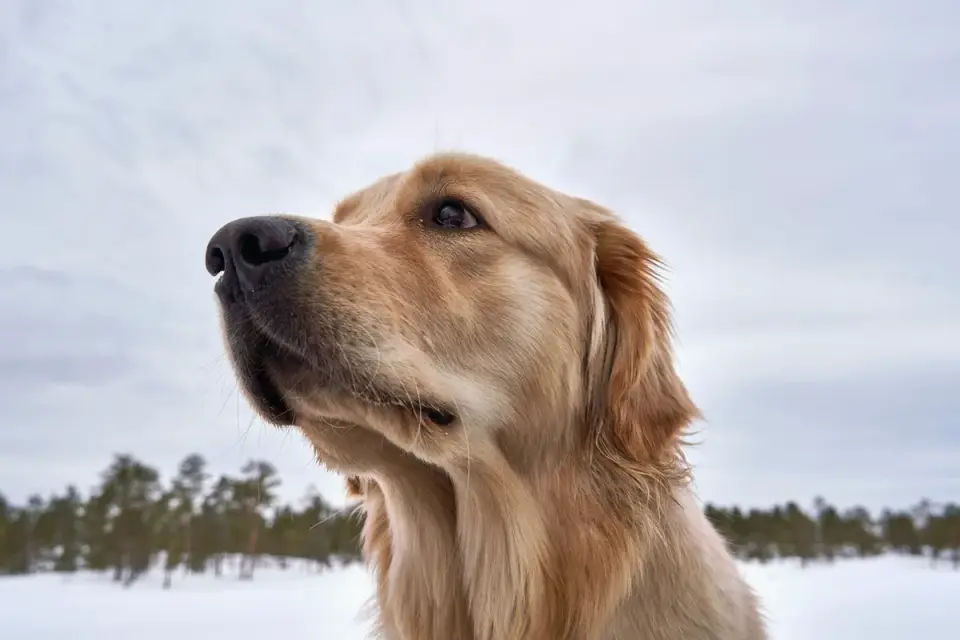
A hug with lips feels like pressure to many dogs
Think about it from nose height. You loom over, reach for the head, bring your face straight in, and hold still. In dog language, leaning over, head-patting, and face-to-face contact can feel confining.
That does not mean your dog doesn’t love you. Dogs form strong bonds through routine, play, walks, training, and calm touch. But research on human-dog bonding points to gaze, voice, and gentle interaction rather than kisses specifically. The much-cited oxytocin work described by Science found mutual gaze between dogs and owners was linked with oxytocin rises in both species — a look-and-soft-voice loop, not lip contact.
Jared in Arvada, Colorado, noticed this with Diogi, his 2-year-old neutered male Miniature Dachshund. Diogi would freeze for about three seconds every time Jared kissed the top of his head, then slide off the couch. When Jared switched to a chest scratch and quiet praise instead, Diogi stayed close for ten minutes. Same love. Different delivery.
What a comfortable dog looks like
A dog who is genuinely okay with close affection looks loose all over. Soft eyes that blink easily. Ears in a neutral position. Mouth slightly open, body wiggly or leaning in. They may nudge your hand for more.
The American Kennel Club guide to canine body language describes these relaxed signals as the baseline to look for before you assume any handling is welcome. Learn that baseline first, then watch what changes when you lean in.
Stress is quieter than most people expect. Look for:
Lip licking when no food is around, yawning, turning the head away, showing the whites of the eyes, tucking the tail, flattening ears, lifting a paw, or going very still. Stillness is not always calm. Sometimes stillness is a dog holding its breath and waiting for the moment to pass.
If you see two or three of those signs together, take it at face value. Your dog is asking for space.
Some dogs learn to like it — on their terms
Here’s the nuance. Dogs are excellent learners. If kisses have always predicted good things — a treat, a walk cue, a favorite scratch — many dogs will lean in, wag, and even solicit that close contact. Tone and history do a lot of work.
That learning is individual. It varies with age, socialization, past handling, and temperament. A confident, social adult may adore cheek rubs. A shy adolescent, a senior with neck pain, or a new rescue still learning the household may not. This is part of why breed alone predicts so little, a point I return to when families ask about Best Dog Breeds for First-Time Owners: What Actually Predicts Success or Best Dog Breeds for Apartment Living: What Actually Matters.
Keep the choice with the dog. Offer, don’t impose. Kiss the air beside them and see if they move closer. Pause after two seconds. Most tolerant dogs will tell you clearly if they want more by leaning in or pawing gently.
A lower-stress way to say I love you
You don’t have to give up affection. Just translate it into dog-friendly language.
Try scratching the chest or the side of the neck rather than reaching over the head. Keep your posture angled, not looming. Use that warm, slightly high voice most dogs prefer. Pair close contact with something the dog already loves, like a short sniff walk or a food puzzle. Keep sessions brief and watch the body.
For handling and close contact, Cornell University College of Veterinary Medicine emphasizes reading whole-body signals — posture, tail, ears, and facial tension together — rather than judging one signal alone. That whole-body check takes five seconds once you practice it.
Teach kids the same rule. No chasing for kisses, no hugging around the neck, no kissing a sleeping dog. Invite the dog over, let the dog sniff, pet for three seconds, then stop. If the dog stays, continue.
That pause is powerful.
Vets also encourage low-stress handling principles at home, not just in the clinic. The American Veterinary Society of Animal Behavior position statements outline why minimizing fear and force keeps both dogs and people safer during close interactions. A dog who can move away is a dog who is more likely to choose to stay.
When to change the habit
Skip face kisses for now if your dog moves away, growls, snaps, freezes, hides, or needs coaxing to come back. Those are clear communication, not disobedience. This is especially important with new dogs in multi-dog homes where space is still being negotiated, which is why I point families to Best Dog Breeds for a Multi-Dog Household: What Actually Predicts Peace.
Talk with your veterinarian if close handling suddenly bothers an older dog who used to enjoy it. Pain, vision loss, hearing loss, and cognitive change can shift tolerance quickly in seniors. A baseline exam may help support comfort and guide safer affection.
And yes, the skeptical question comes up in every exam room: if my dog licks my face, isn’t that a kiss back? Licking is normal dog behavior tied to greeting, attention-seeking, taste, and early puppyhood. It can be affectionate. It isn’t proof they want your kisses the same way. Let their body answer that.
Your dog knows you love them by how safe you make them feel.
Frequently asked questions
Do dogs understand kisses as affection?
Not at first. Dogs learn what kisses predict through your tone, touch, and routine. Many learn to tolerate or enjoy brief affection, but they read your body language more than the kiss itself.
How can I tell if my dog dislikes kisses?
Watch for lip licking, yawning, turning away, whale eye, ears back, tail tucked, freezing, or moving away. One sign alone may mean little, but two or three together suggest discomfort.
What is a better way to show affection?
Use chest or neck scratches, a calm angled posture, a soft voice, play, and walks. Offer close contact for a few seconds, pause, and let your dog choose to stay for more.
Sources
- Oxytocin-gaze positive loop and the coevolution of human-dog bonds — Science
- Position Statements — American Veterinary Society of Animal Behavior