On this page
The kitchen door opens and the 3-year-old, 72-pound yellow Labrador is already vibrating, tennis ball in mouth, back end wagging the whole dog. His owner wants to do right by him. Long fetch sessions on concrete tire him out, yet the next morning he is stiff getting off the rug, slow for the first five steps, then fine. That pattern — sore after impact, better after moving — is the reason joint-friendly exercise matters more than total minutes for Labs prone to joint wear.
That stiffness has a mechanism. Articular cartilage has no blood supply. It feeds by diffusion when the joint loads and unloads in a rhythm, which moves synovial fluid across the surface. Steady walking, swimming, and controlled hill work pump that fluid. Repeated hard stops, sharp turns, and jumping on hard ground spike contact pressure in the elbow, shoulder, hip, and stifle. For a heavy, fast, enthusiastic breed, the difference between those two loading patterns shapes long-term comfort.
I think about a home visit with a 4-year-old, 78-pound black Labrador who lived for weekend ball at the park. The owners counted exercise in throws — often 40 or more — on dry grass with hard cutbacks. By week three of that routine he hesitated on the two front steps after naps, then loosened by the sidewalk. We kept his energy outlet but changed the surface and shape: two 20-minute sniff walks, a 10-minute controlled swim with a rest break, and short training games for his brain. By day 10 his morning hesitation shortened from about eight stiff steps to two or three, which told us load management was working even though his energy stayed high.
What a Labrador joint actually needs from movement
Cartilage likes cyclic, moderate load. Muscle protects joints only when it is strong and not fatigued. Ligaments dislike shear and torsion at speed. That is why straight-line trotting, swimming, and slow strength work usually suit a young Labrador better than sprint-chase-fetch, dog-park wrestling, or jumping for a frisbee.
Chondroitin is often discussed here because it “supports healthy synovial fluid homeostasis,” according to work published in Frontiers in Veterinary Science. Fluid balance is part of lubrication and nutrient exchange. Exercise is the physical side of that same idea: gentle motion circulates fluid, while pounding and twisting irritate the lining. Nutrition may help support the environment, but movement sets the daily load.
Glucosamine has a narrower research story. Laboratory work found it can “prevent experimentally induced cartilage degradation in vitro,” as reported in the Journal of Veterinary Medical Science. That is cartilage cells in a dish, not proof that a chew prevents arthritis in a running Labrador. I still mention it because owners ask, and because whole-patient care looks at diet, weight, muscle, and movement together rather than one ingredient alone.
Trading fetch marathons for energy-burning routines
The failed approach I see most is trying to exhaust a Labrador with more impact. A 2-year-old, 68-pound chocolate female I followed could swim, hike, and still counter-surf at midnight. Her family added longer fetch, up to an hour on pavement, hoping tired would equal calm. Three weeks in she started sitting out the last ten minutes, licking her carpus, and bunny-hopping up stairs she used to take two at a time. Rest helped, then the cycle repeated. The trade-off was clear: fetch bought quiet evenings and sold morning stiffness.
We replaced half the fetch with work that tired her brain and hindquarters. Food scatters in tall grass, 5-minute nosework boxes, place-stay with recalls across 30 feet, and cavaletti poles at fetlock height. Her total active time stayed near 70 minutes, yet impact time fell by more than half. The owners missed the simplicity of throwing a ball. The dog did not.
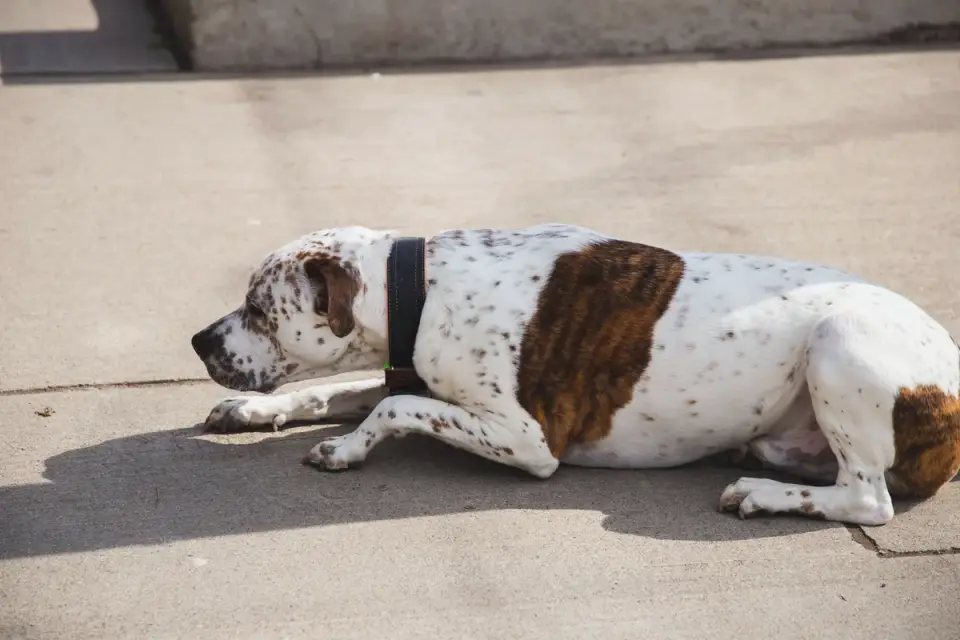
Low-impact does not mean low energy. It means shaping intensity.
Swimming is often ideal, with a caveat. A short warm-up walk, 5 to 10 minutes of swimming, a shore break, then a second short set beats one long 30-minute swim that leaves the shoulders sore. Watch for a dropping head, shortened stroke, or climbing out and shaking repeatedly.
Leashed trotting on forgiving ground builds base fitness. Start with two 15-minute walks with hills kept gradual. Add five minutes every three to four days if next-morning rising stays easy. Soft trails, grass, and packed dirt beat concrete.
Strength snacks matter for Labradors. Three 3-minute sessions per week can carry more joint value than one hard weekend outing. Try slow sit-to-stands on a rug, three to five reps; weight shifting while standing on a cushion; backing up five steps; and walking over four to six ground poles. Stop before panting turns heavy.
For more on how movement and ingredients fit together, see Dog Hip and Joint Supplements: What the Ingredients Actually Do (And What Movement Adds) and Fish Oil vs Glucosamine for Dog Joint Health: What Each Actually Does.
The edge case owners miss: fit dogs hide fatigue
The counterargument to all this caution is fair. A young, lean, sound Labrador needs vigorous exercise for behavior, muscle, and joy, and too little movement weakens the very muscles that stabilize joints. I agree. My position is not rest. It is directed intensity with recovery built in.
That means planning the week, not just the day. Alternate a swim day, a strength-and-sniff day, and a longer trot day. Keep one full easy day. Keep body condition lean enough to feel ribs with light pressure. Keep nails short so the foot lands correctly.
Green-lipped mussel often comes up in this planning stage. It contains omega-3 fatty acids and glycosaminoglycans studied for joint support, and separate laboratory work in rats reported that “BMO, GMO, and KO all alleviated paw swelling in rats and reduced serum levels of rheumatoid factor (RF), anti-cyclic citrullinated peptide (anti-CCP) antibody, and pro-inflammatory cytokines such as TNF-α and IL-17,” according to Nutrients. That is early, animal-model evidence, not a reason to push a sore Labrador harder. Use nutrition questions as a prompt to check weight, flooring, and rest, which shape comfort at home.
I remember a 6-year-old, 81-pound senior-leaning Labrador who surprised me. He could still run, but his tell was subtle: after playdates he stopped lying on the cool tile and chose the couch, where rising took less effort. By day 14 of a revised plan — shorter play bouts, more swimming, rugs on the hallway turn where he skidded — he chose the tile again and rose in one motion. The home told the story before the gait did. Attend to where the dog rests, rises, and turns, and the exercise plan almost writes itself.
Stop the session for repeated sitting, lagging behind, wide turns, head bob, bunny-hop gait, or licking one joint. Soreness the next morning means the prior day was too much, too hard, or too twisty. Scale back by one-third, then rebuild.
Related reading on daily comfort includes How Barometric Pressure Drops Affect a Dog’s Joint Pain: What the Evidence Shows and Collagen vs. Glucosamine for Dog Joint Support: How to Actually Choose.
Where I land for the high-energy Labrador
Burn energy through nose, muscle, and steady cardio. Save joints by limiting sprint stops, hard cuts, and jumping. That trade keeps most Labradors both tired and sound.
Your practical next step is a seven-day trial: three trot walks, two short swim or strength days, one training-game day, one easy day, all on soft footing with morning-rise notes on the fridge.
Frequently asked questions
How much exercise does a high-energy Labrador need without hurting joints?
Many young adult Labs do well with 60 to 90 minutes of total activity split across the day, weighted toward trotting, swimming, sniff walks, and training rather than sprint fetch. Keep impact bouts short and watch next-morning rising.
Is swimming better than fetch for a Labrador prone to joint wear?
Often yes, because swimming loads muscles with less pounding than sprint stops and jumps. Use short sets with breaks, towel dry, and stop if the stroke shortens or the dog tires.
What are warning signs exercise was too joint-stressful?
Lagging, sitting out play, head bob, bunny hopping, wide turns, licking one joint, or stiffness for the first steps after rest. Scale back and use easy leash walks until movement looks normal.
Sources
- Synovial fluid homeostasis study — Frontiers in Veterinary Science
- Cartilage degradation in vitro study — Journal of Veterinary Medical Science
- Mussel and krill oils inflammation study — Nutrients