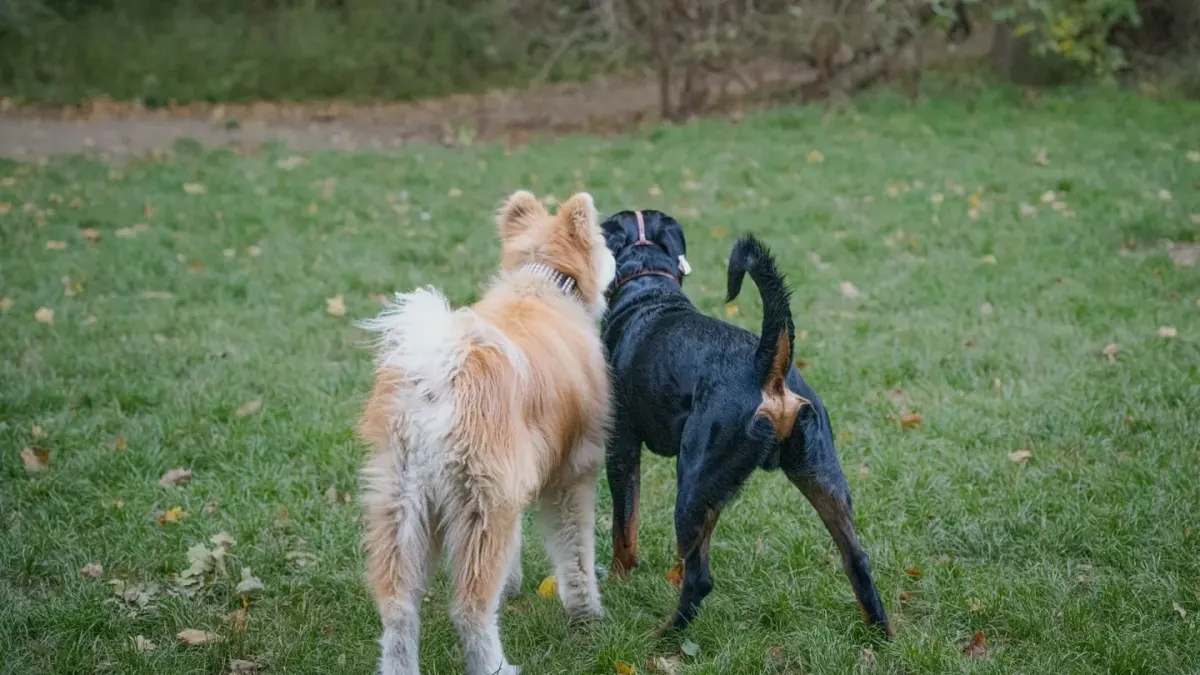
A family brought in their five-month-old Australian Cattle Dog puppy because their seven-year-old kept coming inside with red marks on the back of his ankles. The dog wasn’t being aggressive. He was doing exactly what generations of breeding built him to do: gather a moving target, drive it, control it with a nip at the heel. The parents wanted a switch to flip off. There isn’t one. What there is, is a plan — and the plan looks different depending on which herding breed is standing in your kitchen.
Herding instinct is a modified predatory sequence, not misbehavior. Dogs bred to move livestock retain the early stages of the predatory sequence — search, stalk, chase, and in some lines a nip — while the later stages (grab-bite, kill-bite) have been bred out over generations. That’s the mechanism behind a dog that stares, circles, or bumps at running kids: it isn’t reading the child as prey, it’s reading a fast-moving target as something to organize. The American Kennel Club: AKC notes that different herding lines express this instinct differently — Border Collies tend to stall out at the stare-and-chase stage, while Australian Cattle Dogs and Corgis are more likely to carry it through to an actual nip at the heels.
That distinction matters more than most breed lists let on. A family choosing between a Border Collie and a Cattle Dog isn’t really choosing between “smart” and “smarter.” They’re choosing between a dog whose herding style is mostly visual pressure and one whose herding style involves teeth making contact with skin, even gently. For a household with a toddler who bolts and shrieks when startled — precisely the trigger pattern that escalates chase-and-nip behavior — that’s not a minor footnote. It’s the deciding variable.
Why breed alone doesn’t predict the outcome
I want to be direct about where I land, because breed guides tend to hedge past the point of usefulness: breed tells you the shape of the risk, not whether it will happen. The American Veterinary Medical Association: AVMA is explicit that breed alone is not predictive of aggressive behavior, and that responsible ownership, early socialization, and consistent management do more to determine outcomes than pedigree does. I agree with that position clinically — I’ve seen mellow Cattle Dogs and reactive Border Collies — but I don’t think it means breed is irrelevant. It means breed sets the baseline behavior you’re managing, and management determines whether that baseline turns into a bite report.
The strongest counterargument to picking a herding breed for a family with young kids is straightforward: why choose a dog engineered to chase and nip moving children when calmer options exist? It’s a fair point, and for some households the honest answer is that a herding breed isn’t the right fit at that life stage. But for families who are already committed — a working-line dog already in the home, or owners drawn specifically to the breed’s intelligence and drive — the instinct isn’t a defect to eliminate. It’s energy that needs a legitimate outlet, and redirected correctly it stops showing up on a child’s ankles.

What actually changes the risk
Three things move the needle more than breed selection alone. First, supervised structure: never leaving young kids and an untrained herding dog together unsupervised during active play, since running and screaming are the exact triggers that escalate chase-nip cycles. Second, an outlet: flirt-pole work, structured fetch, or formal herding-instinct classes give the dog a legal place to spend the drive that would otherwise land on a child. Third, early, consistent obedience — a reliable “leave it” and recall redirect the dog before the nip happens rather than after.
I remember a different case a few months later: a nine-year-old Border Collie, previously rock-solid around kids for years, suddenly started stalking and circling the family’s new baby at eight weeks. Nothing had changed about the dog’s temperament — what changed was a small, fast-moving, high-pitched creature that hadn’t been part of the household’s established pattern. We didn’t treat it as aggression. We treated it as an instinct responding to novel stimulus, and built a management plan — baby gates, a “place” command near the bassinet, supervised introductions — before the dog ever got the chance to practice the unwanted behavior. Within three weeks the stalking had dropped out almost entirely, not because the instinct disappeared, but because it never got reinforced.
That case is a useful complication because it shows the limits of a checklist approach. A family can do everything “right” — choose a historically kid-tolerant breed, socialize early, manage supervision — and still hit a new trigger years in. Herding instinct doesn’t retire. It resurfaces whenever the environment presents a new moving, unpredictable target, which is exactly what a crawling infant or a toddler learning to run represents to a dog bred to track motion.
Children are also simply more exposed to this risk than adults are in general: kids under 9 face the highest rates of dog bite injury of any age group, and most of those bites come from a familiar dog in an everyday setting, not a strange dog in public. That statistic isn’t specific to herding breeds, but it’s the backdrop against which herding instinct becomes a real household consideration rather than a curiosity — the dog most likely to nip a child is usually the family’s own.
Where I land
If you already have a herding breed and kids in the same house, don’t wait for a bite report to start managing the instinct — manage it from day one, the way you would any predictable behavior pattern. If you’re choosing a breed with young children already in the home, I lean toward breeds whose herding style stops at eye contact and chase rather than progressing to a nip, and toward working with a trainer who understands breed-specific drive before problems appear rather than after. Readers comparing options in this territory may also find our guides on best dog breeds for first-time owners and best low-maintenance dog breeds for busy people useful for weighing energy level against household bandwidth, and our apartment living guide if space is also a constraint alongside kids.
So what’s the actual line between an instinct that’s manageable and a placement that isn’t going to work? I don’t think there’s a single answer that applies to every family — it depends on the kids’ ages, the dog’s individual drive, and how much structured outlet the household can realistically provide week after week. That’s worth sitting with honestly before bringing a working-line herding dog into a home with small children, rather than after.
Frequently asked questions
Are herding breeds dangerous around young children?
Not inherently. Herding breeds retain early predatory-sequence behaviors like chasing and nipping, but the AVMA notes breed alone doesn't predict aggression — supervision, socialization, and a legitimate outlet for the instinct matter more than the breed label itself.
Which herding breeds are less likely to nip kids?
Style varies by breed. Border Collies tend to rely on stare-and-chase pressure rather than contact, while Australian Cattle Dogs and Corgis are more likely to nip at heels as part of their natural herding technique.
Can herding instinct around kids be trained away?
Not eliminated, but it can be redirected. A reliable recall, structured outlets like flirt-pole work, and supervised introductions reduce how often the instinct gets triggered and reinforced around children.
Sources
- Why Does My Dog Herd My Kids? Tips To Channel Herding Behavior — American Kennel Club
- Why breed-specific legislation is not the answer — American Veterinary Medical Association