
On this page
The first apartment-dwelling Great Dane I worked with belonged to a couple in a fourth-floor walk-up. Zeus was five, 140 pounds, and by the time they called me he’d stopped jumping onto the bed and was taking the stairs one at a time, pausing on each landing. They’d assumed the slowdown was just age. It wasn’t only age — it was four years of hardwood floors, a single evening walk, and a dog whose hips were doing more stabilizing work on slick flooring than his frame was built for. We didn’t need surgery. We needed runners down the hallway, a morning walk added back in, and a program of short, structured decompression sessions instead of one long weekend hike. Within six weeks the owners told me he was taking the stairs two at a time again.
That case is the template for most of what I see with large dogs in apartments. The building isn’t usually the problem. The gap between what the dog needs and what the schedule and the floor plan actually deliver is the problem, and it’s fixable with specifics, not with a bigger unit.
Why floor space is the wrong first question
People ask me whether their apartment is “big enough” for a Labrador or a Bernese Mountain Dog, and I always redirect the question. A crate, a dog bed, and a few feet to turn around in is genuinely all the square footage a large dog requires indoors. What isn’t optional is what happens outside those four walls: how much aerobic exercise the dog gets, what surface he’s walking and turning on inside, and how much of his brain gets used in a given day. Large and working-breed adults generally need somewhhere in the range of an hour or more of daily exercise, and going well past that for a giant-breed dog without conditioning it gradually can create its own orthopedic problems rather than solve them.
Floor space becomes relevant in one specific way: hard, slick flooring inside a unit. A dog with any joint laxity works harder to stabilize on tile or hardwood than on carpet or a rubber-backed runner, and that repeated micro-strain adds up over years, not days. The American College of Veterinary Surgeons notes that hip dysplasia is a developmental disorder involving joint laxity and secondary arthritis that shows up disproportionately in large-breed dogs, and that excess exercise and body weight both add measurable stress to an already compromised joint. None of that means an apartment is off the table. It means the flooring your dog lives on every day is worth the ten-minute fix of adding traction.
What I actually ask owners before they sign the lease
Three questions tell me more than the unit’s square footage ever will. First, what’s the exercise plan on a bad-weather day, not a good one — because the good-weather plan is never the one that fails. Second, is there a stairwell or an elevator, and what does that mean for a dog with early joint changes at twelve or thirteen. Third, who’s home during the day, and for how long, because a large dog left alone in a small space for nine hours without any enrichment is where the barking complaints and the destroyed doorframes come from, not from the breed itself.
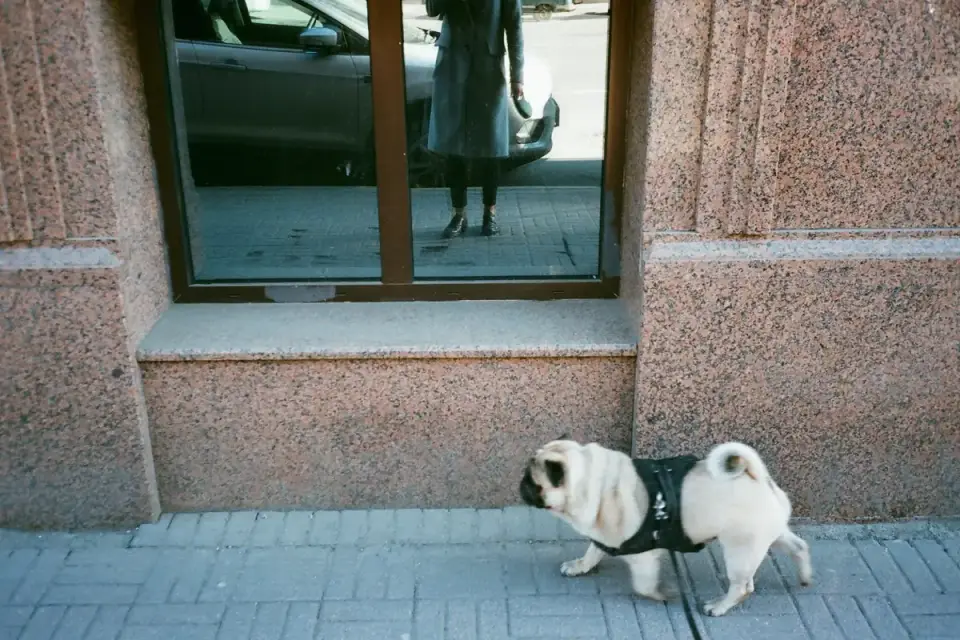
I’ll also ask what the dog does with his mouth and his nose when nobody’s actively engaging him. A frozen food-stuffed toy, a snuffle mat, or a short scent-based task isn’t a luxury for an apartment dog — it’s the difference between a dog who settles on the rug for two hours and one who paces the same twelve feet of hallway. Reward-based, structured mental work has documented behavioral value, and the The American Veterinary Society of Animal Behavior: American Veterinary Society of Animal Behavior publishes position statements built around exactly this kind of low-stress, welfare-forward handling and training approach.
The exercise math, done honestly
Here’s the number I actually use with clients. Budget close to 60 to 90 minutes of real activity a day for most large adult dogs — walking, structured play, a training session that makes them think, or some combination — split across at least two sessions rather than crammed into one. A single weekend-warrior hike does not bank hours for the rest of the week; sudden spikes in activity are one of the more common ways I see soft-tissue injuries in dogs who otherwise get very little exercise. Puppies and giant breeds need the opposite adjustment: less forced, high-impact exercise while they’re still growing, because rapid growth combined with heavy joint loading is one of the recognized contributors to hip dysplasia in large-breed dogs.
Stairs deserve their own line item. If your building has no elevator, a young, healthy large dog usually manages stairs without issue. An older dog, or one already showing stiffness after rest, is a different conversation — that’s when I start recommending a harness with a rear handle for support, and sometimes a temporary or permanent move to a ground-floor or elevator unit isn’t overkill, it’s appropriate management.
One of the harder conversations I have is with owners of a senior large dog whose building only has stairs. I worked with a nine-year-old Rottweiler, Bruno, whose family lived on the third floor of a walk-up with no elevator. He’d start most mornings stiff, warm up within twenty minutes, and then struggle again by the top landing coming home from his evening walk. We didn’t move him. We changed his walk timing to avoid the coldest part of the morning, added a ramp-style approach to the building’s front steps where the layout allowed it, and used a support harness for the indoor stairwell specifically. The owners weighed moving against staying near their jobs and his vet, and staying won, once the daily mechanics were adjusted around his actual mobility rather than around the calendar.
Where I land
An apartment is not a disqualifying factor for a large dog, and I’d push back hard on anyone who tells a client otherwise without asking what their actual daily routine looks like. The counterargument I hear most is that a house with a yard is inherently kinder to a big dog — and a yard is genuinely useful for off-leash decompression, I won’t pretend otherwise. But a yard doesn’t guarantee exercise any more than a small apartment guarantees deprivation; plenty of yard dogs get let out for five minutes and nothing else. What predicts a large dog’s quality of life in an apartment is the same short list every time: daily aerobic minutes actually logged, non-slip flooring where the dog spends most of his time, a stairs-and-elevator plan appropriate to his age and joints, and real mental engagement built into the day rather than left to chance.
If you’re still deciding what kind of dog fits your building and your schedule, our guide to best dog breeds for apartment living walks through the traits that matter more than size, and our piece on best low-maintenance dog breeds for busy people is worth reading if your work hours are the real constraint. Owners weighing a smaller companion instead should see our Yorkshire Terrier vs. Maltese comparison and our notes on best dog breeds for first-time owners, since the calculus around exercise and space changes considerably with a toy breed.
Bottom line: a big dog can absolutely thrive in a small apartment, but only if you treat the exercise budget, the flooring, and the daily enrichment as non-negotiable line items rather than nice-to-haves.
Frequently asked questions
Can a large-breed dog really be happy in a small apartment?
Yes, in most cases. What determines a large dog's quality of life indoors is daily exercise volume, joint-friendly flooring, and mental enrichment — not the number of square feet in the unit.
How much daily exercise does a large dog need in an apartment setting?
Most large adult dogs do well with roughly 60 to 90 minutes of real activity a day, split into two or more sessions rather than one long outing, with growing puppies and giant breeds needing a gentler, lower-impact ramp-up.
Is hardwood flooring bad for a large dog's joints?
Slick, hard flooring makes a dog work harder to stabilize with every step, which adds cumulative stress to joints that may already have some laxity. Rugs, runners, or rubber-backed mats in high-traffic areas meaningfully reduce that load.
Sources
- Canine Hip Dysplasia — American College of Veterinary Surgeons
- Position Statements and Handouts (for the public) — The American Veterinary Society of Animal Behavior